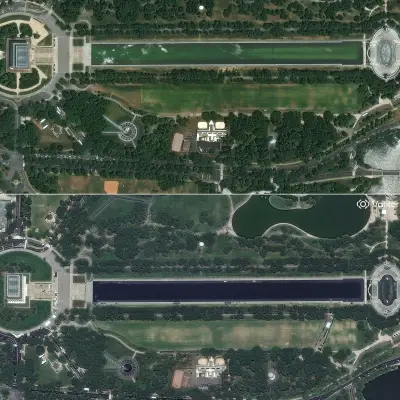
A war that had no clear objectives and no obvious endgame, but unleashed havoc across the globe, looks to be on the brink of coming to a close. As he prepared to mark his 80th birthday with a cage fight on the historic White House lawn, Donald Trump announced via social media that “the Deal with the Islamic Republic of Iran is now complete”.
Announcement and Reactions
The US president has been claiming a deal is close since very early on in the conflict, but this time his words have been backed up by Iranian officials and Pakistan, which has been acting as mediator. Iran’s deputy foreign minister Kazem Gharibabadi said the agreement puts an “immediate end” to the war, including the conflict in Lebanon. World leaders, including Keir Starmer, have welcomed the news.
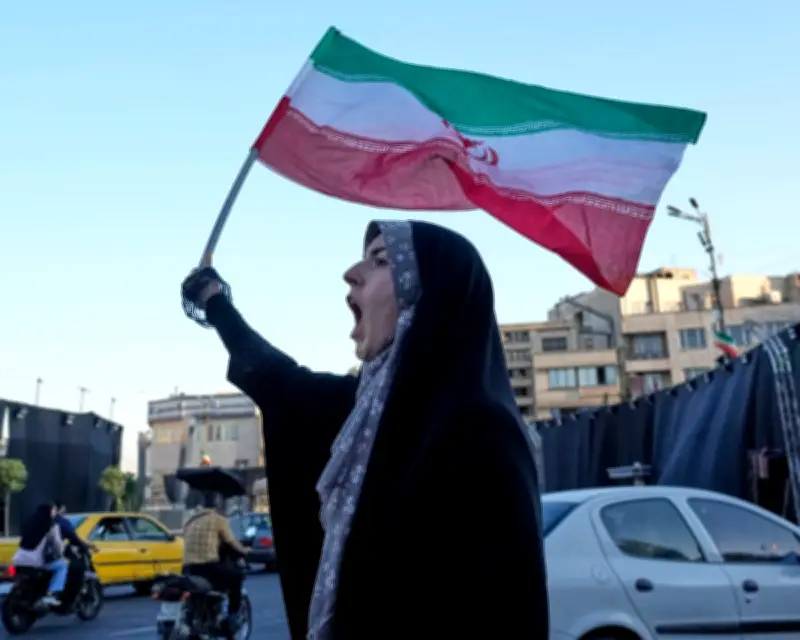
For many, especially those whose lives have been thrown into chaos, there will be a sense of relief – even if it is tempered by doubts. Key questions remain – over the nuclear deal, the vital strait of Hormuz, of Israel’s role, and whether peace can hold.

Weekend Roundup
Before that, a roundup of this weekend’s news. British armed forces intercepted and boarded a Russian shadow fleet oil tanker in the Channel in the early hours of Sunday, the first time the UK has led a naval capture since the start of the war in Ukraine. One of Ukraine’s most significant religious sites, Dormition Cathedral in Kyiv, was set on fire after continuing Russian bombardment. The strategic defence review row drags on, after last week’s ministerial resignations. Culture secretary Lisa Nandy revealed her department is “actively involved” in identifying cash to divert to the Ministry of Defence. A tropical western reef heron usually found between west Africa and India has been spotted in north Wales, the first time the species has been sighted in Britain. Tommy Robinson was detained at Heathrow on Saturday. The far-right activist, real name Stephen Yaxley-Lennon, was held under counter-terrorism laws after riots in Southampton.
In Depth: A Path to Peace, but on Whose Terms?
On the morning of Saturday 28 February, the US and Israel launched a major military offensive against Iran, hitting the country with hundreds of air strikes. By 9.45am local time, Iran’s supreme leader, Ayatollah Ali Khamenei, was killed at his compound in Tehran in a mission that took just one minute. Trump claimed the sudden offensive, dubbed Operation Epic Fury, would give Iranians a chance to “rise up” against their rulers while Benjamin Netanyahu told Iranians to “flood the streets and finish the job”.
However, things did not go according to plan. Iran was able to conduct a sustained, and damaging, wave of retaliatory strikes across the region, hitting critical energy infrastructure. Crucially, it closed the strait of Hormuz, sending oil prices rocketing and sparking global shortage fears. Thousands of people have been killed, primarily in Iran and Lebanon, but also in Israel and in Gulf states.
Trump, meanwhile, has insisted the end of the conflict was near almost ever since it began (at least 38 times for those keeping track). He claimed his “short-term excursion” to “get rid of some evil” was – just over a week in – “very complete, pretty much”. By late March, he declared “regime change” had been achieved. A fragile ceasefire that came into effect in April broke down earlier this month when the US launched strikes across Iran, and Trump threatened further action. But the US leader suddenly changed course at the end of last week, insisting a deal was imminent.
Global leaders are already reacting positively to the news of an agreement, with G7 leaders expected to discuss it in depth as they meet in France today and Tuesday. But the knock-on effects of this conflict are still likely to reverberate beyond any peace deal.
What Has Been Announced?
Despite Trump’s grand announcement, and the flow of hopeful messages from world leaders, details of the deal are – perhaps unsurprisingly – unclear. A memorandum of understanding is due to be officially signed on Friday in Switzerland, but the precise terms have not been published. Iran’s deputy foreign minister Kazem Gharibabadi said a more expansive agreement would be negotiated during a 60-day ceasefire period.

So far Pakistan and Iran have asserted that Lebanon, which has been a sticking point throughout talks, would be included in the scope of the agreement. Pakistan’s prime minister, Shehbaz Sharif, said the deal called for “the immediate and permanent termination of military operations on all fronts, including in Lebanon”. However another thorny issue – Iran’s nuclear programme – appears to still be under discussion. While Trump insisted on Sunday that “Iran will never have a nuclear weapons”, reports suggest that talks over its uranium enrichment plans would continue in this 60-day period.
The lack of movement on the nuclear issue has led to skepticism over whether a deal will hold. Republican senator Lindsey Graham said he would be “watching closely” on the upcoming negotiations and added he was “somewhat concerned that Iran’s view of the agreement seems different than what the American negotiating team is claiming”. Iranian hardliners have also objected to the terms of the deal with the US, with Meysam Nili, brother-in-law of the hardline former president Ebrahim Raisi, calling the deal on the table a catastrophic capitulation.
Will Oil Flow Again?
Trump initially said he had “authorised” the “toll free opening” of the strait of Hormuz, writing: “Ships of the World, start your engines. Let the oil flow!” But he later added that the waterway would be opened upon the signing of the deal, and “for purposes of mine removal”. That may be an indication things are not yet set in stone, but it also raises the complicated logistics of reopening the strait, which usually sees more than a fifth of the world’s oil supply pass through each day. In April, it was reported that Iran was unable to find the mines it laid in the shipping channel, and an inability to monitor operations meant the US was unable to be clear about their location.
“Iranian authorities themselves don’t know [where the mines are], because mines can float away from where they were originally placed,” Pavel Molchanov, analyst at investment bank Raymond James, told Politico, adding that while some sections will be safe, “for a full recovery of shipping traffic, the mine issue will need to be addressed.” The early response to the announcement has been largely positive. Keir Starmer joined France, Germany and Italy in calling for a “toll-free freedom of navigation” to be restored in the waterway after the deal was announced. Markets also bounced on the news – overnight oil prices fell and stock markets jumped.
But uncertainty remains. Earlier reports had suggested the agreement would see Iran reopen the strait and the US lift its own blockade of Iran, allowing it to sell oil. However Mehr, Iran’s state media, reported that the memorandum due to be signed this Friday says that the strait will be managed under “Iranian arrangements”. If the waterway does reopen, it could still take months for oil prices to stabilise, and experts have previously warned it could take months for global oil and gas supplies to return to normal. Last week the World Bank said the war would see global economic growth slow to 2.5%, and downgraded forecasts for two-thirds of countries. It predicted that even if the strait reopened next month, global inflation would still hit 4%, up from 3.3% last year.
What Happens Now?
Friday, when the MoU is supposed to be signed, is still a long way away. The volatile nature of the conflict, and the characters involved – not least Trump – make this an uneasy wait. But perhaps one of the more unusual characteristics of this conflict has been that hostilities have not just flared between sworn enemies, but allies too. Donald Trump has lashed out at a range of western leaders including Keir Starmer for failing to support him, saying of the British PM “he’s no Winston Churchill”. But his most spectacular fallout has been with the man who took him into this war: Benjamin Netanyahu.
At the start of this month Trump reportedly called the Israeli prime minister “fucking crazy” for launching a strike on Beirut, adding “you’d be in prison if it weren’t for me. I’m saving your ass. Everybody hates you now. Everybody hates Israel because of this.” More recently, according to Axios, the president said Netanyahu has “no fucking judgment” and that Israeli strikes had delayed the signing of a deal. Notably, Israel has not yet commented on the deal, which it says it was not party to. As the Guardian’s senior international correspondent, Julian Borger, recently wrote, both Trump and Netanyahu have found “common remedy for their domestic predicament by going to war”. But now both find themselves playing a different game, with a US-Iran deal potentially threatening Netanyahu’s premiership, while at home, Trump desperately needs a solution to his unpopular war.
The Week to Come
Today: Keir Starmer is expected to “outline” his plan to ban access to “high risk” social media apps for under-16s. Tuesday: Chief of the defence staff Richard Knighton will appear in front of the Lords’ international relations and defence committee at 11am to discuss the beleaguered strategic defense review. Thursday: It’s make or break in Makerfield for Andy Burnham, as he looks to win the byelection and then the keys to Number 10. There are also two byelections in Scotland, one of which the Guardian has called “pivotal” for the future of energy in the country.
World Cup 2026
On the pitch: Netherlands 2-2 Japan: Daichi Kamada’s 88th-minute equaliser stole a point from the Dutch. Germany 7-1 Curaçao: A brave World Cup debut for the Caribbean nation ended in defeat. Sweden had an easy win over Tunisia, and Amad Diallo struck in the 90th minute to give Côte d’Ivoire a 1-0 win over Ecuador.
Off the pitch: DR Congo has a “brutally tough” tournament ahead, and their world-class fashion sense. Nick Ames spoke to unenthused Republicans at a political convention in Texas. Matthew Engel has a column on how World Cups invade the public conscience.
Today’s Fixtures
Spain v Cape Verde, 5pm on ITV; Belgium v Egypt, 8pm on BBC; Saudi Arabia v Uruguay, 11pm on ITV; Iran v New Zealand, 0200 on BBC.
The Upside
Parkrun celebrated its millionth event this weekend, with Olympic champion Dame Kelly Holmes in attendance. The free weekly 5km fun run has grown over two decades into a global sensation with 12 million participants at 2,800 locations worldwide. “It is like a spiritual home for some people,” says Parkrun chief executive Elizabeth Duggan.