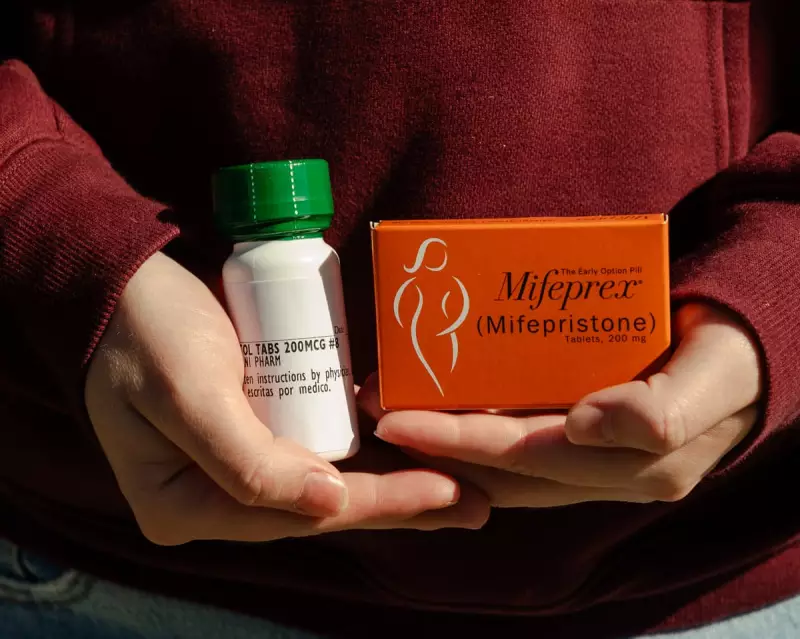
A groundbreaking new law in Texas has dramatically escalated the national conflict over abortion access, creating a direct legal challenge to states that protect the procedure. The law, which took effect on Thursday, empowers private citizens to sue anyone they suspect of making, distributing, or mailing abortion pills into or out of the state.
A First-of-its-Kind Legal Assault
Under this unprecedented legislation, abortion providers could face penalties of at least $100,000 if they mail pills into Texas. The law also makes manufacturers of abortion pills eligible to be sued, although it explicitly shields the women who take the medication from litigation.
Anti-abortion activists, including John Seago, president of Texas Right to Life, openly hope the measure will force a constitutional showdown. They aim to challenge the "shield laws" enacted by several Democrat-led states following the fall of Roe v Wade in 2022. These shield laws are designed to protect healthcare professionals from out-of-state prosecution for sending pills across borders.

"They are going beyond their jurisdiction and their authority by coming into Texas and hurting Texas women," Seago stated. "We think there is going to be a kind of standoff between Texas and New York that maybe goes back to the supreme court."
Shield Laws vs. Texas: A Growing Conflict
Data from the #WeCount research project reveals the scale of the issue. By the end of 2024, providers in shield-law states like Massachusetts and New York were facilitating over 12,000 abortions per month in states with bans, including Texas. This is largely due to the rise of telemedicine, which now accounts for one in four US abortions.
Despite the legal risks, several providers operating under shield laws vow to continue. Dr. Angel Foster, co-founder of the Massachusetts Medication Abortion Access Project (Map), said their practice mantra is "no anticipatory obedience."
"We are going to continue to provide care to patients in all 50 states... until we are legally unable to do so," Foster asserted, calling the Texas law "an overreach."
Legal Battles and Personal Stories
Previous attempts to undermine shield laws have seen limited success. Texas Attorney General Ken Paxton sued a New York doctor last year, and later a county clerk, but a judge dismissed the case against the clerk in October. Similarly, Louisiana has indicted out-of-state doctors, but prosecutions have not advanced.
The human impact of this legal war is profound. Amelia, a Texas woman who used pills from Map, described the new law as "disgusting" and "scary." She recounted a traumatic pregnancy discovery but said the medication abortion itself was a private, manageable experience with her husband's support.
"I’m extremely blessed that I even live in a time or in a place where I had that option," she said. The law has now made her contemplate leaving Texas altogether.
This new front in America's abortion battle sets the stage for a protracted legal conflict, with the potential to redefine state jurisdiction and access to reproductive healthcare nationwide.