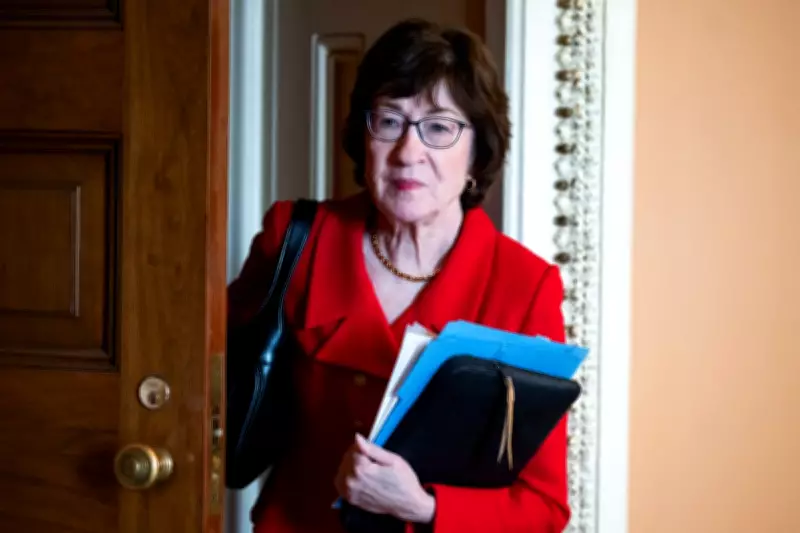
Senator Susan Collins, the Republican representative from Maine, has formally announced her campaign for a sixth term in the United States Senate. The launch comes as Democrats identify her seat as a crucial target in the upcoming midterm elections, with control of the Senate hanging in the balance.
A Pivotal Battle for Senate Control
Collins is anticipated to face one of the most challenging re-election contests of the year. Democrats view victory in Maine as essential to their strategy of reclaiming the Senate majority, which would enable them to obstruct former President Donald Trump's legislative agenda. First elected in 1996, Collins is noted as one of the few Republican senators who occasionally opposes the president, and she represents the only state that Trump did not win in his re-election bid two years ago.
Collins Positions Herself as an Independent Voice
In an op-ed published in the Bangor Daily News, Collins emphasised her role as a bridge-builder in a polarised political landscape. She wrote, "True leaders bring both sides together to seek common ground, not shout the loudest or seek the most social media clicks. I have a proven record of working for you, and I'm running for reelection because my experience, seniority and independence matter." This statement underscores her campaign's focus on pragmatism and her long-standing service.

Rocky Relationship with Trump and Legislative Record
Collins has experienced a tumultuous relationship with Trump during his second term. While she supported many of his cabinet confirmations, she opposed several controversial nominees, including defense secretary Pete Hegseth and FBI director Kash Patel. Additionally, she voted against key legislative measures such as the One Big Beautiful Bill Act and proposals to cut funding from public media and foreign aid programs.
Trump has recently criticised Collins and other senators who backed a war powers resolution to block further attacks on Venezuela, stating they "should never be elected to office again." Despite this, Collins highlights her bipartisan efforts, including voting for President Joe Biden's $1.2 trillion infrastructure bill and securing hundreds of millions of dollars for Maine through her leadership on the Senate appropriations committee.
Democratic Challengers and Primary Contest
On the Democratic side, Maine's Governor Janet Mills and Graham Platner, an oyster farmer and marine veteran, are vying to unseat Collins. They will compete in the Democratic primary on 9 June, with the winner advancing to challenge Collins in the general election. Maine is one of four states, alongside North Carolina, Ohio, and Alaska, that Senate Democrats are targeting to overturn the Republican's 53-seat majority.
Historical Context and Campaign Dynamics
Although Maine has not supported a Republican presidential candidate since 1988, Collins has consistently defeated Democratic challengers, including former statehouse speaker Sara Gideon in 2020 after the most expensive campaign in the state's history. Lauren French, a spokesperson for the Senate Majority Pac, which backs Democrats, criticised Collins, saying, "Collins talks about independence, then votes with Donald Trump when it matters most. Maine deserves leadership that understands today's challenges and has the energy to actually fight for working people, not another six years of excuses and fake concerns."
As the campaign unfolds, Collins' re-election bid is set to be a focal point in the national political arena, with implications for Senate control and the broader direction of US politics.