Supreme Court Delivers Major Blow to Trump's Tariff Agenda
In a landmark decision with profound implications for presidential authority, the United States Supreme Court has ruled that former President Donald Trump exceeded his executive powers by imposing sweeping tariffs on global imports. The 6-3 ruling, delivered on Friday, represents a significant judicial check on one of Trump's most aggressive economic policies since his return to the White House.
A Legal Challenge to Executive Authority
The court determined that the International Emergency Economic Powers Act (IEEPA) of 1977, which grants the president authority to regulate international transactions during national emergencies, did not provide legal justification for the majority of the Trump administration's tariffs. This decision directly challenges Trump's assertion that he had the right to unilaterally impose these measures without Congressional approval.
During oral arguments, US Solicitor General D John Sauer attempted to defend the administration's position by arguing that these were "regulatory tariffs" rather than revenue-raising measures. "The fact that they raise revenue is only incidental," Sauer told the court, despite Trump's previous claims that the tariffs would generate trillions of dollars for federal coffers.

Judicial Skepticism Across Ideological Lines
Supreme Court justices from across the ideological spectrum expressed deep skepticism about the administration's legal reasoning. Liberal Justice Sonia Sotomayor was particularly pointed in her questioning, stating: "I just don't understand this argument. You want to say tariffs are not taxes, but that's exactly what they are."
Even conservative members of the court, including Chief Justice John Roberts, raised serious concerns. Roberts emphasized that "the vehicle is the imposition of taxes on Americans, and that has always been a core power of Congress," highlighting the constitutional separation of powers at stake in the case.
Broader Implications for Economic Policy
The ruling strikes at the heart of Trump's economic agenda, which has relied heavily on tariffs as tools to revitalize American industry and create what he has called a "fairer" global trading environment. Economists have repeatedly warned that such tariffs risk increasing prices for American consumers, particularly concerning given years of elevated inflation.
Trump had previously framed the court's pending decision in apocalyptic terms, suggesting it represented "the difference between going bankrupt and thriving" for the United States. The ruling now establishes important precedent regarding the limits of presidential power in economic matters and reinforces Congress's constitutional authority over taxation.
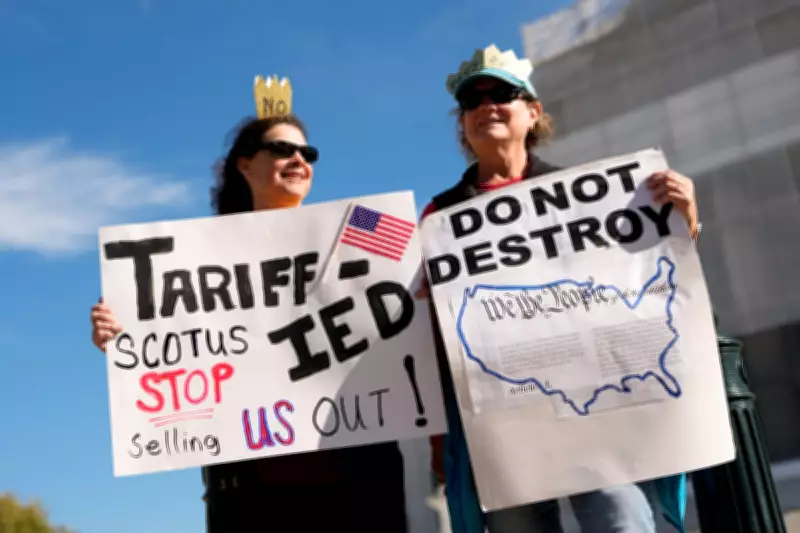
The decision comes amid ongoing protests against tariffs outside the Supreme Court building in Washington DC, reflecting the deep political divisions surrounding trade policy. As the legal and political ramifications continue to unfold, this ruling represents a defining moment in the ongoing debate over executive authority versus legislative power in American governance.