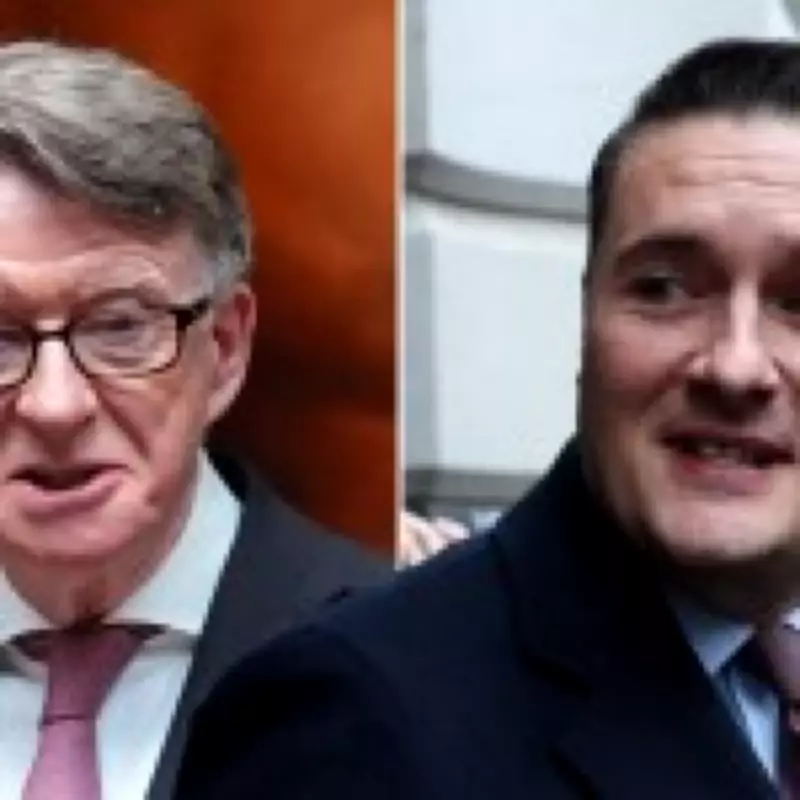
Health Secretary Takes Preemptive Action by Publishing Private Correspondence
In a bold political manoeuvre, Health Secretary Wes Streeting has released months of private WhatsApp and text message exchanges between himself and former US ambassador Lord Peter Mandelson. This preemptive strike is designed to quell mounting Westminster speculation about the nature and closeness of their relationship, which has become politically sensitive following Mandelson's association with the Jeffrey Epstein scandal.
Strategic Timing Amid Government Transparency Pledge
The release comes just days after the government committed to publishing a substantial tranche of files relating to Mandelson's controversial 2024 ambassadorial appointment. These documents were promised to include all communications between Mandelson and government ministers, along with messages involving Keir Starmer's former chief of staff Morgan McSweeney, who resigned abruptly on Sunday.
Prime Minister Starmer has stated this transparency exercise will illuminate how the Labour grandee repeatedly misled him and his team about the extent of his friendship with the disgraced financier Jeffrey Epstein. However, the Metropolitan Police has expressed concerns that immediate publication could compromise their ongoing investigation into Lord Mandelson, potentially delaying the official release.

Leadership Ambitions and Political Calculations
Streeting's decision to bypass this delay and publish his correspondence directly to Sky News has ignited fresh speculation about his leadership aspirations. Widely regarded as a potential successor should Keir Starmer be forced from office, the Health Secretary's move is being interpreted in Westminster as a demonstration of bold, decisive leadership.
Political observers note the action could serve multiple purposes: halting damaging rumours about his Mandelson links, subtly shifting attention from Starmer's precarious position, and presenting Streeting to Labour MPs as a politician willing to confront controversy head-on. The timing appears particularly significant following accusations – denied by his team – that Streeting encouraged Scottish Labour leader Anas Sarwar's dramatic intervention in the ongoing crisis.
Content Analysis: From Policy Critiques to Geopolitical Stances
The released messages, exchanged across twenty separate days between August 2024 and October 2025, reveal a relationship centred primarily on professional matters. Streeting emphasised to Sky News that the correspondence disproves allegations of regular social contact, stating: 'You would think from some of the things we've read over the weekend that I was having dinner with him every week, sought his advice on everything and anything. I've got nothing to hide.'
Their communications included sharing news articles and discussing professional opportunities like an Oxford University debate invitation. However, several exchanges contain politically sensitive material that provides insight into Streeting's private views.
In March 2025, Streeting concurred with Mandelson's assessment that government difficulties 'do not stem from comms,' implying policy choices rather than communication failures were causing problems. Expressing electoral concerns, Streeting warned: 'I fear we're in big trouble here – and I am toast at the next election. We just lost our safest ward in Redbridge to a Gaza independent. At this rate I don't think we'll hold either of the two Ilford seats.'
Perhaps most revealing are exchanges from July 2025 concerning UK recognition of Palestinian statehood. Streeting adopted a strikingly stronger position than any senior government figure has expressed publicly, stating Israel 'is committing war crimes before our eyes' and describing 'the most chilling and distressing scenes of calculated brutality against women and children.' He later characterised Israeli actions as 'rogue state behaviour' deserving of state-level sanctions.
Westminster Reaction and Containment Efforts
The political convenience of many messages has not gone unnoticed in Westminster circles. Streeting's strong pro-Israel constituency positioning and shared frustrations about government strategy resonate with many backbench Labour MPs, potentially bolstering his support base.

However, other ministers appear unlikely to follow Streeting's lead. Reports indicate they have been expressly forbidden from releasing their own Mandelson correspondence ahead of the official files publication, suggesting concerns about uncontrolled disclosures complicating both police investigations and political management of the escalating scandal.
This carefully calculated transparency exercise reveals much about contemporary political crisis management, leadership positioning, and the enduring challenges of managing associations in an era of instant communication and relentless scrutiny.