Starmer's US Ambassador Selection Failed Initial Security Vetting Process
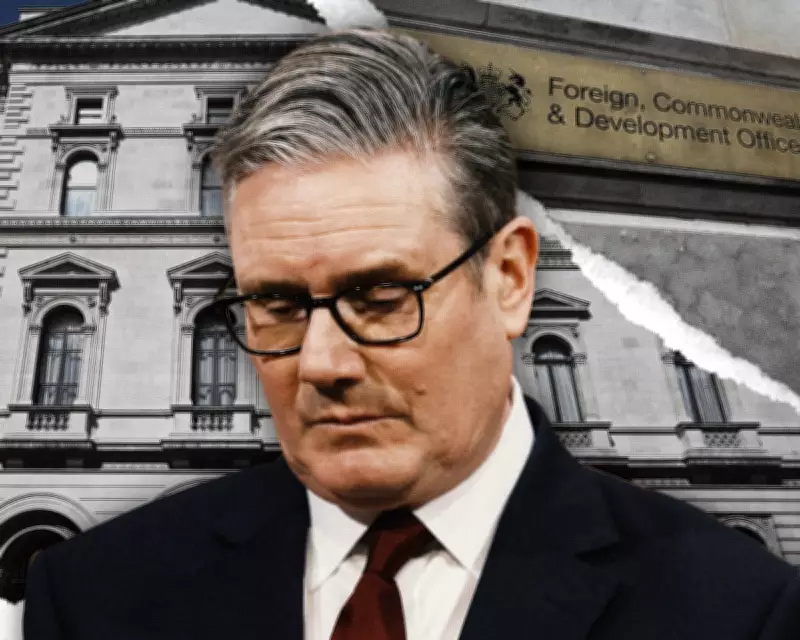
The Guardian has exclusively revealed this week that Prime Minister Keir Starmer's preferred candidate for the crucial role of UK ambassador to Washington initially failed the rigorous developed vetting process required for such a sensitive diplomatic position. This revelation has sent shockwaves through Westminster and intensified scrutiny of Starmer's leadership at a particularly vulnerable moment for his administration.
Growing Discontent Within Parliamentary Labour Party
While it still appears improbable that Starmer will face a formal leadership challenge immediately, even if Labour performs disastrously in next month's local elections, many of his own MPs now believe his departure has become inevitable. The question for them has shifted from "if" to "when" the prime minister will be replaced.
"It does seem incredible that he didn't know, but the problem is that it's quite possible as well," summarized one backbencher, responding to Downing Street's insistence that no one had informed the prime minister about his ambassador pick's failed security clearance.

Some Labour parliamentarians view the vetting fiasco as potentially terminal for a prime minister who has consistently presented himself as beyond reproach. "I can't see how he survives this," one MP stated bluntly. "I just don't think it's feasible for him to say he didn't know anything. I'm angry and really sad."
Multiple Factors Delaying Leadership Challenge
Despite this anger, the prevailing view within the Parliamentary Labour Party suggests that terrible election results on May 7th for Scottish and Welsh parliament elections, along with English council contests, will not immediately trigger Starmer's departure. Several interconnected factors appear to be protecting his position for now.
A significant consideration is the ongoing conflict in the Middle East. Since US-Israeli attacks on Iran began in late February, the UK has been a semi-participant and observer, however unwilling, and faces potential economic fallout. Changing leaders during wartime presents an unappealing image of instability.
Equally important was the moment in February when Scottish Labour leader Anas Sarwar called on Starmer to resign. Although this came to nothing, Labour MPs glimpsed the potential chaos of regicide and recognized the drawbacks of following the Conservative Party's pattern of leadership coups.
Furthermore, none of the probable challengers appear ready to make their move. Potential successors including Health Secretary Wes Streeting, former deputy leader Angela Rayner, and Manchester Mayor Andy Burnham (who isn't even in parliament to mount a challenge) have shown no immediate inclination to challenge Starmer's leadership.
Mounting Frustration Over Sacrificial Tendencies
These protective factors do little to alleviate the sheer despair many Labour MPs feel about Starmer and his allies repeatedly creating self-inflicted crises. Beyond concerns about haplessness and political drift, there are growing worries about No. 10's tendency to sacrifice others when things go wrong.
In the latest controversy, Olly Robbins and the Foreign Office have borne the brunt of criticism. One MP described Starmer as "almost like a Bond villain – he always manages to escape the scene before the explosion, but he's running out of people to push under the bus."
The same parliamentarian listed those they felt had already been sacrificed: "Ethnic minorities, colleagues, the soft left, even Morgan McSweeney." While prime ministerial politics can be brutal, there is a growing consensus that Starmer's willingness to jettison loyal supporters to protect himself is becoming a significant liability.
Limited Confidence in Damage Control Measures
There is little confidence that Downing Street's rapid announcement of yet another internal inquiry, coupled with the promise of a prime ministerial explanation to the Commons on Monday afternoon, will significantly improve the party's mood.
"Strategy is all Starmer and his allies cared about," one MP commented. "Monday will be a disaster given he can't even express genuine feeling."

While an immediate leadership challenge remains unlikely, increasing numbers of MPs are contemplating what will happen when the moment finally arrives. This consideration extends to both the 2024 intake of new parliamentarians and elements of the older guard.
As one MP explained: "There's a point at which the PLP always realizes that loyalty is akin to complicity. It's obvious the body count will rack up at the local elections."
Potential Turning Points on the Horizon
Some hope Starmer himself will reach a realization about his position, with one MP questioning whether the prime minister might accept that "he was just a caretaker – he's had his fun and it's time to enjoy other things in his life."
The timing of any potential leadership crisis depends on multiple factors, particularly developments in the Middle East. Many of Starmer's ministers, along with numerous MPs, acknowledge he has navigated a difficult course for the UK during the conflict relatively competently.
They have also noted his more robust responses to Donald Trump's White House. "The changed response to Trump hasn't been planned – it's just a natural response to events," one cabinet minister observed. "There comes a point where Trump says so many rude things that it would be almost strange to not hit back at least a bit."
If the Middle East conflict concludes relatively soon with limited economic damage, Labour's annual conference in late September could provide a catalyst for change. By that time, the party's scattered geographical and ideological groups will gather to mourn May's election results and look ahead to a general election less than three years away.
Electoral Realities and Polling Woes
It remains equally possible that Starmer will limp on longer, until another dismal set of local election results provides the final catalyst. Alternatively, as with Boris Johnson's demise, a seemingly minor scandal could finally tip the scales into outright rebellion.
The blunt political reality is that Starmer appears to be leading his party toward electoral disaster. The most recent YouGov polling places Labour in fourth position with just 17% support, a rating that hasn't exceeded 20% for six consecutive months. Nearly three-quarters of voters believe Starmer is performing poorly as prime minister.
"There's not a lot of love for us on the doorsteps and there's particularly not a lot of love for the prime minister," one MP reported wearily. "This is more than just midterm blues. And everyone knows it."
Olly Robbins represents just the latest in a series of high-profile exits under Starmer's tenure, adding to the growing perception of an administration struggling to maintain stability and direction amid multiple crises.