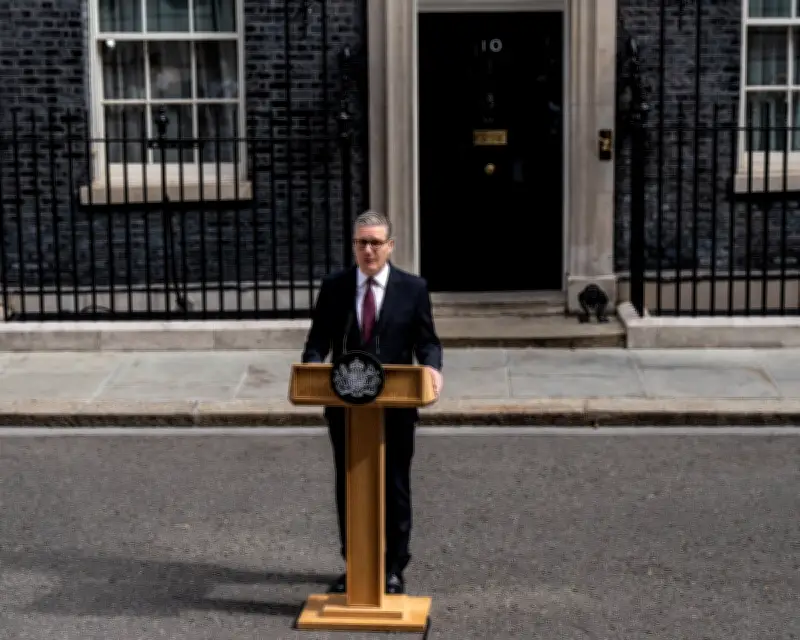
Keir Starmer has resigned as prime minister, bringing an end to his tenure and triggering a leadership contest within the Labour Party. The announcement, made on June 22, 2026, has sent shockwaves through the political landscape, with immediate questions about who will succeed him and whether a general election will be called.
Starmer's Resignation and Immediate Aftermath
In a statement outside Downing Street, Starmer said he would step down with immediate effect, citing personal reasons and a desire to allow fresh leadership to take the country forward. His resignation comes amid declining approval ratings and internal party divisions over key policies, including Brexit and economic reform.
According to constitutional experts, the resignation triggers a formal process. The monarch, King Charles III, will accept the resignation and invite the new Labour leader to form a government. However, until a successor is elected, Starmer remains prime minister in a caretaker capacity, though he is expected to delegate most duties to senior cabinet members.

Labour Leadership Contest Timeline
The Labour Party has announced that a leadership election will begin immediately, with nominations opening within days. The contest is expected to last around two to three months, following party rules. Candidates must secure the support of at least 20% of Labour MPs to stand, and the winner will be decided by a vote of party members and affiliated supporters.
Potential contenders include Deputy Prime Minister Angela Rayner, Shadow Chancellor Rachel Reeves, and former shadow cabinet members such as Emily Thornberry. Each will need to present a clear vision for the party's future, with key issues including the economy, public services, and Brexit's long-term impact.
Interim Government and Parliamentary Dynamics
During the leadership contest, the government will continue to function under Starmer's caretaker leadership, but major policy decisions are likely to be postponed. The opposition Conservative Party, led by Kemi Badenoch, has called for an immediate general election, arguing that the government lacks a mandate. However, Labour insiders insist that the party has a right to choose its own leader without an election.
Parliamentary arithmetic remains tight. Labour holds a slim majority of 12 seats, meaning any defections or by-election losses could threaten the government's stability. Political analysts suggest that if the new Labour leader cannot command confidence, a general election could be called later in 2026 or early 2027.
Public Reaction and Historical Context
Public reaction has been mixed. A YouGov poll conducted shortly after the resignation found that 45% of respondents thought Starmer was right to resign, while 38% believed he should have stayed. The resignation marks the first time a sitting Labour prime minister has quit mid-term since Harold Wilson in 1976.
Constitutional historian Dr. Jane Smith noted, "This is a significant moment for British politics. The process of choosing a new prime minister without a general election is always contentious, but it is perfectly constitutional. The key question is whether the new leader can unite the party and the country."
What Happens Next: Key Dates and Scenarios
The Labour Party is expected to announce the timetable for the leadership contest within a week. The winner will be announced in late August or early September. If the new leader struggles to assert authority, a vote of no confidence could be tabled by the opposition, potentially triggering a general election.
Meanwhile, the civil service has prepared contingency plans for an orderly transition. Cabinet Secretary Simon Case has briefed senior ministers on protocols for a change in leadership, ensuring continuity in government operations.
As the political drama unfolds, all eyes are on Westminster. The coming weeks will determine not only the future of the Labour Party but also the direction of British politics for years to come.