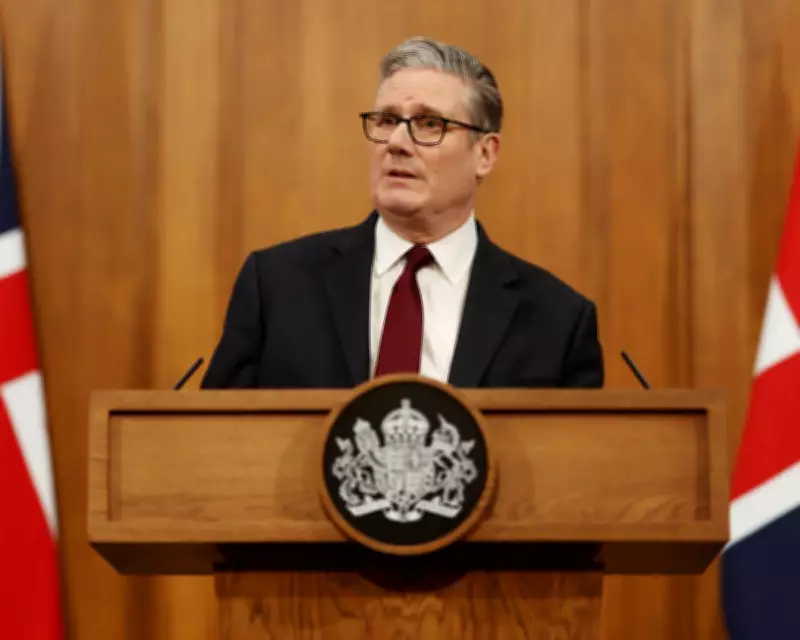
Starmer's Press Tormentors Show No Mercy in Iran Policy Criticism
Prime Minister Keir Starmer finds himself under relentless assault from right-wing media outlets, particularly regarding his cautious stance on the escalating Iran conflict. The criticism has reached such intensity that political observers now question whether the Labour leader should adopt a more confrontational approach or seek alternative channels to communicate directly with the British public.
Newspapers Amplify Accusations of Cowardice
Three major newspaper groups recently published front-page stories featuring dire warnings from the Israeli Defense Force about Iran's potential military capabilities against London. The Telegraph prominently featured Reform UK's Nigel Farage accusing Starmer of cowardice and alleging the Labour party had shifted toward "a very extreme hard-left, Islamist-allied position." The Express echoed similar sentiments with a headline highlighting former US President Donald Trump's mockery of the British leader.
Even the Sunday Times repeated Israeli claims about missile capabilities, though buried deeper in their coverage was the qualification that "it is not known for certain that Iran possesses a missile capable of reaching Diego Garcia," let alone London, which lies approximately 400 miles further away. The consistent media portrayal depicts Starmer not as a former human rights lawyer grappling with the legality of military intervention, but as an indecisive leader lacking courage.

Historical Context and Shifting Media Landscape
Labour prime ministers have traditionally faced hostility from media outlets owned by wealthy individuals concerned about potential tax increases. However, Starmer confronts additional challenges in today's rapidly evolving media environment. The 24/7 news cycle prioritizes controversy and sensationalism to drive engagement, creating an inhospitable atmosphere for a leader whose communication style often appears measured and deliberate rather than explosive and immediate.
British broadcasters, despite their impartiality requirements, have demonstrated increasing frustration with Starmer's approach. The BBC's tradition of employing someone known affectionately as "Gobby" to shout provocative questions outside 10 Downing Street has evolved into a broader phenomenon where numerous journalists seem tasked with daily criticism of the prime minister, often seeking viral moments in an increasingly competitive content landscape.
Self-Inflicted Communication Challenges
Some of Starmer's difficulties stem from his own communication style rather than purely external hostility. The prime minister frequently employs similar tones and delivery regardless of whether he's discussing international conflict or everyday matters, making him vulnerable to caricature and satire. His initial policy of media appeasement has yielded limited benefits, with hostile outlets showing no signs of moderating their criticism despite government indications that press regulation reforms won't be pursued.
The Daily Mail recently thundered in an editorial: "Can there be anyone at all left in the country who still believes and trusts this degenerate government?" This uncompromising tone suggests that attempts at conciliation have failed to produce either goodwill or breathing space for the administration.
Potential Strategies for Narrative Control
Former party advisers who worked with Tony Blair suggest Starmer could benefit from adopting a more confrontational approach with aggressive questioners. They note that his politeness, while commendable, may be misinterpreted as weakness in today's combative media environment. Others recommend establishing rapid-response units to counter negative interpretations of government statements more effectively.
Some strategists propose bypassing traditional media entirely by making major announcements through social media platforms and conducting regular YouTube broadcasts. This approach, modeled somewhat on Donald Trump's communication methods, would force media outlets to report on Starmer's direct messaging rather than filtering it through their own interpretive lenses. However, this strategy carries risks, as demonstrated by recent Saturday Night Live-style satire that mocked the prime minister during its inaugural UK episode.

The Substance Versus Style Dilemma
Tom Baldwin, Starmer's biographer, argues that the prime minister doesn't need to fundamentally change his personality but should stop attempting to be someone he's not. "Being some sort of inauthentic 'insurgent' is right now the worst thing he could possibly be," Baldwin suggests, emphasizing that Starmer will always prioritize substance over superficial style.
The fundamental challenge remains Starmer's difficulty in transforming his policy achievements and principled positions into compelling narratives that resonate with the electorate. While he has pushed back against Trump on various issues including Greenland, tariffs, and medical recommendations, he has struggled to weave these actions into a coherent story that captures public imagination.
To counter hostile media narratives effectively, Starmer needs both better stories and more sophisticated distribution strategies. Developing these communication capabilities isn't peripheral to his government's mission but central to its ability to govern effectively and maintain public confidence during challenging international circumstances.