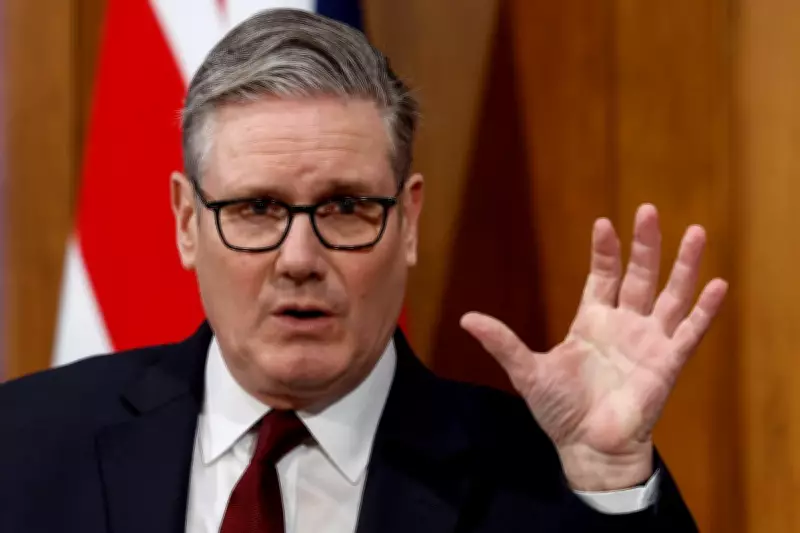
Prime Minister Sir Keir Starmer has issued a stark warning to Parliament about the severe economic repercussions facing the United Kingdom due to the ongoing conflict in Iran. Addressing MPs on Monday, Starmer emphasized that the government's primary stance remains to avoid direct involvement in the war, but he acknowledged that the economic fallout is already being felt across the nation.
Immediate Economic Impact Visible Nationwide
Starmer pointed out that the effects of the Iran war are clearly visible on every petrol forecourt in the country, with rising fuel prices directly impacting consumers and businesses. The conflict, which lasted over a month before a ceasefire was announced last week, has disrupted global energy markets, leading to increased costs for oil and gas.
He highlighted that the Brent crude oil price surged above $100 per barrel on Monday, while UK gas prices remain elevated compared to pre-war levels. These increases are contributing to broader inflationary pressures, which economists warn could hit the UK harder than other advanced economies, potentially stunting growth and increasing living costs.

Critical Focus on Strait of Hormuz
A central concern for Starmer is the Strait of Hormuz, a vital maritime passage through which approximately one-fifth of the world's oil and gas supplies, along with other essential materials, are transported. The Prime Minister is advocating for a toll-free and safe reopening of this critical trade route, rejecting any conditions or tolls imposed by Iran.
"All of the leaders that I met were crystal clear that freedom of navigation is vital and must be restored," Starmer stated. "No conditions, no tolls and no tolerance of Iran holding the world's economy to ransom. Because, Mr Speaker, the impact of Iran's behaviour in the Strait is causing untold economic damage."
International Response and Summit
In response to the crisis, Starmer and French President Emmanuel Macron will convene an international summit this week to focus on reopening the Strait of Hormuz. The goal is to reassure industry officials from energy, shipping, and insurance sectors, who are currently hesitant to send vessels through the region until safety is guaranteed.
Starmer noted that these officials will not deploy ships until they are confident it is safe to do so, underscoring the broader economic paralysis caused by the conflict. This hesitation exacerbates supply chain disruptions and could lead to prolonged economic strain.
Geopolitical Tensions and Ceasefire Uncertainty
The situation remains volatile, with the two-week ceasefire adding to the confusion around the Strait of Hormuz's status. Vice-President JD Vance left peace negotiations in Pakistan without securing a full deal, leaving the ceasefire in a precarious state.
Complicating matters further, Israel has continued its attacks in southern Lebanon against Hezbollah, an Iran-backed militant group. Starmer condemned these strikes as "wrong" and warned that "the region remains on edge," highlighting the risk of escalation that could deepen economic turmoil.
US Blockade and Iranian Taunts
Amidst this, President Trump has warned that US forces will attack Iranian ships if they "come anywhere close" to the naval blockade, promising strikes that would be "quick and brutal." Despite the US blockade, traffic across the Strait remains largely clogged, disrupting global trade flows.
Social media accounts linked to Iranian leaders and international offices have taunted Trump over the surge in energy prices, using the economic disruption as a geopolitical tool. This adds a layer of psychological pressure to the already tense situation, influencing market sentiments and investor confidence.
Long-Term Economic Consequences
Starmer concluded with a sobering prediction: "We all know the consequences will be significant and that they will last longer than the conflict itself." He insisted that the UK is not being dragged into the war, but the economic damage—from inflated energy costs to trade disruptions—poses a sustained threat to the nation's financial stability.

As the UK navigates these challenges, the Prime Minister's warnings underscore the interconnectedness of global conflicts and domestic economies, with the Iran war serving as a potent reminder of how geopolitical events can translate into tangible economic pain for citizens and businesses alike.