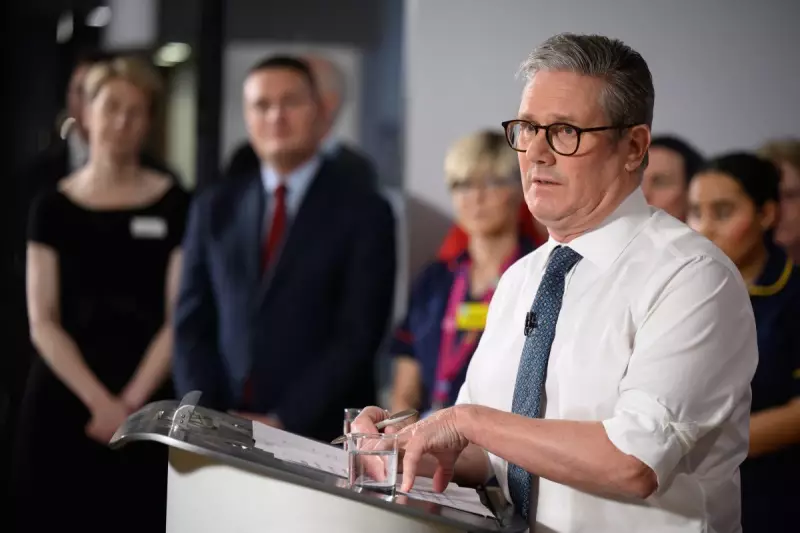
Prime Minister Sir Keir Starmer has made a defiant public pledge that he will still be in Downing Street this time next year, directly confronting growing speculation about challenges to his leadership from within the Labour Party.
Defiance Against "Chopping and Changing"
In an interview with the BBC's Laura Kuenssberg, Starmer argued that frequent leadership changes are not in the national interest. He pointed to the political instability under the previous Conservative government, which had three different prime ministers between 2020 and 2024.
"Under the last government we saw constant chopping and changing of leadership, of teams—it caused utter chaos," Starmer stated. "It's amongst the reasons that the Tories were booted out so effectively at the last election. Nobody wants to go back to that." He concluded emphatically: "I will be sitting in this seat by 2027."

Mounting Pressure and Potential Challengers
This bold declaration comes as Starmer faces significant political headwinds. Recent opinion polls have been poor, and discontent among Labour backbenchers is reportedly growing. The party is also braced for a potentially difficult set of local election results in May 2026, outcomes that analysts predict could spark fresh calls for a change at the top.
Key figures are frequently mentioned as potential successors:
- Wes Streeting, the Health Secretary, was the subject of reports in The Sunday Times suggesting a leadership bid could be launched as soon as January. While Streeting has denied such plans, rumours continue to circulate.
- Andy Burnham, the Mayor of Greater Manchester, has refused to rule out a future bid. However, his current mayoral tenure runs until 2028, which would prevent him from standing for a parliamentary seat before then.
- Political commentators have also suggested that Deputy Prime Minister Angela Rayner or Foreign Secretary Shabana Mahmood could pose a threat to Starmer's position.
A Promise of Delivery Amid Economic Strain
Starmer told Kuenssberg he was elected on a five-year mandate to transform the country and is focused on delivering long-term improvements, not "slogans or easy answers". He acknowledged public frustration, saying he was "not surprised that people are frustrated and have lost trust in politics."
This interview followed his New Year message, where he admitted life was still "harder than it should be" for many but promised "a sense of hope" would emerge in the coming months. However, this optimism is tempered by economic forecasts.
According to the latest Office for Budget Responsibility predictions, workers are likely to be poorer in real terms by the 2030-2031 tax year. This is largely due to Chancellor Rachel Reeves' decision to freeze income tax thresholds until 2031, dragging more people into higher tax bands as wages nominally rise.
The policy means someone earning £50,000 could end up £505 worse off. Robert Colville of the Centre for Policy Studies highlighted this, writing in The Sunday Times that Labour's welfare expansions and the state pension triple lock are "being paid for by making millions of workers poorer."
Starmer's immediate battle, however, remains within his own party. His unequivocal statement is a clear attempt to shore up his authority and frame any internal dissent as a step towards the instability he claims voters rejected.