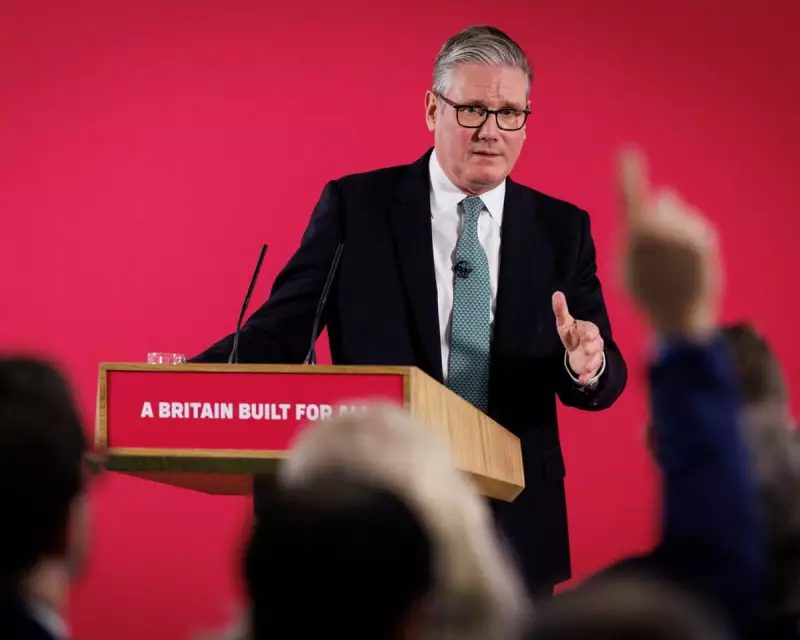
In a bid to regain control of the political narrative, Labour leader Sir Keir Starmer delivered his own version of the budget's story on Monday, attempting to shift focus away from a tumultuous week of accusations and internal confusion. The speech, delivered at a London community project, was a direct effort to frame the debate on his terms, following what critics have labelled a "budget megashambles" marked by leaks, U-turns, and fierce Tory attacks.
A Narrative of Chaos and a Leader's Rebuttal
The days leading up to and following Chancellor Rachel Reeves's budget have been dominated by a sense of disarray. Months of conflicting briefings and a confused timeline regarding the Office for Budget Responsibility's report created an opening for opponents. Conservative figures, notably Business Secretary Kemi Badenoch, seized the opportunity, accusing Reeves of misleading the country and market manipulation—claims Starmer dismissed as "deranged" and desperate.
Starmer's central argument was that the budget was designed to unlock Britain's potential and mend public services broken by 14 years of Tory rule. He framed it as a moral mission, placing particular emphasis on a pledge to lift 500,000 children out of poverty, though he faced immediate scrutiny over his party's previous stance on the two-child benefit cap.

"This was the story of the budget," Starmer asserted, defending the decision to raise taxes as a necessary alternative to cutting public services. He placed blame for Britain's low productivity and weak growth squarely on the Conservatives, arguing he was now tasked with clearing up their mess.
The Spectre of Self-Sabotage
Despite Starmer's efforts, the event underscored a persistent theme haunting his leadership: a perceived propensity for self-inflicted wounds. Political observers are beginning to question whether the party's struggles are mere ring-rustiness from a long period in opposition or something more ingrained—a "death wish" or an instinct for self-sabotage.
This pattern, from earlier controversies over freebies and benefits U-turns to the current budget chaos, has repeatedly allowed the government's substantive messages to be drowned out. As Starmer spoke of fiscal headroom and future growth, journalists' questions persistently returned to the process: had the chancellor misled the public about a "black hole" in the finances?
Starmer's defence was firm but did little to quell the narrative of a party struggling with the basic mechanics of governance. The episode reinforced the impression that chaos is somehow hardwired into the current Labour operation, forcing even its successes to be viewed "through a glass darkly."
Political Fallout and the Road Ahead
The fallout has created clear battle lines. Starmer used his speech to attack the Tory narrative of a "Benefits Street" budget, pointing out that two-thirds of welfare payments go to working people and blaming the Conservatives for ballooning the welfare bill. He sought to draw a stark moral contrast with Kemi Badenoch, highlighting the 900,000 children pushed into poverty under Tory policies.
However, the political damage from the shambolic rollout may linger. The Conservatives have been gifted a potent line of attack, focusing on competence and trust, while some within Labour's own ranks may feel uneasy about the leadership's strategic direction. Starmer concluded with a note of hopeful, if doubtful, optimism, suggesting the worst was over and the party was "looking for a reason to believe in itself."
Whether this attempt to tell his own "story of the budget" can cut through the noise of the past week remains to be seen. For now, the Labour leadership finds itself battling not only political opponents but also a growing perception of a party at war with its own ability to govern effectively.