In a dramatic and unprecedented intervention, Labour leader Sir Keir Starmer has personally shouldered the blame for considering a breach of the party's manifesto, as he moves to bind himself irrevocably to his embattled Chancellor, Rachel Reeves.
A Defence of the Chancellor
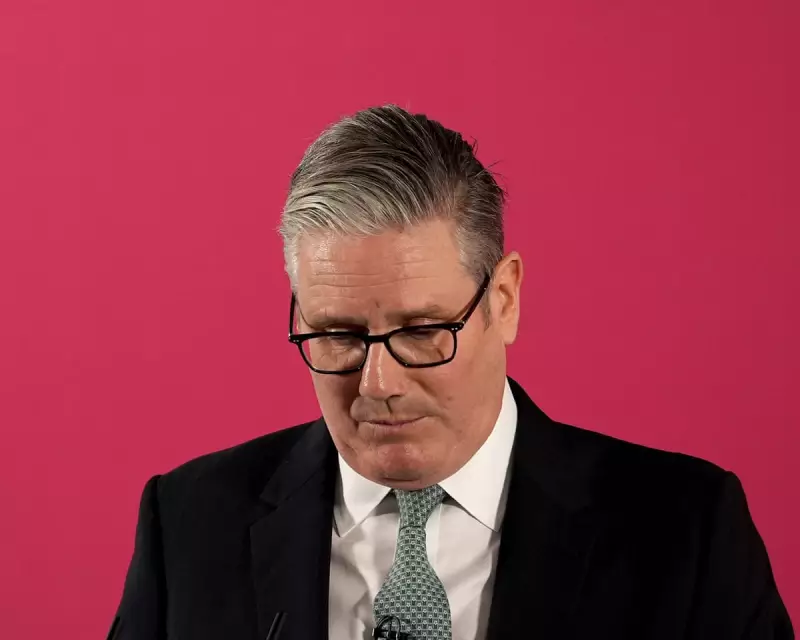
Starmer assembled journalists at a community centre in Southwark on Monday, ostensibly to refocus attention on the budget's core measures: a cut to energy bills and the lifting of the controversial two-child benefit cap. However, the conference's defining moment came as he mounted a fierce defence of Reeves against accusations of misleading the public over fiscal forecasts.
"There was no misleading – I simply don’t accept it. And I was receiving the numbers," Starmer stated emphatically. He went further, taking the highly unusual step of revealing that he himself had contemplated authorising a breach of Labour's manifesto pledge not to raise income tax. "I didn't want to get to that place, but I recognised we might have to," he admitted, framing the ultimately rejected tax rise as a potential necessity.

The Real Context: Political Survival
The decision to step back from that brink cannot be understood in isolation. The political context is one of intense pressure, with Conservative figure Kemi Badenoch having called for Reeves's dismissal three times since October. More critically, Starmer's own leadership has faced renewed internal threats following briefings against Health Secretary Wes Streeting.
Prime ministers almost never sack their chancellors, a move that historically precipitates their own downfall. As former Chancellor Kwasi Kwarteng warned Liz Truss, such an act signals the end. Starmer is acutely aware that his political fate is now inextricably linked to Reeves's. Ditching her would inevitably shine a harsh light back on the true, survivalist motive for avoiding the manifesto breach.
The resignation of Richard Hughes, chair of the Office for Budget Responsibility (OBR), over a cybersecurity failure that led to a budget leak, has intensified scrutiny. While Hughes took responsibility for the security lapse, some in Westminster argue Reeves should similarly answer for the 'spin' surrounding the OBR's forecasts, which the body insists did not drive the income tax decision.
A Budget of Stagnation and Self-Preservation
Beneath the political manoeuvring lies a deeper concern for many Labour MPs. For the more economically literate and thoughtful within the Parliamentary Labour Party (PLP), this budget appears fundamentally lacking in ambition, with self-preservation at its core rather than a bold plan for growth.
While the end of the two-child limit is welcomed, there is "precious little there to give any of the more growth-minded MPs room for hope," especially amid dire predictions of the worst parliament on record for living standards. The fear is that the government has chosen a path of managed stagnation for ordinary voters.
Starmer spent the hour-long session repeatedly underlining that the budget choices were his own, while also expressing "barely concealed fury" at the OBR, criticising the timing of a productivity downgrade and the "serious error" of the leak. His strategy is clear: present a unified front with his chancellor and deflect blame onto the independent fiscal watchdog.
The ultimate risk to Starmer and Reeves, however, may not come from Opposition attacks but from within. It is the restless PLP, not Kemi Badenoch, that represents the most significant threat to their future, as patience wears thin for a government perceived as prioritising its own survival over transformative economic change.