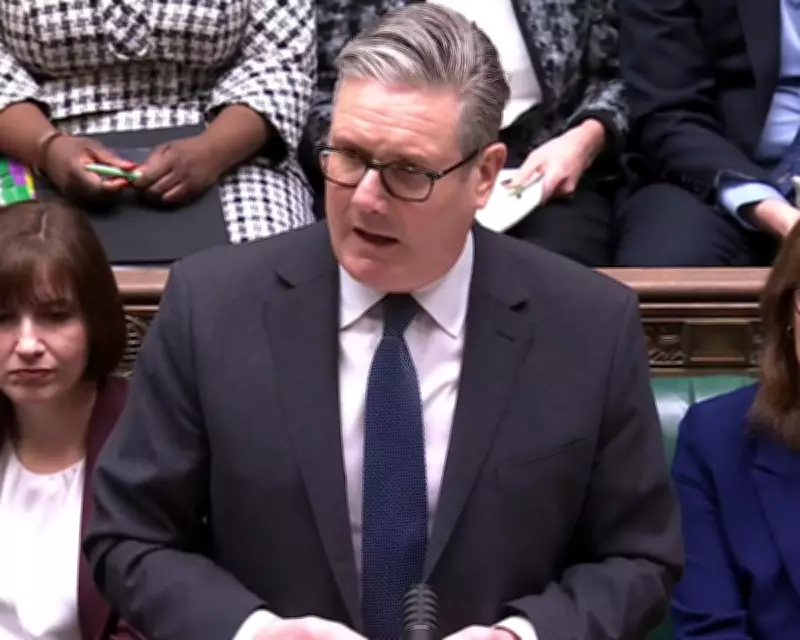
Starmer Condemns Opposition Leaders for Iran War Position Reversals in Heated Parliamentary Session
Prime Minister Keir Starmer launched a scathing attack on Kemi Badenoch and Nigel Farage during a raucous Prime Minister's Questions, accusing both of executing dramatic U-turns on their support for potential UK involvement in the war with Iran. The Labour leader asserted that if the Conservative and Reform leaders had been in charge, Britain would currently be engaged in armed conflict.
'The Mother of All U-Turns' on Critical National Security Decision
Starmer specifically targeted Badenoch, the Conservative opposition leader, for what he termed "the mother of all U-turns" regarding military engagement. He highlighted that just last week, Badenoch had repeatedly pressed him on why Britain wasn't launching offensive strikes against Iranian missile bases, questioning why the UK was asking allies to do what it should be doing itself.
"If I'd asked her last week, her position would be, we support the initial strikes and we want to join the war," Starmer declared to the Commons. "This week, she says, we don't want to join the war. That is the mother of all U-turns on the single most important decision a prime minister ever has to take, whether to commit the United Kingdom to war or not."

Amid cheers from Labour backbenchers, Starmer added that Badenoch had "utterly disqualified herself from ever becoming prime minister," though he noted thankfully she never would.
Defending UK Armed Forces and Their Middle East Operations
The prime minister provided detailed information about British military activities in the region, telling MPs that UK armed forces were "working day and night to protect British lives and British interests in the Middle East." He revealed that the Royal Air Force had flown more than 230 hours of defensive operations across multiple countries and successfully intercepted numerous drones.
"We thank them for their courage and for their professionalism," Starmer stated, before turning his criticism to what he characterized as Badenoch's disrespect toward military personnel.
He referenced an interview where Badenoch allegedly suggested RAF personnel were "just hanging about," countering: "Let me tell you what they've been doing: flying sorties in seven of the 10 countries in the region, day and night, taking out incoming strikes, protecting the lives of others whilst risking their own. If she had any decency, she'd get up and she would apologise."
Domestic Concerns: Energy Prices and Economic Impact
The parliamentary clash extended beyond military matters to domestic economic concerns. Badenoch used her questions to repeatedly challenge Starmer on petrol prices, asking why he believed "now is the right time to increase the cost of petrol?" Starmer denied any government plans to increase petrol costs, confirming fuel duty would remain frozen until September.
Liberal Democrat leader Ed Davey highlighted the broader economic impact on British families, noting they were experiencing rising petrol prices, increasing mortgage rates, and more expensive fixed energy deals "all because of a war they did not start and do not support."
Davey criticized both Conservative and Reform leaders for competing to be "Donald Trump's biggest cheerleader" and commended Starmer for rejecting their "costly warmongering." Starmer agreed, emphasizing that "last week, they were urging us to join. If they had been leading the country, we'd be at war."
Addressing Energy Bill Concerns and Future Protections
The discussion turned to looming energy bill increases, with Davey calling on Starmer to guarantee that energy bills wouldn't rise by hundreds of pounds in July when the next quarterly price cap takes effect. Analysts have warned that household energy bills could increase by approximately £160 annually this summer following market disruptions caused by the Iran conflict.
Starmer sought to reassure households that the current price cap remains in place until July and that his government was actively working with the energy sector and international allies to prevent significant bill increases.

"We are working with the sector and with others and with allies to do everything we can to make sure those energy bills don't rise," the prime minister stated. "We're working around the clock on that. The most important thing, the most effective thing we can do, is to work with our allies to find a way to de-escalate the situation."
The fiery PMQs session underscored deep political divisions over national security strategy while highlighting the interconnected challenges of international conflict and domestic economic stability facing the United Kingdom.