
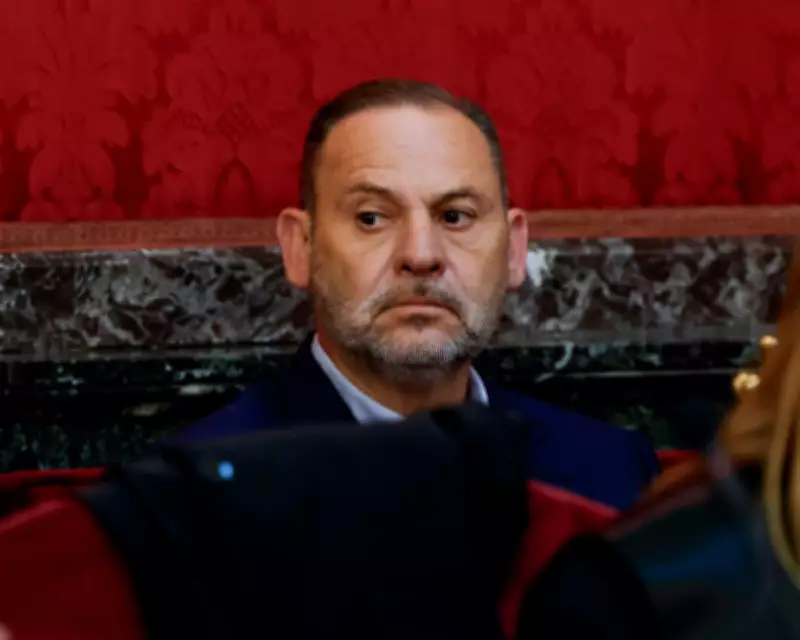
Spain's Political Landscape Rocked by Simultaneous Corruption Trials
Spain's political establishment faces a significant moment of reckoning as two separate corruption trials involving former senior figures from the country's main political parties unfold simultaneously in Madrid. The timing could not be more delicate, with regional elections in Andalucía approaching next month and a general election scheduled for next year.
The Socialist Party's Mask Scandal
At the Supreme Court, the so-called "caso Koldo" or "masks case" has commenced, focusing on allegations that former transport minister José Luis Ábalos and his former aide Koldo García received kickbacks on public contracts for sanitary equipment during the COVID-19 pandemic. The businessman Víctor de Aldama, who has admitted involvement in the alleged scheme, is also on trial.
Ábalos and García, who deny all charges, face potential sentences of 24 and 19 years respectively, while Aldama could receive seven years. This trial represents just one of several scandals that have recently enveloped Prime Minister Pedro Sánchez's administration and inner circle.
Although Sánchez himself has not been accused of wrongdoing, his wife Begoña Gómez awaits trial over accusations she used her influence to secure sponsors for a university course she ran. His brother David Sánchez will face trial next month over allegations he received preferential employment from a socialist-led council in Badajoz in 2017.
The prime minister has described these cases against his family as a "harassment and bullying operation" and maintains their innocence. However, any perception of graft threatens to undermine Sánchez's original promise to eliminate corruption from Spanish politics when he took office nearly eight years ago.
The Conservative Party's Espionage Allegations
Meanwhile, at Spain's highest criminal court, the Audiencia Nacional, former interior minister Jorge Fernández Díaz stands trial for allegedly orchestrating an extrajudicial operation to spy on Luis Bárcenas, a former People's Party treasurer who threatened to expose corruption within the conservative party.
Fernández Díaz, who served under former Prime Minister Mariano Rajoy from 2011 to 2016, denies any knowledge of a plot to spy on Bárcenas. He faces charges including embezzlement, concealment, and privacy breaches, with a potential 15-year sentence if convicted.
Bárcenas, who was eventually jailed for 33 years in 2018 for fraud and money laundering, has repeatedly claimed that high-level PP officials knew about illegal party financing. In a recent interview, he suggested that a spying operation "of this nature could not have been carried out without the knowledge of the highest levels of the party."
Both Rajoy and former PP secretary-general María Dolores de Cospedal are scheduled to give evidence at Fernández Díaz's trial, ensuring continued scrutiny of the conservative party's past leadership.
Political Implications and Electoral Consequences
The simultaneous trials present significant challenges for both major parties as they prepare for crucial elections. The Socialist Party, despite its efforts to highlight economic achievements including reaching 22 million social security contributors for the first time in Spanish history, must contend with damaging allegations against former close associates of the prime minister.
The People's Party, while attempting to capitalize on the Socialist Party's difficulties, faces its own embarrassing court proceedings that recall previous corruption scandals. The party's leadership had hoped to focus public attention solely on the Socialist Party's troubles, but the Fernández Díaz trial ensures both parties remain under judicial scrutiny.
These legal proceedings revive memories of 2018, when corruption allegations ultimately led to Rajoy's removal from office through a no-confidence motion led by Sánchez. That historical precedent underscores how much can depend on the outcome of a single court case in Spanish politics.
As both trials progress through Spain's judicial system, they threaten to dominate political discourse during a critical election period, testing voters' tolerance for political corruption and potentially reshaping Spain's political landscape for years to come.




