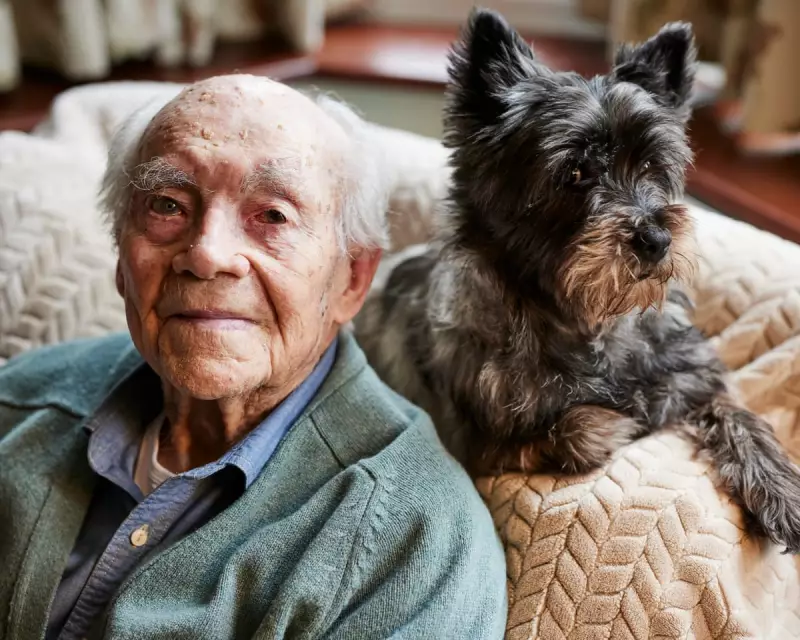
Sir Patrick Duffy, a former Labour minister and one of his party's leading authorities on defence during the Cold War, has died at the age of 105. His political career spanned a quarter of a century, though he spent 19 of those years in opposition.
From Wigan to Westminster: A Life of Service
Born in Wigan on 17 June 1920 to Irish parents from County Mayo, Patrick Duffy's early life was humble. His father was a miner, and the family later moved to Rossington near Doncaster. A devout Catholic and altar boy, his education was partly funded by a disability pension received after he was badly injured during six years of service with the Royal Navy and Fleet Air Arm in the Second World War.
This period also solidified his Irish identity, which would deeply influence his future politics. He later studied at the London School of Economics, earning a BSc and a PhD, and also attended Columbia University in New York.

A Political Career Forged in Adversity
Duffy's path to Parliament was not straightforward. He first stood for election in Tiverton, Devon, in 1950, while working as a lecturer at the University of Leeds. He was successfully elected on his fourth attempt, winning a by-election in Colne Valley, West Yorkshire, in 1963. He held the seat by a mere 187 votes in the 1964 general election but lost it in 1966.
After returning to academia, he found a safe Labour seat in Sheffield Attercliffe in 1970, which he represented until his retirement in 1992. In government, he served as Parliamentary Private Secretary to Defence Secretary Roy Mason (1974-76) before being appointed as the junior minister with responsibility for the Royal Navy.
A Staunch Atlanticist and Independent Voice
An economist by training and an Atlanticist by conviction, Duffy was a fervent European for most of his life, though he supported Brexit in 2016, believing the eurozone had made the EU impractical. He was never afraid to dissent from party lines, most notably when Labour adopted a unilateral defence policy in the early 1980s, a stance at odds with his role in the NATO Parliamentary Assembly.
After Labour's 1979 defeat cost him his ministerial post, he was appointed to the NATO assembly, serving as its President from 1988 to 1990. This role earned him a knighthood in 1991, recommended by Conservative Prime Minister John Major after Labour leader Neil Kinnock refused to nominate candidates.
His independent streak saw him face a deselection attempt by local party activists in the 1980s, which he survived by just five votes. A committed Catholic, he voted against abortion, embryo research, and Sunday trading.
He was also forthright on Irish issues, criticising Tory policy in Northern Ireland during the 1981 hunger strikes, advocating for the Birmingham Six, and condemning the SAS killings in Gibraltar in 1988. He voted against the Anglo-Irish Agreement, opposing the partition of Ireland.
After leaving Parliament, Duffy resumed academic work in the US and at UK universities. He was a dedicated pilgrim, walking to shrines in Walsingham, Croagh Patrick in Mayo, and Santiago de Compostela. In 2013, he published his autobiography, Growing Up Irish in Britain and British in Ireland. Sir Patrick Duffy died on 2 January 2026. He is survived by his sister, Patricia.