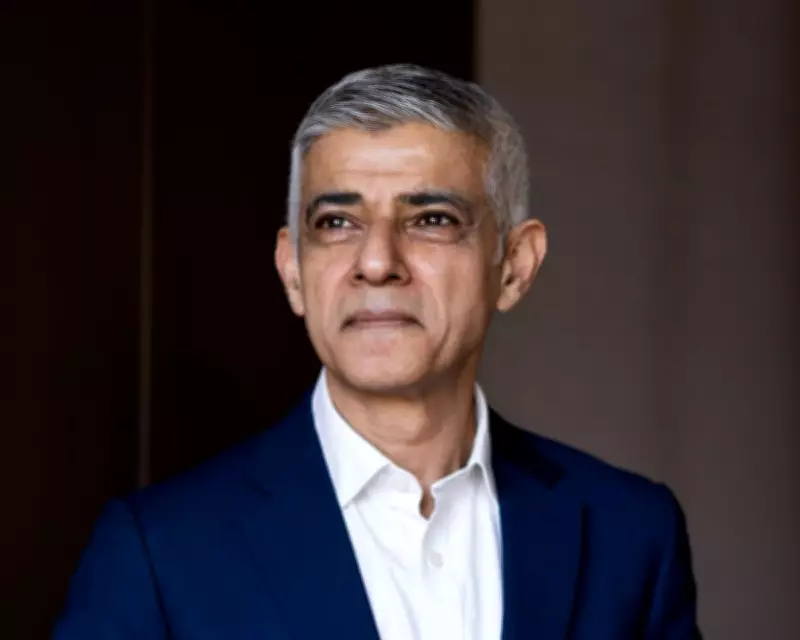
When Sadiq Khan was first elected as mayor of London 10 years ago, Barack Obama was US president, the UK was still in the European Union, and Leicester City had just won the English Premier League. Since then, Donald Trump has become a two-time US president, the UK has had six prime ministers, and Brexit has reshaped the country. London has faced terror attacks and the Grenfell Tower fire. Through it all, Khan, the son of a bus driver from south London, has remained a constant figure. He has served longer than either of his predecessors, Ken Livingstone and Boris Johnson, and easily defeated his latest Tory challenger.
Coalition Building
From his office overlooking the Thames, Khan says the biggest lesson he has learned is to be a “coalition builder.” “I’m somebody who’s quite pugnacious. I used to be a litigation lawyer, so I’m quite adversarial,” he says. “But my experience as mayor has taught me that actually working together achieves far more.” He notes that his “winning coalition” includes “Tory remainers, Greens, Lib Dems, Labour supporters.” “It is really important to say I am all in favour of building a coalition of the willing … if we have a similar north star, the fact that you are from a different tribe to me, that should be by the by. Let’s work together because we love this city.”
Facing Criticism and Abuse
Khan, London’s first Muslim mayor, has faced a torrent of racist abuse, including repeated attacks from Donald Trump, who called him a “terrible, terrible mayor” and claimed London was heading toward sharia law. Khan hit back, accusing Trump of being “racist, sexist, misogynistic and Islamophobic.” He says London’s diversity is an affront to nativists. “If you’re a nativist, you believe in mono-ethnicity, you believe in mono-religion, then London is the antidote and the antithesis, because we are diverse, we are pluralistic, we are liberal and we are incredibly successful on any objective criteria.” But he accepts such attacks take a toll: “It is not nice. It has a personal cost to me and my family and my staff.”

Environmental Record
Khan highlights his environmental achievements. Before his first election, he pledged to extend the ultra-low emission zone (Ulez), plant 2 million trees, build cycle lanes, introduce electric buses, divest from fossil fuels, and pedestrianise Oxford Street. Ten years on, Ulez covers all of Greater London, 640,000 new trees have been funded, the cycle network has quadrupled, electric buses are widespread, the pension fund is largely divested, and Oxford Street will be fully pedestrianised by summer. Beavers, otters, and white storks have returned to London. Khan says, “I’m just so proud that we have put environment front and centre. … It would take the harshest critic not to say we are a greener, safer, fairer city.”
Expert Praise and Challenges
Experts agree Khan’s environment record is impressive. In 2019, King’s College London estimated it would take 193 years to meet NO2 limits, but last year London fell within legal limits for the first time since 2010. Khan faced severe opposition to the 2023 Ulez expansion, with no support from the Conservative government, national Labour, Liberal Democrats, or Reform. “So we built a coalition because of the urgency … and we’ve done it.”
Concerns About National Labour
After recent local elections and Labour’s defeat by the Greens, Khan worries the national Labour party is on the wrong track. He says denigrating Greens as extremists turns off progressive voters. “The national Labour party did incredibly well in July 2024, winning a landslide in the general election. That was built on a coalition of progressives wanting a party that was not the Conservatives – a party that would take on vested interests whether they are Donald Trump or the fossil fuel companies. … To denigrate them is utterly counterproductive. … We need to treat people and their votes with more respect than that … and we need to work together to build those crucial coalitions.”

Future Challenges
Despite achievements, challenges remain: climate change brings more flooding, extreme heat, and wildfires. The Silvertown tunnel decision is controversial, and PM2.5 pollution remains above WHO guidelines due to wood-burning stoves. Khan agrees there is no space for complacency. “I’m impatient for change,” he says. “I’m ambitious for this city.” He plans to clean up waterways, reduce SUVs, and make London the world’s green finance capital. As he enters his second decade, Khan, who still runs five miles most mornings, shows no signs of slowing down. “London is a case study in hope,” he says. “We’re a city that, in the last 10 years alone, has gone through Brexit … we went through the pandemic, we’ve suffered the consequences of austerity and the mini-budget. We had four terror attacks in 2017. We had Grenfell Tower in 2017. But the history of London is one where we bounce back, we bounce back stronger.”