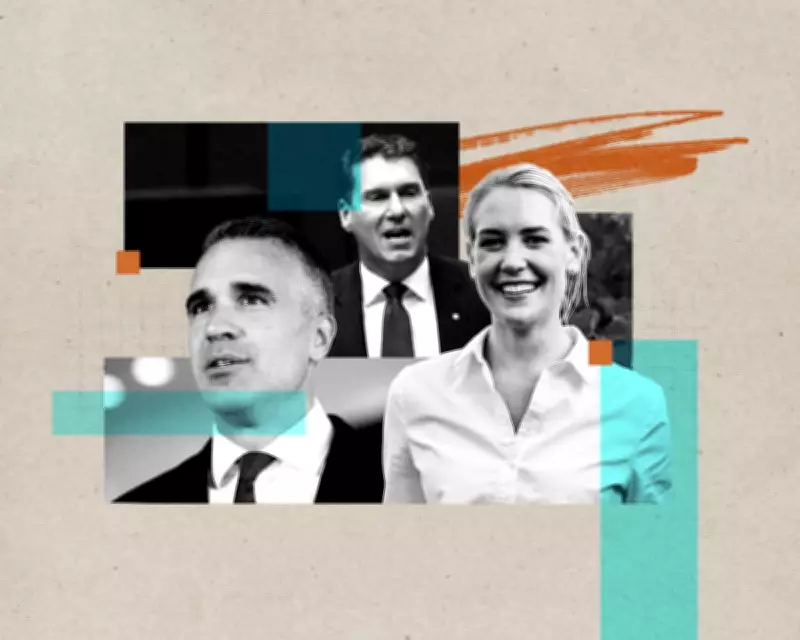
South Australia Election: Liberals Face Humiliation as One Nation Surges
South Australia is heading to the polls on March 21 in a state election that could deliver a historic humiliation for the Liberal party while testing the electoral strength of the right-wing One Nation movement. With Labor under Premier Peter Malinauskas appearing set for a colossal victory, political attention has shifted to the dramatic collapse of Liberal support and the surprising surge of Pauline Hanson's party.
Polling Points to Potential Liberal Wipeout
The latest Newspoll reveals devastating numbers for the South Australian Liberal party, showing their primary vote at just 14% - a level that political analysts suggest could leave them without a single seat in the 47-seat House of Assembly. Meanwhile, One Nation has surged to 24% in the same poll, with Labor commanding 44% of the primary vote. This represents a remarkable reversal of traditional political dynamics in the state.
Liberal leader Ashton Hurn, who stepped into the leadership just 100 days before the election, has described her challenge as "Mount Everest" rather than the more modest "Mount Lofty" hiking trail near Adelaide. Hurn entered her campaign launch to the strains of Ain't No Mountain High Enough, but the polling suggests she faces what appears to be an insurmountable political obstacle.
Labor's Dominant Position
Peter Malinauskas leads what appears to be an unassailable Labor government, with the current House of Assembly containing 28 Labor members, 13 Liberals, and four independents, with two seats vacant. The popular, football-playing premier has maintained strong approval ratings despite various challenges during his term.
"I've probably spent less time thinking about One Nation than you might think," Malinauskas told reporters. "I'm more interested in what they represent as a phenomenon globally where the rise of populist parties and populist politics has combined with polarisation in a way that concerns me."
The premier warned against dismissing legitimate concerns of those drawn to One Nation but took aim at their anti-immigration policies in a recent speech, asking pointedly: "Who's going to feed you and bathe you and wipe your bum when you're 90?"
Liberal Party in Disarray
The South Australian Liberal party has been plagued by internal crises and external challenges. The delicate balance between conservative and moderate factions has been disrupted by what one senior Liberal called "a takeover" of party branches by hardline conservatives led by federal senator Alex Antic.
The parliamentary party has suffered multiple blows, including former leader David Speirs quitting after being arrested on suspicion of drug offences, though he later pleaded guilty to two counts of drug supply. Labor scooped up his seat of Black in a subsequent byelection.
Other setbacks include the retirement of former premier Steven Marshall, whose seat of Dunstan went to Labor, and the legal troubles of several former Liberal MPs turned independents. Troy Bell was sentenced to up to five years for theft and dishonest dealing, while Fraser Ellis is appealing a conviction for deception over travel allowances.
Hurn rejects characterizations of her leadership as a "glass cliff" situation, saying: "For me, my colleagues saw in me someone who's a leader, who can give it their all. I'm aware of the task at hand, and it's a big challenge, but I'm also just determined to do a good job at it."
One Nation's Electoral Test
One Nation's new upper house lead candidate, former Liberal senator Cory Bernardi, claims the party would "be the strongest voice of opposition that this government has ever faced" if elected. The party plans to contest every seat in the election.
Political scientist Rob Manwaring from Flinders University notes that this election differs from typical state contests because "for the first time we'll get a stronger sense of how the One Nation vote might fracture and splinter the far-right vote overall. It tells us something about the total disarray and carnage in the Liberal party."
Peter Lewis, executive director of Essential Research, points out that One Nation's vote in South Australia runs lower than in other states like Queensland and New South Wales. "SA is the interesting first test of whether intention translates to actual ballot box endorsement," he says.
Preference Flow Uncertainties
How preferences will flow remains a major uncertainty in this election. A YouGov poll published in Adelaide's Advertiser newspaper showed One Nation ahead of the Liberals on primary votes by a narrower margin of 22% to 20%, with Labor on 37%. When calculating the two-party-preferred vote against the Liberals, this poll gave Labor a 59% to 41% lead.
Manwaring notes that voting patterns have become more volatile, with people increasingly not following how-to-vote cards. The One Nation vote is expected to be stronger in regional and rural areas, creating more complicated dynamics in seats with sitting independents.
Hurn has attempted to frame the choice clearly: "Pauline's got a big profile because she's been in politics for 30 years. But a vote for One Nation guarantees a Labor government."
Upper House Battleground
Where One Nation could make the most significant impact is in the Legislative Council, where half of the 22 seats are up for election. Political insiders believe Bernardi will very likely secure a seat, with another One Nation candidate, state party president Carlos Quaremba, also considered a strong possibility.
Lewis suggests that South Australia might not be the most comfortable home for One Nation: "If you wanted a live test of your viability as One Nation, you probably wouldn't choose SA. There's a very popular incumbent, a traditionally more moderate conservative base, a less populated rural area."
He adds, perhaps optimistically for the party: "But maybe it becomes a bit of 'New York, New York' - if I can make it there, I'll make it anywhere."
The March 21 election will reveal whether One Nation's polling surge translates into actual electoral success and whether the South Australian Liberal party faces the historic humiliation that current polling suggests.