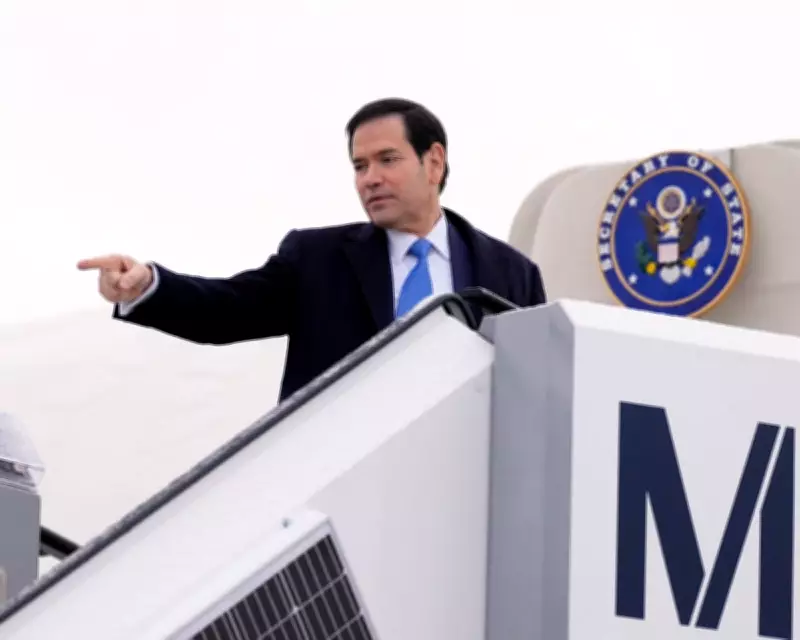
Rubio's Munich Address Echoes Past Islamophobia, Alarms Critics
Marco Rubio departed Munich on February 15, 2026, following his speech at the prestigious Munich Security Conference, an event captured in a photograph by Alex Brandon of AFP/Getty Images. His remarks, which received a standing ovation from European political and business leaders, have ignited profound concerns among observers who fear the United States is steering Europe back toward an era dominated by white supremacist ideologies. Shada Islam, a Brussels-based commentator on EU affairs, voices these anxieties, drawing parallels to the Islamophobia that surged after the U.S.-led "war on terror" initiated by George W. Bush twenty-five years ago.
A Chilling Sequel to the War on Terror
That earlier campaign, which Bush persuaded European allies to support, resulted in millions of lives lost and massive displacements across the Middle East. It normalized racism and hatred targeting Muslims, refugees, and racialized minorities in both the U.S. and Europe. Islam warns that Rubio's speech, with its explicit calls to defend white, Western, Christian civilization against what he portrays as contaminating racialized migrants, may signal a chilling sequel to this dark chapter. Unlike his political mentors, Donald Trump and JD Vance, Rubio adopts a more emollient tone, yet his language remains conspiratorial, focusing on migration, identity, and civilizational anxiety rather than overt terrorism threats.
In Munich, Rubio flattered Europeans by referencing the continent's colonial past, denying any xenophobic intent and framing border defense as a respectable, sovereign duty. However, the underlying message of nativist exclusion remains starkly unchanged. Islam, who lived through and reported on the aftermath of 9/11, highlights the racist subtext and Islamophobic dog whistles embedded in such discourse, which can unleash widespread fear and violence. The debates from that era about Islam's place in Europe, loyalty, and the perception of Muslims as an unintegratable "other," continue to haunt European Muslim communities today.
European Leaders' Troubling Complicity
This is not mere alarmism. Amid geopolitical instability, particularly regarding Ukraine, European leaders are understandably cautious about alienating an unpredictable U.S. ally. Yet, racism, even when coded as virtuous, must be confronted. The applause for Rubio in Munich suggests many European elites are already aligning with this worldview, whether out of shared ideology or geopolitical expediency. To safeguard multiparty liberal democracy and counter the far right, vigilance is essential against not only toxic transatlantic rhetoric but also Trump's connections to Europe's xenophobic parties and the legitimization of far-right ideologies by U.S. Maga politicians.
Alarm bells should ring across Europe with reports that the U.S. State Department may soon fund policy-aligned thinktanks and charities on the continent. Islam questions why so few EU political elites openly reject this stigmatizing language, recalling its dangerous historical precedents. She emphasizes that colonialism was not glorious but caused immense death and destruction, and notes that Jews were once similarly vilified as threats to white Christian Europe. Today, migrants, Muslims, and black and brown people are targets of what author Hanif Kureishi terms Europe's "collective hallucination" about outsider contamination, a narrative corrosive to societal cohesion.
Resistance and Reality in Migration Policies
Swimming against this tide is challenging. Spain's Prime Minister Pedro Sánchez, who advocates factual discourse on migration, faces opposition from both the far right and senior EU policymakers. They criticize his move to regularize 500,000 undocumented migrants and asylum seekers as undermining EU deterrence. EU Migration Commissioner Magnus Brunner has warned Spain to avoid negative spillover effects, ignoring that hundreds of thousands of undocumented migrants already contribute to Europe's labor markets, and many EU states engage in migrant-bashing while signing labor-mobility agreements with Global South countries.
Instead of acknowledging these realities, Brussels prioritizes securing European Parliament support for Brunner's "simpler and more effective return procedures" to accelerate deportations, potentially to offshore centers in non-EU countries. Rights groups warn this could expand ICE-like immigration raids and surveillance across Europe. Europe's leaders, Islam argues, should know better. Rather than being seduced by Rubio's faux flattery, they must find moral courage to stand up to Maga's divisive discourse, echoing Sánchez's questions: "When did recognising rights become something radical? When did empathy become something exceptional?"
Reflecting on post-9/11 advice to denounce Islamophobia to "succeed in Europe," Islam notes the shock of such suggestions then, when Muslim and European identities were not seen as incompatible. Today, Rubio's similar sentiments garner applause in Munich, showing how unchecked bias and prejudice can embed themselves in Europe's political discourse at every level. This troubling shift underscores the urgent need for resistance against rising supremacist ideologies.