Reform's Triple Lock Pledge Exposes Contradiction in Anti-Establishment Claims
If Reform UK genuinely aspires to be an anti-establishment political force, one dedicated to addressing Britain's profound economic challenges rather than merely playing at opposition, then abandoning the pension triple lock is not merely an option—it is an absolute necessity. This policy decision reveals a troubling inconsistency in the party's proclaimed identity.
A Brief Moment of Economic Credibility
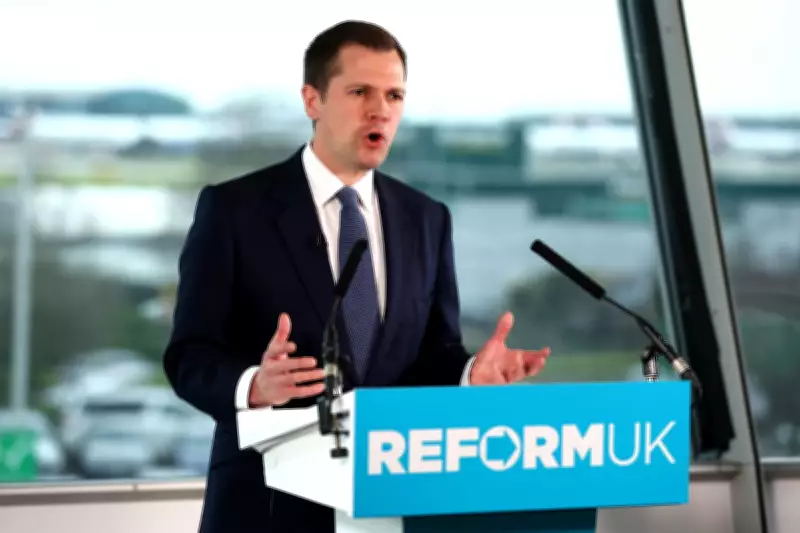
Just weeks ago, Reform appeared to be maturing into a serious economic actor. Robert Jenrick, affectionately dubbed 'Sensible Bob' by supporters, delivered a speech that signaled newfound responsibility. Speaking plainly and donning respectable glasses, he outlined a coherent economic plan. Proposals to cap foreign aid at £1 billion, control welfare expenditure, and maintain the Office for Budget Responsibility suggested Reform could be trusted with national finances. Financial markets took note and responded positively to these commitments.
The Onset of 'Establishmentitis'
However, this momentum was halted by an affliction best described as 'establishmentitis'—the irrational, unfounded compulsion to preserve the status quo. This malaise has infected every major political party in Britain, and Reform has now succumbed. The specific symptom was the party's announcement that it would maintain the controversial pension triple lock, a decision that immediately created a significant political dilemma.

This choice places Nigel Farage's party in a precarious position, fighting on two fronts simultaneously. While not as violent as historic military conflicts, this dual challenge poses an existential threat to Reform's electoral coalition. Over the past year, the party has successfully attracted younger voters, particularly young men, even as the Greens captured a substantial share of the 18-24 demographic. By upholding the triple lock, Reform now directly opposes the interests of these very supporters, forcing Farage to balance the demands of pensioners and young people concurrently.
The Fiscal and Social Consequences
Reform defends the policy as essential for 'protecting' pensioners, but critics offer a harsher assessment. Dr. Kristian Niemietz of the Institute of Economic Affairs labels it an 'electoral bribe with a compound interest rate,' a characterization that is difficult to dispute. Research from the Adam Smith Institute indicates the state pension is on track to become fiscally unsustainable by 2036, largely due to 'the ratcheting effect of the triple lock.'
The Office for Budget Responsibility already attributes an annual cost of £125 billion to the state pension, with the triple lock alone accounting for nearly 10 percent of that figure. By 2030, this mechanism is projected to add £15.5 billion to the national bill. Beyond fiscal concerns, this policy represents a fundamental breakdown of the social contract. The Pensions Policy Institute found that the median male worker will receive a state pension worth almost double his lifetime National Insurance contributions.
The Institute for Fiscal Studies further notes that the connection between contributions and benefits has weakened so drastically that National Insurance now functions essentially as a secondary income tax. The system no longer resembles the insurance scheme it was intended to be. Meanwhile, young workers are being squeezed to fund it, prompting many to leave the country in what has been termed an 'exodus of talent,' risking 'generational economic loss.' Each departure shrinks the tax base, compounding long-term economic damage.
A Crisis of Identity
The irony is palpable. Reform has constructed its entire identity around being the anti-establishment alternative—political outsiders untainted by the Westminster Bubble, who wouldn't know the Marquis of Granby from The Speaker. This resonated with a British public deeply frustrated with the current political system. Yet, on the triple lock, Reform has faltered, following the mainstream herd instead of charting an independent course.

If Reform is truly committed to its anti-establishment ethos and serious about solving Britain's economic woes rather than merely performing opposition, then pledging to scrap the triple lock is not optional—it is imperative. This policy decision not only risks alienating its growing base of young supporters but also undermines the party's core identity and long-term credibility.