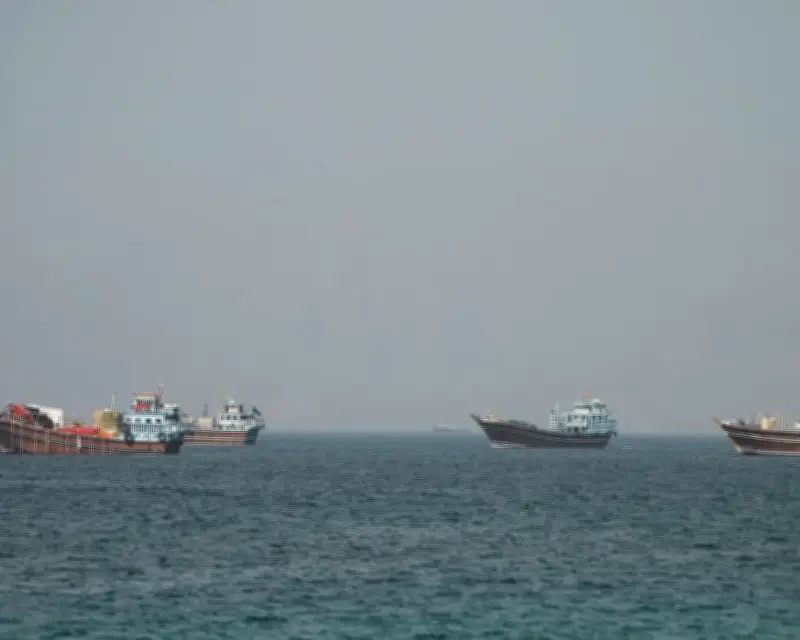
Qatar has warned Iran that it will bear full legal responsibility after three tankers, including a Qatari LNG carrier, were struck within hours in the Strait of Hormuz. All three vessels were hit close to Oman, which had proposed a new shipping corridor near its coastline—a plan Iran opposes as it wants to charge ships for using the waterway.
Iran blames US for incident
Iran blamed the United States for the incident on Thursday, arguing that Washington's efforts to open new routes through the strait constitute a breach of a memorandum of understanding signed between the two parties. Tehran claims the memorandum is specifically worded to leave Iran, in consultation with Oman, to manage the reopening of the strait with the aim of returning commercial traffic to prewar levels within 30 days.
At a briefing in Tehran, foreign ministry officials insisted Iran has the right to impose fees on all ships using the strait. “Securing the strait for navigation for safe passage is itself a service,” said the foreign ministry spokesperson, setting terms for the long-term management of the strait that are likely to be rejected by Oman and Western shipping interests.
Qatari tanker hit near Oman
The United Kingdom Maritime Trade Operations centre (UKMTO) reported that a Qatari tanker, Al Rekayyat, was hit near Limah, Oman, as it tried to travel south out of the strait toward the Gulf of Oman. In a mayday call, the Al Rakayyat crew sent a message: “We’re being hit by a drone top of port side near engine room.”
This is the first time a Qatari ship has been struck since the start of the war between the US and Iran on 28 February. Qatar, which has been acting as a mediator in talks, condemned the attack. Foreign ministry spokesperson Majed al-Ansari called it a “serious and explicit violation” of international law and said Qatar would hold Iran fully responsible for the act of aggression.
Iran rejects Omani proposal
Iran’s foreign ministry rejected a proposal from Oman to create a new authority for the strait, modelled on the Malacca and Singapore straits, where fees are charged only for specific navigational services not including security. “For a long time we have been generous enough not to ask for anything. Providing security is costly and Iran and Oman have been doing that for a long time. So from now on we’re going to ask for necessary costs when we provide related services, including securing the safe passage,” the spokesperson said.
He added: “When you provide in the English Channel you call it deep sea piloting, for instance, you call it different names, but that’s the same.” However, deep sea pilotage in busy waterways is regarded as voluntary. Iran will face criticism that it is demanding ships pay a compulsory fee or risk being attacked—a situation close to a protection scheme. Tehran argues the strait became contested only because of American aggression.
Iran rejects French and UK help
Iran’s foreign ministry also firmly rejected proposals from France and the UK that they start to de-mine and secure the southern route through the strait close to the Oman shore. The spokesperson said: “When France and others said they were ready to help, we said ‘no thank you’—this is for Iran to do it and we know how to do it.”