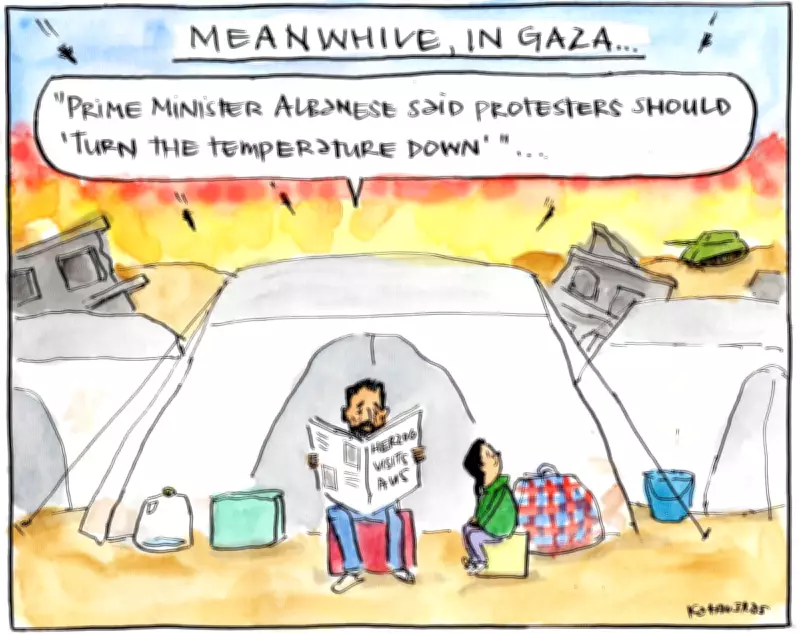
Public Response to Prime Minister's Cooling Advice Remains Tepid
Recent observations indicate that the Prime Minister's advice on cooling things down has garnered a notably lukewarm response from the public. Despite the high-profile nature of the recommendations, which were issued in early February 2026, widespread adherence appears to be lacking across various demographics and regions.
Mixed Reactions Across Communities
Initial reports suggest that while some individuals and organizations have taken the Prime Minister's words to heart, implementing measures to reduce tensions or slow down activities, many others have largely ignored the guidance. This divergence in response highlights the challenges of translating political rhetoric into tangible public action, particularly in a climate where trust in governmental directives may be variable.
In urban centers, for instance, there has been little noticeable change in the pace of daily life or in public discourse, with debates and conflicts continuing unabated. Conversely, in certain rural areas, there are anecdotal accounts of communities attempting to adopt a more measured approach, though these efforts are often isolated and not part of a coordinated national movement.

Sector-Specific Impacts
The advice has also elicited varied reactions across different sectors:
- Business and Economy: Corporate leaders have shown minimal interest, with most companies maintaining their usual operational speeds, citing competitive pressures and market demands.
- Media and Culture: Coverage of the advice has been sporadic, with some outlets critiquing it as vague or impractical, while others have praised its intent but noted its limited enforceability.
- Public Services: There is little evidence of systemic changes in government agencies or public institutions, though a few local councils have initiated small-scale awareness campaigns.
This sectoral disparity underscores the complexity of implementing broad-based advice without specific mandates or incentives, raising questions about the effectiveness of such top-down communication strategies in influencing behavior.
Political and Social Context
The tepid response may be attributed to several factors, including political polarization, where supporters of the opposition are less likely to heed advice from the current administration, and a general skepticism toward political messaging in an era of frequent policy shifts. Additionally, the advice's lack of concrete details or legal backing has made it easy for many to dismiss or overlook.
Experts note that for such advice to gain traction, it often requires clear, actionable steps and robust public engagement efforts, which appear to have been insufficient in this case. The Prime Minister's office has not yet commented on the public's reception, but ongoing monitoring suggests that without further intervention, the impact is likely to remain minimal.
In summary, while the Prime Minister's call to cool things down was intended as a unifying message, its execution has fallen short, with most of the public continuing business as usual. This scenario highlights the ongoing challenges in political leadership and public communication, where well-intentioned advice must compete with entrenched habits and competing priorities to effect real change.