Fresh polling data reveals a significant erosion of public trust in the Labour government following its recent Budget, with voters particularly angered by decisions on taxation that are seen as a breach of manifesto promises.
Poll Reveals Record Low Ratings for PM and Chancellor
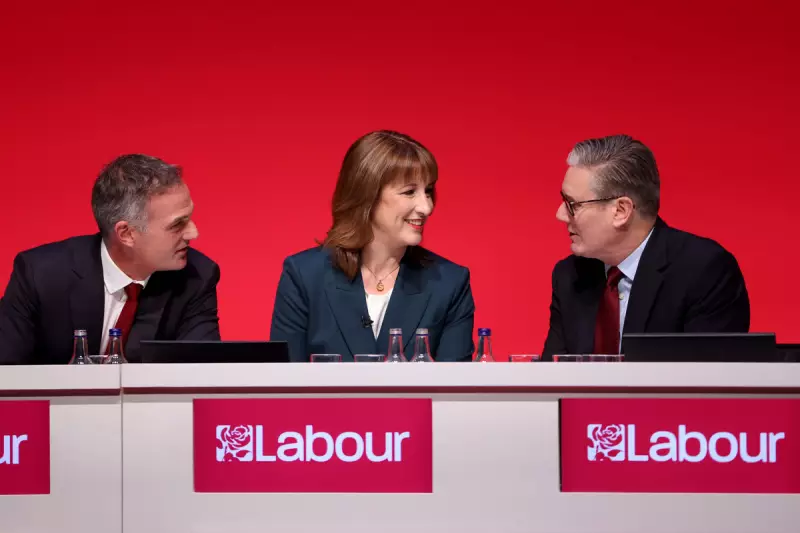
The latest City AM / Freshwater Strategy Poll paints a grim picture for the Prime Minister and his Chancellor. Sir Keir Starmer's personal favourability rating has sunk to -47, a drop of two points, while Rachel Reeves stands at -45, down four points. Both figures represent new record lows for the pair. The discontent is so pronounced that a majority of voters, 57 per cent, believe Chancellor Reeves should resign in the wake of the Budget.
On the crucial question of personal finances, the Budget has failed to convince. A mere eight per cent of voters expect to be better off as a result of the fiscal statement, while nearly half, 48 per cent, anticipate being worse off. Furthermore, a clear majority of 58 per cent interpret the government's decision to raise taxes as a sign of failure in managing the economy, rather than a necessary step to fix long-term issues.

Public Sees Tax Threshold Freeze as a Broken Promise
At the core of the public's frustration is the government's approach to taxation. The Budget included the extension of income tax threshold freezes, a move designed to generate revenue to fund increased welfare spending, such as the scrapping of the two-child benefit cap.
However, this redistributive strategy has backfired with the electorate. More voters consider the Budget unfair (43 per cent) than fair (22 per cent). Critically, 56 per cent disagree with the decision to freeze the thresholds, and an even larger 64 per cent view it as a direct breach of Labour's election manifesto—a sentiment shared by a majority of those who voted for the party.
The political misjudgement appears stark when considering the current public mood. Presently, 56 per cent of voters prefer tax cuts even if it means reduced spending on public services, compared to 33 per cent who favour tax hikes to fund service increases.
Fallout from "Misleading" Fiscal Briefings and Political Shifts
The poor reception of the Budget has been exacerbated by revelations that the public may have been misled about the state of the public finances beforehand. It emerged that the Office for Budget Responsibility (OBR) had informed Chancellor Reeves of a £4bn surplus almost a month prior to the Budget, and before she delivered a speech warning of fiscal challenges. This has led to accusations that briefings on the need for income tax rises were not only politically damaging but factually incorrect.
The political beneficiary of this turmoil may be the Conservative Party. As reducing the cost of living regains its position as the top voter priority, the polling landscape shows subtle shifts. While Reform UK still leads in primary voting intention, its momentum has slowed, falling four points to 31 per cent over two months. The Conservatives are up one point to 20 per cent, with Labour trailing just behind on 19 per cent.
In a striking finding, following her well-received speech responding to the Budget, Kemi Badenoch has opened a commanding lead as the public's preferred Prime Minister. She is now favoured by 41 per cent of voters, compared to Keir Starmer's 32 per cent.
The broader context remains deeply challenging for the government. 75 per cent of the public believe the country is on the wrong track, and 56 per cent expect the economy to worsen in the next year. What was initially framed as a deft political manoeuvre has rapidly unravelled, leaving the Prime Minister and his Chancellor in a weaker position than before.