Why Politicians' Declining Reading Habits Signal a Leadership Crisis
Leading historian Dominic Sandbrook has asserted that the dwindling reading habits of contemporary politicians starkly illustrate why they are so profoundly inadequate in their roles. This perspective resonates deeply, highlighting a critical issue in modern governance. Would Keir Starmer become a more effective Prime Minister if he indulged in a classic Trollope novel before sleep? Sandbrook, renowned as Britain's most popular historian, top podcaster, and dedicated Wolverhampton Wanderers enthusiast, posed this provocative question in a recent interview.
The Literary Preferences of Prime Ministers
While promoting his new podcast, aptly titled 'The Book Club', Sandbrook contended that the erosion of reading among politicians directly correlates with the inadequacies seen in today's governance. Starmer once admitted to having no favorite book and an inability to dream, a stark contrast to Harold MacMillan, who famously recommended bedtime reading of Trollope's works like Cousin Henry or The Way We Live Now. This disparity underscores a lamentable decline in intellectual engagement among leaders.
The reading habits of Prime Ministers offer fascinating insights. When questioned by schoolchildren, Starmer recalled enjoying Roy of the Rovers, a 1970s football comic. His predecessor, Rishi Sunak, favored more risqué material, being a devoted fan of the late Jilly Cooper. John Major shared MacMillan's affection for Trollope, while Gordon Brown claimed his favorite was Julia Donaldson's picture book The Snail and the Whale. MacMillan also dedicated an hour daily to Jane Austen, though this pales next to William Gladstone, who, amidst his moral crusades and political reforms, amassed so many books he transported them in a wheelbarrow; his library in north Wales now offers overnight stays.

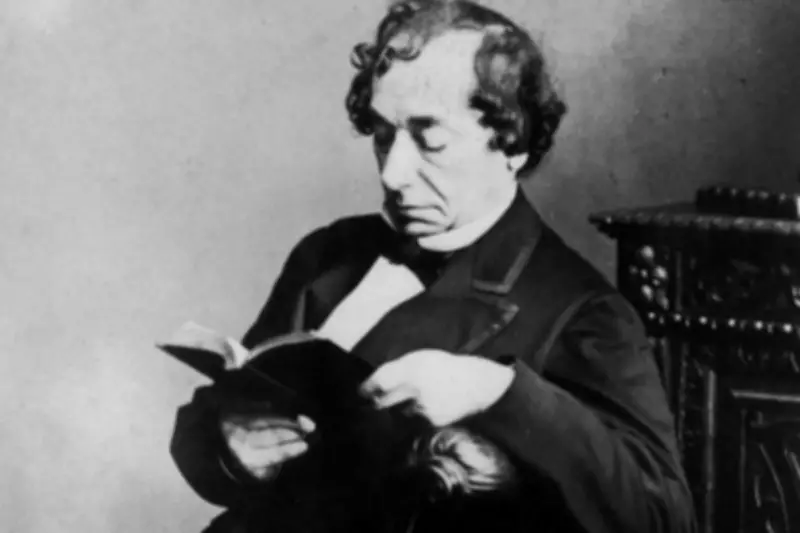
Notably, three Prime Ministers were novelists themselves: Benjamin Disraeli, Winston Churchill, and Boris Johnson. The latter two penned thinly veiled self-portraits of ambitious young politicians, with Johnson's work serving as a peculiar psychological study of a scandal-plagued, unserious MP. Disraeli, while centering himself in his narratives, produced Sybil, an underrated Victorian masterpiece of social critique and moral fervor, deserving recognition beyond its oft-misquoted 'two nations' line by Tory MPs.
Analyzing the Link Between Reading and Leadership Success
Sandbrook's underlying argument—that better-read Prime Ministers would achieve greater success—warrants scrutiny. Both MacMillan and Major enjoyed their Trollope novels, yet their premierships were marred by sex scandals, economic turmoil, and European conflicts. As Sandbrook's authoritative histories of modern Britain reveal, one of the most studious post-war Cabinets, under Harold Wilson in the mid-1970s, included Chancellor Denis Healey, who boasted of reading a book a day in his youth. Despite this, they presided over 28 percent inflation and 98 percent income tax rates.
In contrast, Margaret Thatcher, often criticized as uncultured for preferring Frederick Forsyth over Fitzgerald or Forster, demonstrated formidable leadership by overcoming unions and fostering prosperity. Critics labeled her uncultured, yet she could quote Rudyard Kipling from memory and expressed enjoyment of Dostoevsky, standing as an intellectual titan compared to her successors. Thatcher emerged from an era where reading was a societal norm, predating the distractions of Twitter, reality TV, and trivial social media that compel politicians to feign ignorance to avoid elitism accusations.
Today, if Starmer admitted to favoring War and Peace, Bleak House, or Ulysses, he might fear being branded out of touch by less literate critics, opting instead for safer topics like football. Sandbrook's mission to 'Make Reading Cool Again' is commendable, but the literary deficit among politicians is just one facet of a broader knowledge crisis.

The Broader Deficit in Political Knowledge
Politicians today lack not only novel-reading habits but also essential knowledge across various domains. For instance, Liz Truss could name only Thatcher and Churchill as admired Prime Ministers during her brief 49-day tenure, seemingly oblivious to the portraits of predecessors in Downing Street. A survey of 29 Labour MPs elected in 1906 showed their favorite works included authors like John Ruskin, Charles Dickens, Thomas Carlyle, and Henry George, alongside the Bible. It is doubtful that 29 current Labour or Tory MPs could even identify these authors, let alone have read them.
This intellectual shortfall is detrimental to Britain, extending beyond literary pursuits to include a lack of curiosity about critical issues. How many politicians have educated themselves on artificial intelligence, gene-editing, nuclear fusion, or other technological advancements reshaping our world? How many used the Ukraine war as an impetus to study Russian history and foreign policy? How many can locate the Chagos Islands on a map or defend Starmer's contentious policies?
Like Sandbrook, it is a mark of shame that the current Prime Minister is poorly read and that book-loving has become almost embarrassing in this age. Encouraging politicians to listen to podcasts and embrace novels would be a positive step toward reversing this decline, but it is no panacea for the pervasive leadership crisis. Ultimately, fostering intellectual curiosity and worldly wisdom is imperative for effective governance in an increasingly complex world.