Police Invoke Victims' Rights to Withhold Names After Fatal Encounters
Across the United States, a growing number of law enforcement officers involved in fatal and violent incidents are exploiting a victims' privacy law to conceal their identities from public scrutiny. The controversial practice involves invoking Marsy's Law, legislation originally designed to protect crime victims' anonymity, which has now become a shield for police officers following deadly encounters.
The Case of Connor Grubb and Ta'Kiya Young
This troubling trend gained national attention through the case of Ohio police officer Connor Grubb, who shot and killed Ta'Kiya Young and her unborn daughter in a Kroger parking lot outside Columbus in August 2023. For months following the incident, Grubb and his department attempted to hide his identity by claiming Young had attempted to drive over him - an assertion that would technically make him a victim of crime and eligible for anonymity under Marsy's Law.
Body camera footage from the fatal encounter shows Young slowly driving her car forward and to the right before Grubb fires through the windshield directly into her chest. Despite Grubb's eventual acquittal on murder charges on 21 November 2024, the Ohio Supreme Court later rejected his anonymity claim, though the officer remains on paid leave from his duties.
Marsy's Law: From Protection Tool to Police Shield
Marsy's Law originated following the 1983 murder of a California woman by her ex-partner and has been adopted in 12 states, including Ohio where it became part of the state constitution through a 2017 amendment. The legislation was intended to provide crime victims with rights including anonymity.
However, civil rights organizations and legal experts argue that police departments are systematically misapplying the law. Emily Cole of Ohio Families Unite for Political Action and Change states: "The way Marsy's Law is being applied to police in the course of their duties acting on behalf of the state is inappropriate and a misuse of the law."
She further explains the fundamental imbalance: "Police and prosecutors determine who the victims are in any interaction and using Marsy's Law to shield officer identities during violent interactions presumes that law enforcement, as the arm of the state, have more rights than actual victims of their actions do."
Nationwide Pattern of Concealment
The problem extends far beyond Ohio. In Florida, officers who shot and killed 20-year-old Jayden Baez outside a Target store in 2022 remained unnamed after the local sheriff's office invoked Marsy's Law, claiming Baez had attempted to ram his car into officers.
Similar cases have emerged in North and South Dakota, where law enforcement agencies have repeatedly sought to hide officers' names following violent incidents. A ProPublica investigation revealed that while some law enforcement districts require officers to invoke Marsy's Law, others offer them a choice - and in some cases, identities are concealed even when officers report no injuries.
Legal Challenges and Mixed Rulings
The controversy has prompted legal battles across multiple states. In December 2024, a court order ruled that Marsy's Law does not protect law enforcement officers from lawful subpoena in the case of the police killing of Jamie Overstreet in Columbus in August 2023. However, in a contradictory ruling, Ohio's Supreme Court later decided that officers' identities could be hidden in another case involving a 2023 bank robbery in Hilliard.
Ráchael Powers, a criminal justice expert at the University of Cincinnati, highlights broader concerns: "Marsy's Law violates defendants' due process rights, increases the potential for wrongful convictions, and undermines the principles of the US legal system. This provision also decreases accountability - for example, it makes the work of civilian oversight boards very difficult because they cannot obtain the relevant information to conduct investigations."
Police Defence and Community Outrage
Law enforcement representatives defend the practice. Jay McDonald, president of the Fraternal Order of Police of Ohio, argues: "Victims of crime, whether police officers or plumbers, are entitled to victim rights protections that protect their privacy. The outright harassment, threats and violence that law enforcement faces on a daily basis are exactly why Marsy's Law protections and others are necessary."
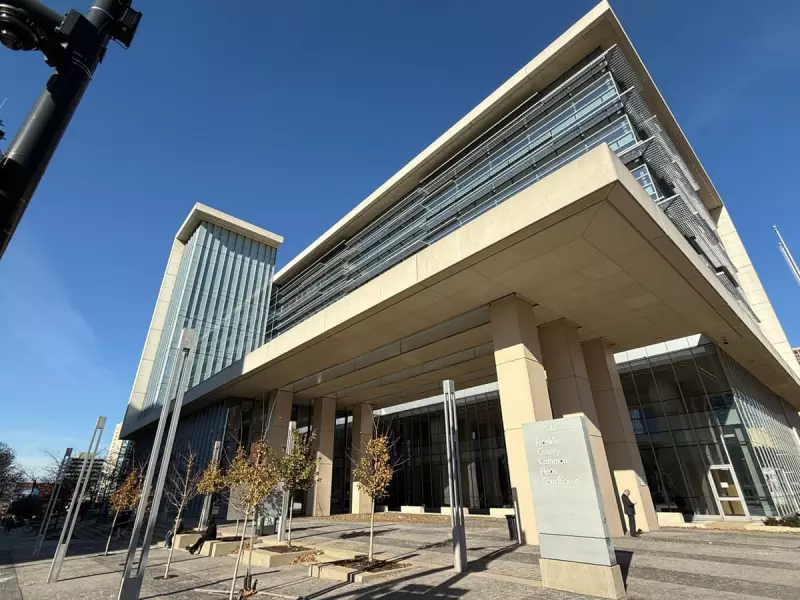
However, for families like Ta'Kiya Young's, the system appears fundamentally stacked against them. Her grandmother, Nadine Young, visibly reacted to Grubb's acquittal in Franklin County Common Pleas court. The family's lawyer, Sean Walton, told a press conference: "We have to have de-escalation. We cannot have officers pull a gun in a petty theft situation. Two lives were lost. It's not just Ta'Kiya, it's an unborn daughter that does not get to step foot on this earth."
The tension reflects deeper divisions in communities where trust in law enforcement remains fragile, particularly following incidents like the June 2022 killing of Jayland Walker in Akron, Ohio, where eight officers who fired 46 times into the unarmed man were never publicly identified - without even invoking Marsy's Law.