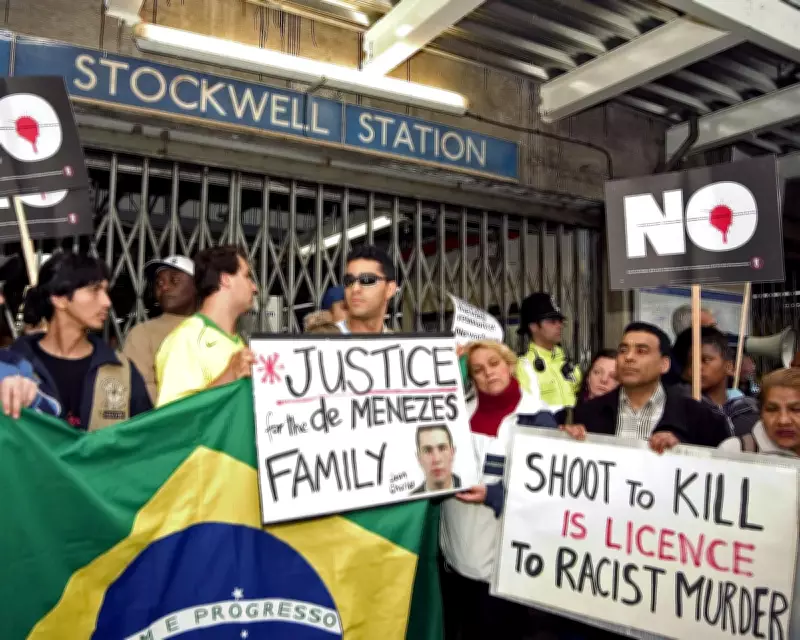
Undercover Police Spied on De Menezes Family's Justice Campaign, Inquiry Reveals
The spycops public inquiry has heard shocking revelations that four undercover police officers conducted surveillance on the justice campaign run by the family of Jean Charles de Menezes, the innocent Brazilian electrician shot dead by Metropolitan police in 2005. This covert monitoring occurred while the grieving family was actively seeking to hold Scotland Yard accountable and uncover the truth behind the catastrophic mistake that led to his death.
Surveillance During Grief and Advocacy
Patricia Armani da Silva, the cousin of de Menezes, expressed deep shock upon learning of the spying during her evidence to the inquiry. She emphasized that the family's campaign was entirely peaceful, stating, "At no point did I or the people within our campaign ever advocate or condone public disorder, breaking the law or subversion of any kind." Despite this, Scotland Yard maintained a secret file on the campaign, documenting meeting details and identifying key supporters along with their email addresses.
The Metropolitan police has since admitted that this covert surveillance was "wholly unjustifiable," acknowledging the ethical breach. The surveillance reports included notes on planned family activities, such as laying flowers at events commemorating de Menezes's death, highlighting the intrusion into their private grief.

Background of the Tragic Incident
In July 2005, police firearms officers killed Jean Charles de Menezes at Stockwell tube station in London after mistakenly identifying him as a fugitive involved in a failed bombing two weeks after the 7/7 attacks. He was shot seven times in the head, a mistake that triggered a major crisis for the Met's reputation. No police officers faced prosecution, although the force was fined for health and safety violations.
Da Silva recounted the family's struggle to correct false narratives spread by police, including unfounded claims that de Menezes ignored police challenges and wore suspicious clothing. These lies, she asserted, originated from senior officers at Scotland Yard, compounding the family's trauma.
Undercover Operations and Infiltration
The inquiry detailed how undercover officers, such as Robert Hastings and Carlo Soracchi, infiltrated leftwing groups to monitor reactions to the shooting. Hastings attended the public launch of the family's campaign, filing reports to his supervisors, while Soracchi gathered intelligence on activists supporting the cause. In official documents, Soracchi's managers noted his role in "providing intelligence on the reaction of activists to the shooting by police of Jean Charles de Menezes in Stockwell."
Another officer, using the alias Simon Wellings, spent six years infiltrating progressive groups, with his deployment aims including monitoring activist responses to the Stockwell shooting. He reported on plans for a commemoration event, where flowers were to be laid at the tube station, further illustrating the extent of the surveillance.
Broader Implications of the Spycops Inquiry
Led by retired judge Sir John Mitting, the inquiry examines the conduct of approximately 139 undercover officers who infiltrated mainly leftwing and progressive groups from 1968 to 2010. A key issue is the repeated spying on grieving families whose relatives were killed by police or died in custody, including high-profile cases like the Stephen Lawrence murder.
Police have defended the monitoring as incidental, arguing that the primary focus was on activists potentially exploiting these campaigns. However, da Silva's testimony underscores the profound impact of such intrusions, stating, "I find it disheartening and disturbing that the state would intrude on our grief and plan their response to our prayers and flower laying."
This case highlights ongoing concerns about police accountability and the ethical boundaries of undercover operations, particularly in sensitive contexts involving victims' families seeking justice.