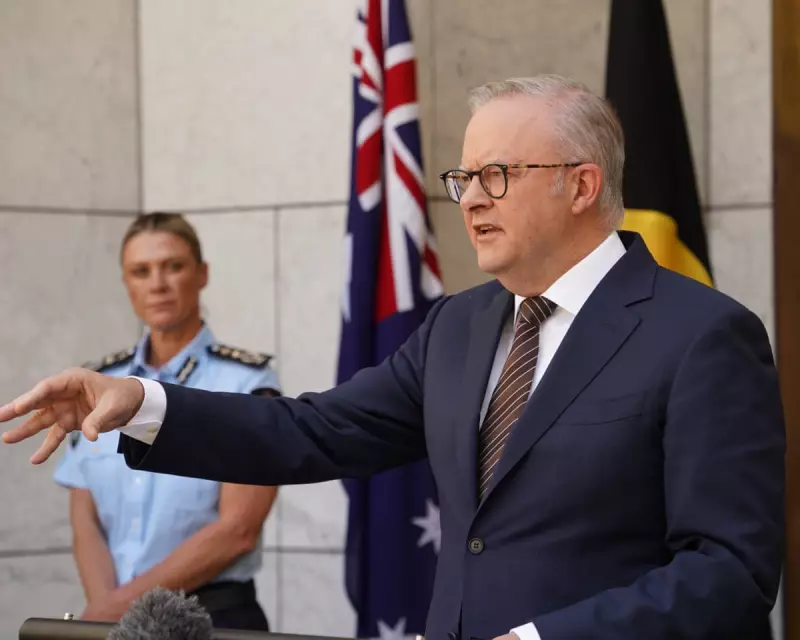
The office of Australian Prime Minister Anthony Albanese has moved to quash mounting speculation, issuing a firm denial that the government is considering calling an early election in 2025.
Official Statement Dismisses Rumours
A spokesperson for the Prime Minister stated unequivocally that there are no plans for an early election. This direct communication aims to clarify the government's position and end conjecture that has been circulating in political and media circles. The confirmation underscores the administration's stated intention to serve its full term.
The speculation appears to have been driven by analysis of the political calendar and perceived strategic advantages. However, the Prime Minister's office has now drawn a clear line under these discussions. The government's focus, according to the statement, remains on delivering its policy agenda and addressing the pressing issues facing the nation.

Context and Political Landscape
This denial comes amidst the usual backdrop of political manoeuvring and public debate about electoral timing. In parliamentary systems, the possibility of an early election is a constant topic of discussion, often used to apply pressure or gauge public sentiment. The Albanese government, elected in 2022, would be due to face voters by 2025 at the latest.
By ruling out an early poll, the government seeks to project stability and a commitment to governing. This move allows ministers and MPs to concentrate on long-term policy work without the immediate shadow of an election campaign. It also sets a clearer timeline for the opposition and other political stakeholders.
The next Australian federal election must be held by or before 2025. The Prime Minister retains the prerogative to advise the Governor-General to dissolve the House of Representatives earlier, but this latest confirmation signals that such advice is not currently contemplated.
Implications and Next Steps
The official statement significantly reduces the immediate uncertainty around the political schedule. Voters, businesses, and institutions can now operate with a more predictable horizon, at least in the short term. Political commentators will shift their focus from the 'when' of the election to the 'what' of the competing policy platforms that will eventually be presented.
For the government, the challenge will be to maintain discipline and momentum throughout the remainder of the term. With the election date now effectively anchored to the latter part of 2025, both major parties will begin the long process of refining their strategies and policy offerings. The public denial of an early election marks a definitive point in the current political cycle, setting the stage for the next phase of national debate.