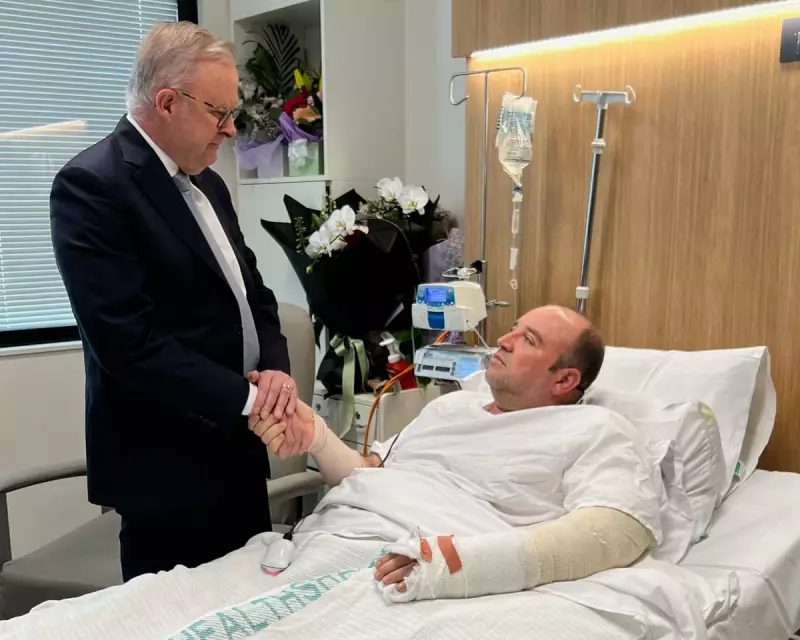
Prime Minister Anthony Albanese has met with one of the heroes of the Bondi beach terror attack, visiting Ahmed al-Ahmed at St George Hospital in Sydney. The meeting came as the political fallout from Australia's deadliest massacre since Port Arthur intensifies debates on firearms legislation and antisemitism.
A Hospital Visit and a Nation's Gratitude
On Tuesday, Anthony Albanese entered the hospital room of Ahmed al-Ahmed, a 44-year-old man hailed for his bravery during Sunday's shooting. Despite suffering bullet wounds and facing serious surgery, al-Ahmed had run towards danger to tackle one of the assailants. The Prime Minister, appearing humbled, told him, "Your heart is strong." This act of courage stands in stark contrast to the heinous nature of the attack, which targeted Jews celebrating Hanukah.
The usual bipartisan unity following such tragedies has been notably absent this week. The Coalition, along with figures like former treasurer Josh Frydenberg and Israeli Prime Minister Benjamin Netanyahu, has criticised Albanese's response to rising tensions since the Hamas attacks of 7 October 2023. They argue his approach left Jewish communities feeling exposed to abuse and fear.

The Twin Challenges: Gun Laws and Hate
In response to the attack, Albanese has made tightening gun laws an immediate priority. His proposals include a national firearms register, a measure recommended but not implemented since the Hoddle and Queen street massacres 35 years ago. The government aims to speed up its implementation to 2026. Other planned changes would limit the number of firearms an individual can own and restrict licences to Australian citizens.
However, this push faces opposition. One Nation leader Pauline Hanson posted a photo of herself shooting a gun, while the Coalition has focused its criticism on the government's handling of antisemitism. They highlight the five-month delay in formally responding to a review by special envoy Jillian Segal. The opposition leader, Sussan Ley, stated "from today, everything must change," but has offered limited support for the proposed gun reforms.
Complex Solutions for a Deep-Seated Problem
Tackling antisemitism presents its own complexities. Some recommendations in Segal's report, such as government monitoring of media for "impartiality" or cutting funding from institutions deemed insufficiently active, are viewed as extreme and impractical. Meanwhile, security questions loom large. Reports that the alleged gunmen may have travelled to the Philippines for military-style training are under investigation, raising concerns about how individuals previously interviewed by authorities could access weapon caches.
As Bondi mourns, Anthony Albanese's political resolve is being tested. His ability to navigate these fraught issues—staring down opponents on gun control while addressing genuine community fears about hate—will require a strength matching that displayed by heroes like Ahmed al-Ahmed. The path ahead demands tough questions and leadership that represents the entire Australian community.