New Zealand's 2026 General Election Date Confirmed by Prime Minister Luxon
New Zealand Prime Minister Christopher Luxon has officially announced that the country's next general election will take place on 7 November 2026, setting the stage for what political analysts predict could become one of the most fiercely contested campaigns in recent years. The announcement kickstarts a lengthy election cycle that will see the centre-right National party battling to retain power against a resurgent opposition.
Economic Concerns Set to Dominate Political Agenda
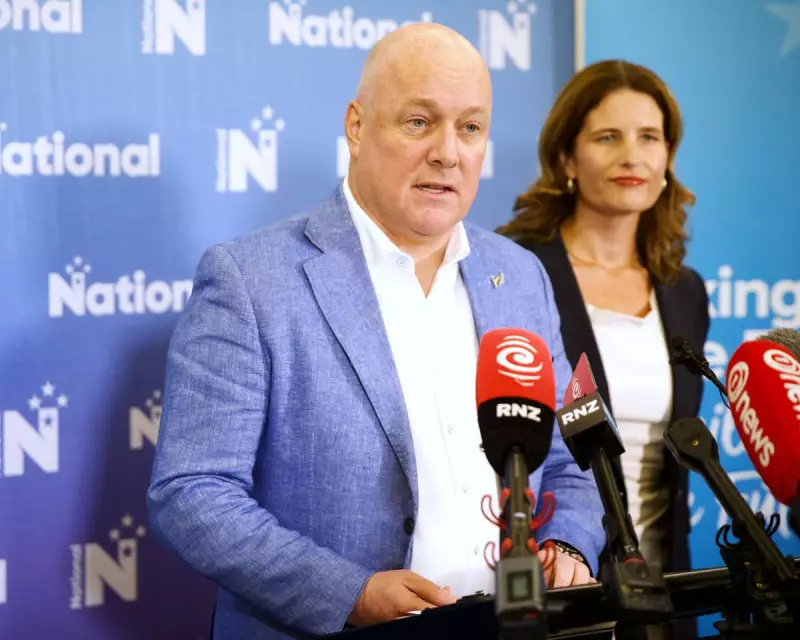
Speaking to reporters on Wednesday, Luxon emphasised his government's commitment to continuing its agenda to "fix the basics and build the future". The prime minister framed the upcoming election as a crucial choice for New Zealanders, stating that voters would need to consider "who is best placed to provide stable and strong government in a very volatile and uncertain world".
According to the latest Ipsos New Zealand issues monitor, economic stability and the persistent cost of living crisis consistently rank among the top concerns facing citizens. These issues are expected to dominate political discourse throughout the campaign period, with both major parties preparing detailed policy platforms addressing these fundamental challenges.

Coalition Government's Controversial Record
Since forming a coalition government in 2023 alongside the minor libertarian Act party and populist New Zealand First, Luxon's administration has implemented sweeping policy changes across multiple sectors. The government has pursued an ambitious agenda focused on:
- Rebooting what they describe as a sluggish economy
- Driving increased overseas investment
- Boosting domestic industry through regulatory reform
However, many of these policies have generated significant controversy and public opposition. The coalition's reforms affecting Māori rights sparked the largest ever protest over indigenous rights in New Zealand's history. Environmental policies have also drawn criticism, with scientists and environmentalists expressing alarm about weakened climate change goals. Additionally, proposals to open up land for mining attracted approximately 30,000 public submissions, representing one of the highest response rates ever recorded for proposed legislation.
Political Landscape and Electoral Challenges
New Zealand operates under a mixed member proportional (MMP) voting system, with general elections typically held every three years. The parliamentary system comprises 120 seats, requiring major parties to negotiate with smaller parties to form governing majorities.
Recent polling presents significant challenges for Luxon's government. Over the past year, support for the coalition has remained lukewarm, with the left bloc - comprising Labour, the Green party, and Te Pāti Māori (the Māori party) - frequently polling at similar or higher levels than the sitting government. Luxon's personal favourability ratings have remained consistently low, with Labour leader Chris Hipkins regularly outperforming him in preferred prime minister surveys.
Political scientist Dr Claire Robinson analysed the situation, noting that "the last 15 public opinion polls show Labour has averaged 2% more support over National". She suggested that despite outward appearances of calm, "the party will be in quite a lot of panic" about their electoral prospects.
Opposition Response and Campaign Outlook
Reacting to the election date announcement, Labour leader Chris Hipkins declared his party "fired up and ready to go", promising voters a refreshed team with new ideas and faces. Hipkins outlined Labour's alternative vision, emphasising priorities including:
- Employment opportunities and wage growth
- Affordable healthcare access
- Housing affordability solutions
- Direct measures to tackle the cost of living
The Labour leader framed the election as an opportunity for change, asserting that "the sooner New Zealand gets rid of this government, the sooner the country can move forward".

Dr Robinson suggested that the domestic economy would need to show dramatic improvement for National to secure a second term, noting little current evidence that citizens feel positive about economic prospects. She characterised the situation as "National's game to lose, not Labour's to win", while highlighting opportunities for the opposition to challenge the government on economic performance indicators including wages, employment, migration patterns, and housing prices.
As New Zealand enters this extended election cycle, political observers anticipate intense campaigning around fundamental economic issues, with both major parties preparing to make their case to voters seeking stability and solutions to pressing national challenges.