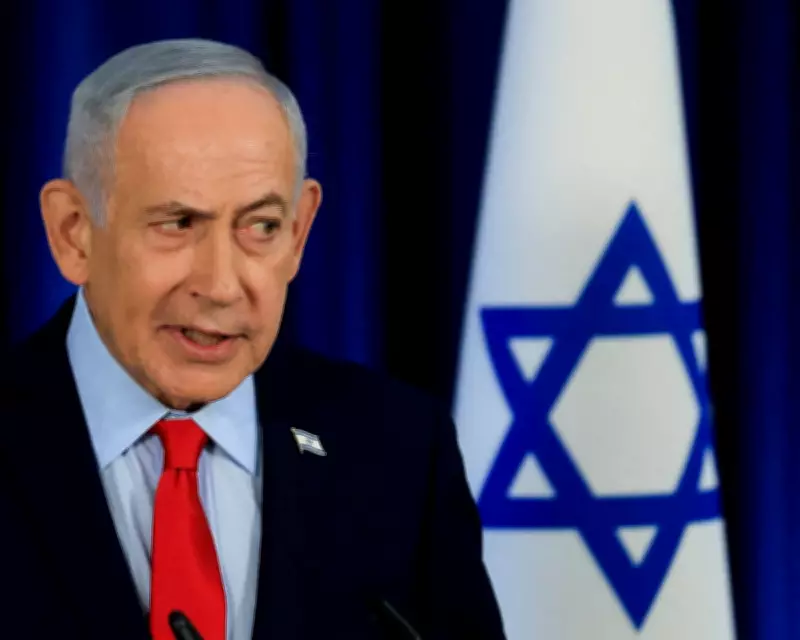
Netanyahu's Ceasefire Deal Labeled 'Political Disaster' by Israeli Opposition
In a conflict that has produced no clear victors, Israeli Prime Minister Benjamin Netanyahu emerges as the most significant loser following a fragile and ambiguous ceasefire agreement with Iran. Opposition figures within Israel are characterizing this development as an unprecedented "political disaster" and a profound "strategic failure" that will have lasting consequences for the nation's security and international reputation.
Years of Threats Culminate in Strategic Failure
After years of Netanyahu's persistent threats against Iran, dramatic presentations at United Nations general assemblies, questionable intelligence dossiers circulated to global media outlets, and sustained diplomatic pressure on multiple U.S. administrations to endorse military action against Tehran, Israel's military campaign has ultimately proven ineffective. The assessment from U.S. intelligence agencies that Israeli predictions of regime change and revolution in Iran were "farcical" has been validated, while Israel's own projections about the conflict's duration—estimating days or weeks at most—proved wildly inaccurate.
According to reports from Israel's Channel 12, Netanyahu was actively urging former U.S. President Donald Trump to reject ceasefire negotiations as recently as two days before the agreement was finalized. Despite Trump's initial aggressive warnings toward Tehran, the American administration ultimately acquiesced to diplomatic solutions, reportedly marginalizing Israeli input during critical decision-making processes.

Opposition Leaders Voice Unprecedented Criticism
Yair Lapid, Israel's primary opposition leader, expressed scathing condemnation on social media platform X, stating: "There has never been a political disaster like this in our entire history. Israel was not even close to the table when decisions were made concerning the core of our national security." Lapid continued his criticism, asserting that "Netanyahu failed politically, failed strategically, and did not achieve any of the goals he himself set. It will take us years to repair the political and strategic damage that Netanyahu caused due to arrogance, negligence, and lack of strategic planning."
Yair Golan, leader of the leftwing Democrats party, echoed this sentiment, describing the ceasefire as a "strategic failure" by Netanyahu. "He promised a historic victory and security for generations, and in practice, we got one of the most severe strategic failures Israel has ever known," Golan declared. "It's a total failure that endangers Israel's security for years to come."
Damaged Global Standing and Strengthened Adversaries
The reality is that Netanyahu staked everything on this military campaign, and his failure to achieve regime change in Tehran, secure Iran's stockpile of highly enriched uranium, or meaningfully degrade the Iranian state has further damaged Israel's international standing. This comes at a time when Israel's global reputation was already significantly tarnished by its actions in Gaza, where it faces accusations of genocide.
On the security front, despite Trump's public claims, the power of Iran's Islamic Revolutionary Guards Corps appears strengthened rather than diminished. Tehran has achieved its primary objective of surviving a month-long assault from two of the world's most formidable military powers, emerging with a wounded but fundamentally intact regime possessing substantial military assets. This outcome likely sets the stage for rapid rearmament and future retaliatory actions.
Domestic and Diplomatic Fallout Intensifies
The diplomatic and public opinion consequences may prove even more damaging for Netanyahu and Israel. In the United States, a political consensus supporting Israel that dates back to the 1960s is visibly deteriorating. Israel's role in pushing Trump toward conflict with Iran has drawn criticism from both progressive factions and the far-right MAGA movement, while broader support for Israel has reached historic lows, even among Jewish American voters.

Domestically, in an Israeli election year, Netanyahu emerges from this conflict having achieved none of his primary promised objectives. Despite his well-documented tendency to broadcast temporary achievements as permanent victories, it will become apparent to Israeli citizens that the "existential threat" Netanyahu long described remains largely unchanged. While Iranian Supreme Leader Ali Khamenei has died, his hardline son has succeeded him, and Tehran's nuclear program continues with international recognition of its uranium enrichment rights.
Missed Opportunities and Future Implications
Amos Harel, military affairs correspondent for Haaretz, suggests failure was inherent in Netanyahu's war strategy from the beginning. "Many of the weaknesses shared by the current U.S. administration and Israel's system under Netanyahu came into view: a tendency to gamble based on unfounded wishful thinking, shallow and half-baked plans, disregard for experts, or the aggressive use of pressure to make them align their views with the wishes of the political leadership," Harel observed.
Israelis will recognize that the past month's conflict represented a unique opportunity to conduct military operations at this scale with comprehensive American support. Future flare-ups may occur, but the likelihood of such sustained hostilities repeating appears remote. Trump ultimately hesitated at the most dangerous escalation points, including the deployment of ground troops—an unpopular option among American voters due to extreme costs and potential damage to the global economy.
Having secured his long-sought military confrontation only to witness its failure, Netanyahu is unlikely to receive another opportunity for such extensive U.S.-backed operations. This reality raises fundamental questions about the Israeli prime minister's political relevance, given that securing American support for military action against Iran has been his obsessive political selling point for years. As Harel noted, "This is now the fourth time in a row—in Gaza, once in Lebanon and twice in Iran—that his boasts of total victory and the removal of existential threats have been exposed as empty promises."