Prime Minister Keir Starmer has pledged that Members of Parliament will be granted a debate and a binding vote before any UK troops are deployed on peacekeeping operations in Ukraine.
Parliamentary Scrutiny for Potential Deployment
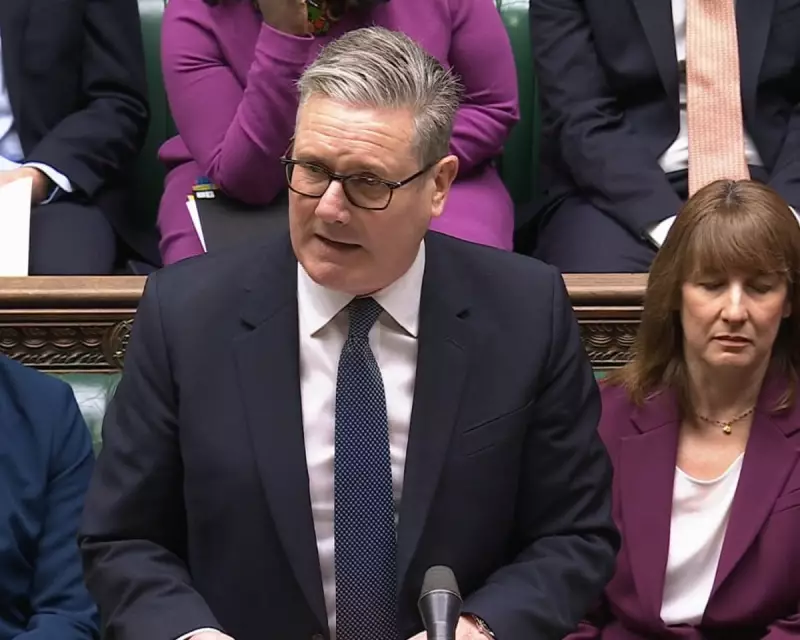
The commitment was made during a tense Prime Minister's Questions session, following discussions at an international summit in Paris where Britain and France indicated a willingness to send forces should a peace deal be secured. The announcement came after the Conservative leader, Kemi Badenoch, challenged Starmer for not making a full statement to the House of Commons on the matter.
In his response, Starmer detailed the sequence of events. "Yesterday, I stood side by side with our European and American allies and President Zelenskyy at the coalition of the willing meeting in Paris," he stated. "Along with President Macron and President Zelenskyy, we agreed a declaration of intent on the deployment of forces in the event of a peace deal."

He assured MPs that the specifics, including the number of personnel, would be presented to Parliament for scrutiny. "I will keep the house updated as the situation develops and were troops to be deployed under the declaration signed, I would put that matter to the house for a vote," Starmer affirmed.
Conservative Criticism and Prime Minister's Defence
While welcoming the government's efforts on Ukraine, Kemi Badenoch expressed strong disapproval of the Prime Minister's approach to informing Parliament. She labelled it "astonishing that the prime minister is not making a full statement to parliament today," arguing that no previous prime minister had failed to address the Commons personally after committing to troop deployments.
Starmer countered that an immediate statement was unnecessary because the Paris agreement was a political declaration that built upon existing military plans. He clarified that any deployment, which would involve troops conducting deterrent operations and protecting military hubs, would only occur after a ceasefire was in place.
"If we went as far as a legal instrument to deploy, which would be necessary, I would then have a debate in this house so all members could know exactly what we're doing, make their points of view, and then we would have a vote," he reiterated, framing this as the proper democratic procedure.
Ongoing Political Tensions
The exchange did not fully satisfy Commons Speaker, Sir Lindsay Hoyle, who requested an "early statement" on the issue. The session also saw Badenoch raise other foreign policy concerns, criticising Starmer for not having spoken to US President Donald Trump following recent military intervention in Venezuela.
Starmer pointedly reminded the Conservative leader of her past criticism when he attended a NATO summit, suggesting a pattern of political point-scoring over substantive engagement with complex international diplomacy. The commitment to a parliamentary vote sets a significant precedent for how future military deployments, particularly in a peacekeeping context, will be handled by the new government.