MPs Vote Down Social Media Ban for Under-16s in Parliamentary Showdown
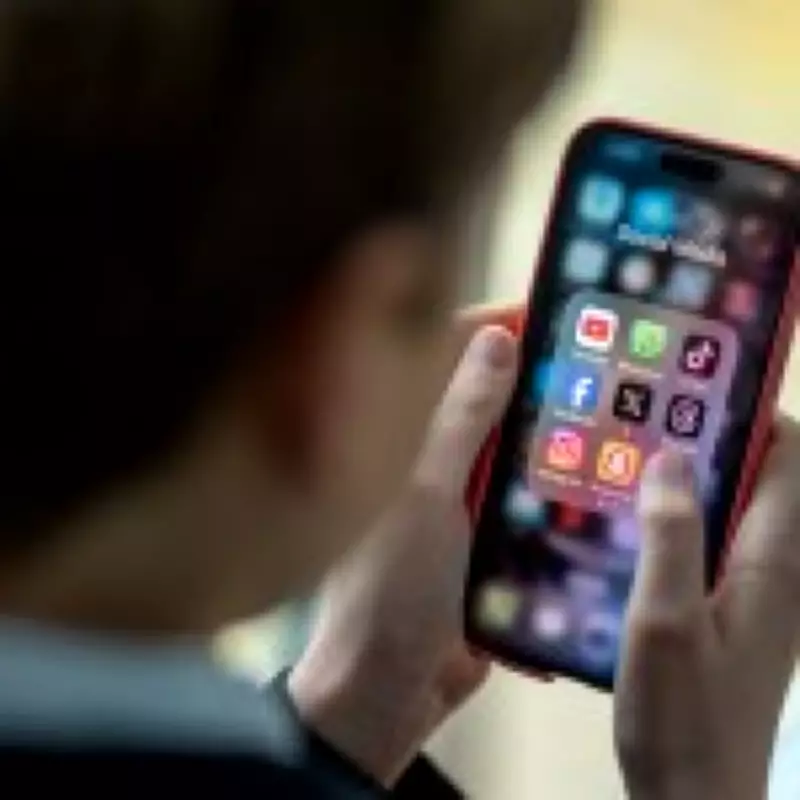
Members of Parliament have decisively rejected a proposal to implement a comprehensive social media ban for children under the age of 16. The controversial measure, which drew inspiration from similar Australian-style restrictions targeting platforms like TikTok, Instagram, and Snapchat, was defeated by a vote of 307 to 173, representing a substantial majority of 134 against the amendment.
The Contentious Debate Over Online Protection
Proponents of the ban argued passionately that parents currently find themselves in what they described as "an impossible position" when attempting to shield their children from the myriad online harms proliferating across social networks. Conservative former minister Lord Nash, who championed the amendment to the Children's Wellbeing and Schools Bill, expressed profound disappointment following the Commons vote, labeling the decision as "deeply disappointing" and vowing to pursue all available avenues to revive the proposal in the House of Lords.
However, significant opposition emerged from various quarters, including prominent children's charities like the NSPCC. These organizations cautioned that an outright prohibition could inadvertently drive teenagers toward less regulated and potentially more dangerous corners of the internet, where safeguards are minimal or nonexistent.

Government Secures New Regulatory Authority
Despite rejecting the immediate ban, Parliament approved a separate government initiative that grants substantial new powers to the Secretary of State. Under this provision, Science Secretary Liz Kendall will possess the authority to "restrict or ban children of certain ages from accessing social media services and chat bots." Additionally, these powers extend to limiting children's use of virtual private networks (VPNs), restricting access to addictive platform features, and potentially altering the UK's digital age of consent.
Education Minister Olivia Bailey clarified these expanded capabilities during parliamentary debates, emphasizing that the government remains committed to addressing online safety concerns through a measured, evidence-based approach.
Consultation Launched to Shape Future Policy
In response to the complex and polarized nature of the issue, the government has initiated a formal consultation process to gather diverse perspectives on regulating young people's access to social media. This consultation will specifically examine whether social media platforms should implement minimum age requirements and whether addictive features such as autoplay functions should be deactivated for younger users.
"Many parents and campaign groups have called for an outright ban on social media for under-16s," Minister Bailey stated. "Others, including children's charities, have warned that a blanket ban could drive children towards less regulated corners of the internet or leave teenagers unprepared when they do come online. That is why, last week, the government launched a consultation to seek views to help shape our next steps."
Cross-Party Reactions and Divisions
The vote revealed notable divisions within political ranks. Labour MP for Hayes and Harlington John McDonnell broke with his party to support the Lords amendment, while 107 Labour MPs, including North Somerset's Sadik Al-Hassan, chose to abstain. Al-Hassan, drawing parallels to pharmaceutical regulation, argued compellingly: "As a pharmacist, I know if a drug were causing such measurable harm for 78%, it would be withdrawn, reformulated or placed behind a counter with strict controls on who could access it. We would act, because that is what the evidence demanded. The same logic must apply here."
Education Committee Chairwoman Helen Hayes expressed support for "robust measures to protect children from social media harms," including raising the digital age of consent and banning certain apps for under-16s. However, she acknowledged the "important differences of opinion between stakeholders" and endorsed the government's consultation approach.

Broader Legislative Context and Additional Provisions
The Children's Wellbeing and Schools Bill, which now returns to the House of Lords for further consideration, contains additional significant measures beyond the social media debate. The legislation mandates that local councils assess a child's home environment within 15 days of their inclusion on a register of children not attending school—a provision developed in response to the tragic 2023 murder of 10-year-old Sara Sharif.
Furthermore, Minister Bailey confirmed that Benedict's Law, designed to strengthen allergy safety guidance in educational institutions, will be formally enacted. During debates, Shadow Education Secretary Laura Trott urged immediate action on banning phones in schools, citing alarming statistics: "Polling out today shows 40% of children are shown explicit content during the school day. That's happening right now. This is an emergency."
Path Forward and Political Implications
Liberal Democrat education spokesperson Munira Wilson criticized the government's approach, stating: "The government's failure to commit to a ban on harmful social media is simply not good enough—families need concrete assurances now." Meanwhile, Lord Nash pledged to collaborate with colleagues across both parliamentary chambers to advance the amendment once more, emphasizing that "our medical professionals, intelligence community, senior police officers, teachers and parents are all clear: we are not short of evidence, we are just short of action."
The legislation will only become law if both Houses of Parliament reach agreement on the final draft, setting the stage for continued negotiations and potential compromises in the coming weeks as policymakers grapple with balancing child protection against digital access and preparedness.