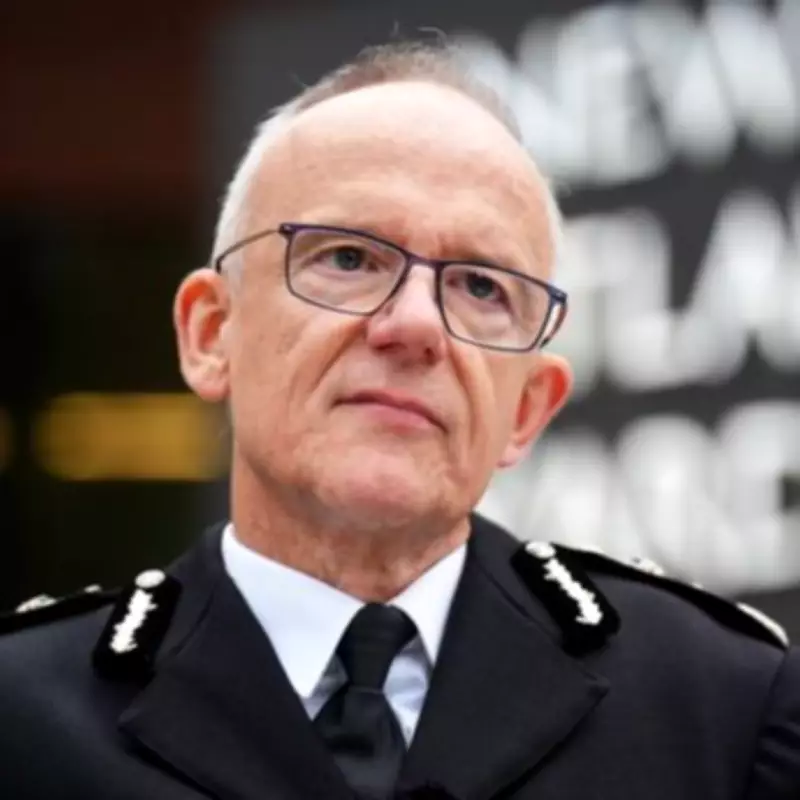
The Commissioner of the Metropolitan Police has provided crucial clarification regarding the reporting of hate incidents, addressing widespread confusion over how non-crime cases should be handled by officers. Sir Mark Rowley emphasised that while police resources must focus on illegal activities as defined by Parliament, it remains vital for the public to inform authorities about perceived hate-motivated incidents, even if they do not constitute criminal offences.
Distinguishing Between Crimes and Non-Crimes
Speaking at the official launch event for the British Muslim Trust in Westminster, Sir Mark responded to questions from the trust's chief executive, Akeela Ahmed, about non-crime hate incidents. These are situations perceived to be driven by prejudice based on characteristics such as race, religion, or gender, but which fall outside the legal definition of a crime. The Met had previously announced it would cease investigating such incidents, a decision that Ms Ahmed noted had caused significant confusion among victims and community groups.
Sir Mark explained that the police had found themselves acting as "referees" in matters that risked infringing upon freedom of speech. He stated, "For us to start investigating things that Parliament hasn't decided is illegal, you start to overreach, and I don't think that's actually helpful." He stressed the importance of directing limited police resources towards activities that are explicitly unlawful, as determined by legislative bodies.

Guidance for Victims and Communities
When asked what advice he would offer to individuals who might struggle to differentiate between a crime and a non-crime hate incident, Sir Mark was unequivocal. He advised, "If someone feels threatened because of their race or religion they should call us. We will work out whether it's a crime." He further elaborated that regardless of the legal classification, police need to be aware of such reports. This knowledge can help identify escalating tensions in neighbourhoods or areas, enabling officers to take preventative measures to avert potential violence.
The Commissioner underscored that information from non-crime reports could be instrumental in deploying resources effectively to maintain public safety and community harmony. This approach aims to balance the protection of free speech with the need to monitor and address underlying social tensions.
Addressing Integrity and Standards Within the Force
During the same event, Sir Mark was questioned about recent controversies within the Metropolitan Police, specifically referencing a BBC Panorama documentary that exposed officers making racist and sexist comments. He acknowledged that the force had "lost grip of its integrity issues" and that his tenure as Commissioner has been focused on rectifying these problems.
He highlighted the current climate of increased hostility, stating, "We're in a more hateful world." In response, the Met has implemented stricter vetting procedures for new recruits and enforced higher standards of conduct. Sir Mark reported that the officers implicated in the documentary were suspended within days, with most facing expedited tribunal hearings shortly thereafter. He described this as "as robust a response as I think you can hope for," demonstrating the force's commitment to accountability.
Launch of the British Muslim Trust
The event also served as the formal launch for the British Muslim Trust, a government-funded organisation established last summer to monitor anti-Muslim hate across the United Kingdom. The trust introduced its dedicated helpline, providing a channel for individuals to report incidents of hate and Islamophobia. The initiative aims to collect comprehensive data on such occurrences and offer support to those who come forward.
The launch was attended by several prominent figures, including the Mayor of London, Sir Sadiq Khan, who reflected on his personal experiences with hate during his childhood in 1970s London. He warned, "Now though, the extremists are trying to turn back the clock on the progress we've made." Other attendees included Sarah Owen, chairwoman of the Women and Equalities Committee, faith and communities minister Miatta Fahnbulleh, and professional rugby player Zainab Alema.

This gathering underscored a collaborative effort between law enforcement, government officials, and community organisations to tackle hate and promote understanding, while providing clear guidelines on when and how to engage police services in such sensitive matters.