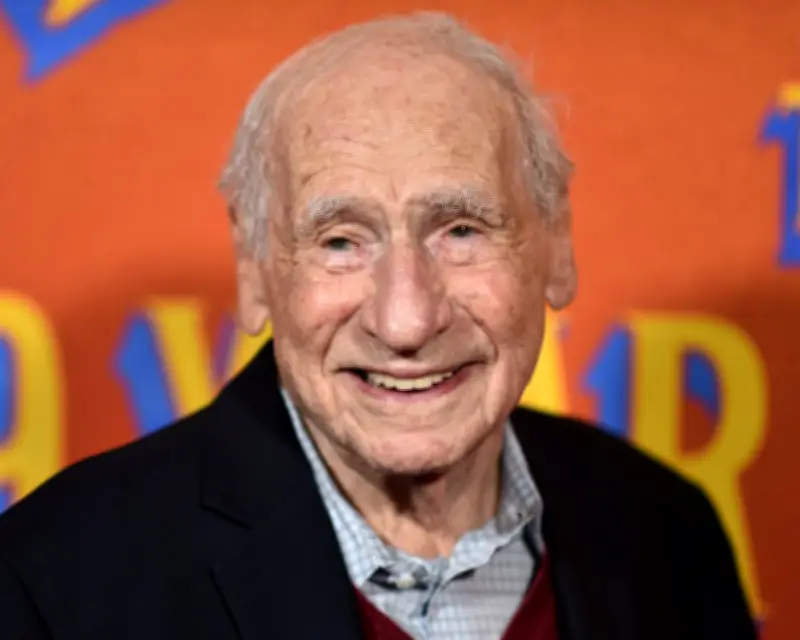
A Century of Laughter: Mel Brooks Turns 100
Mel Brooks, the legendary director and comedian behind The Producers and Blazing Saddles, celebrates his 100th birthday on June 28, 2026. Born Melvin Kaminsky on June 28, 1926, in a Brooklyn tenement, Brooks has become one of the most beloved entertainers in American history, earning a rare EGOT (Emmy, Grammy, Oscar, Tony) and embodying his conviction that 'comedy is the opposite of death.'
Early Life and War Service
Brooks was the youngest of four brothers, raised by his mother after his father died when Melvin was just two. A small, sickly child, he developed an intense desire for attention. As his colleague Larry Gelbart noted: 'Mel thought when he got slapped in the ass by the doctor who delivered him that was applause, and he has not stopped performing since.'
In his youth, Brooks learned drums from jazz great Buddy Rich. His teenage years were interrupted by World War II; he joined the U.S. Army and fought in the Battle of the Bulge. This experience forged his fearlessness and lifelong commitment to mocking Nazis. It also inspired his famous line, 'Comedy is the opposite of death.'

Rise in Show Business
After the war, Brooks drummed at Borscht Belt resorts in the Catskills, where he filled in for a sick comic and discovered the joy of making people laugh. He soon joined Your Show of Shows, the iconic Sid Caesar sketch show, assembling what many consider the greatest comedy writing team in television history. There, he met Carl Reiner, beginning a personal and professional relationship that lasted until Reiner's death in 2020 at age 98.
The pair improvised routines for friends, leading to the creation of the 2,000 Year Old Man, a character who claimed to have been present at the crucifixion. The routines, recorded on five albums between 1960 and 1997, were unapologetically Jewish at a time when such humor was risky. Brooks recalled Cary Grant playing the record at Buckingham Palace to the delight of the queen mother, saying, 'If the biggest shiksa in the world loves it, we're home free.'
Film Career and Cultural Impact
Brooks' first feature film, The Producers (1967), centered on Broadway producers who scheme to profit from a flop, culminating in Springtime for Hitler: A Gay Romp with Adolf and Eva at Berchtesgaden. Larry David, who built a Curb Your Enthusiasm season in tribute, called it 'possibly the greatest comedic premise that anybody has ever dreamed up.' Some critics felt the horrors of WWII were too fresh; one audience member confronted Brooks, saying, 'I was in World War Two.' Brooks replied, 'So was I, I didn't see you there.'
His next film, The Twelve Chairs (1970), showcased his love of Russian literature, inspired by colleague Mel Tolkin lending him Gogol's Dead Souls. But 1974 was a banner year: Blazing Saddles and Young Frankenstein ushered in the golden age of parody films. Blazing Saddles became the highest-grossing western until Dances With Wolves in 1990.
Brooks continued making parodies in the 1980s and 1990s with diminishing returns, but his true calling often seemed to be simply being Mel Brooks. He produced The Elephant Man, selecting David Lynch as director and removing his own name from credits to avoid confusion. When executives requested changes, Brooks replied, 'Do not misconstrue this as our soliciting the input of raging primitives.'
Legacy and Later Years
Brooks is one of only 22 people to win an Oscar, Emmy, Grammy, and Tony. His defiance of death, forged in war, drove his relentless pursuit of joy. A friend once met a taxi driver who had driven Brooks to a London speaking engagement; when the cabby revealed he was a fan, Brooks performed his entire speech for an audience of one.
When asked the secret to a long life after a screening of Blazing Saddles, Brooks offered sage advice: 'Don't die.' He turns 100, still blazing after all these years.