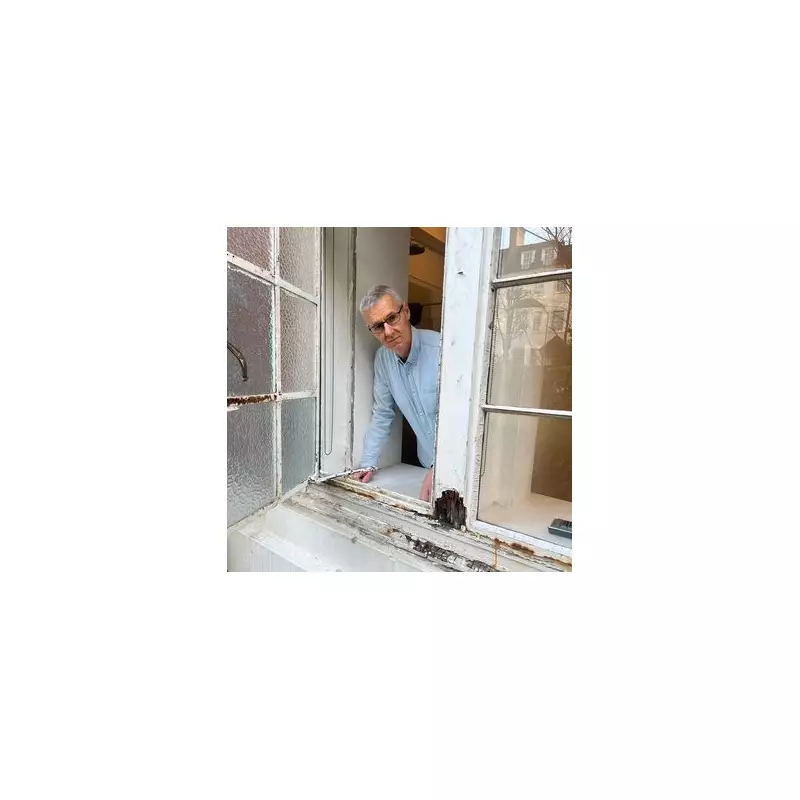
A central London homeowner has been hit with a potential bill of over £16,000 to replace just two rotting windows, a situation he describes as 'red tape lunacy'.
The £16,000 Window Replacement
Chris Howell, an accountant living in a ground-floor flat in Westminster, initially budgeted around £2,500 to install standard PVC double-glazed windows to fix the rot. However, due to his building's location in the upmarket borough and its classification as a 'higher-risk' building, the total cost is now projected to exceed £16,000.
Mr Howell expressed his profound frustration, feeling he is 'being punished for doing the right thing'. He stated: "If someone smashed my windows tomorrow, I could replace them straight away because it'd be an emergency. But because I'm trying to follow the rules, I'm trapped in months of paperwork and thousands of pounds in fees."
Navigating Planning and Safety Rules
The financial shock stems from a combination of local planning rules and national building safety legislation. Because his property is in Westminster, Mr Howell must first apply for planning permission to change his windows, even for a like-for-like replacement. The council charges £528 for this application, and most applicants need to hire consultants, adding thousands more.
Furthermore, based on other local cases, Mr Howell anticipates the council would reject cheaper PVC windows and require more expensive aluminium frames, effectively doubling the cost of the windows themselves from £2,500 to £5,000.
The Building Safety Act Hurdle
Complicating matters further, his eight-storey building is categorised as 'higher-risk' under the Building Safety Act 2022. This means any work, including replacing a single window, must be approved by the Building Safety Regulator (BSR) unless certified by a government-recognised scheme.
When Mr Howell contacted the three approved glazing bodies, each refused to sign off work on high-risk buildings. This left him with no choice but to apply directly to the BSR, triggering further consultant fees. Quotes for preparing the BSR application alone ranged from £5,000 to £12,000, on top of a £288 submission fee and the regulator's hourly charge of £144.
Official data shows that approximately 70% of applications to the BSR are rejected, sometimes for minor reasons. Processing times can stretch to nine months or more, with some homeowners paying over £4,000 in fees while they wait.
An added layer of irony for Mr Howell is that his ground-floor flat means the expensive aluminium frames demanded by planners would be 'almost entirely hidden behind a bush'.
A Systemic Problem
Frustrated, Mr Howell submitted a Freedom of Information request which revealed a startling statistic: of the 700,000 flats in 'higher-risk' buildings across the country, the BSR had received only around a hundred applications for window work since 2024. This suggests many residents may be unaware of the requirement or are ignoring it, risking legal action and up to two years in prison.
Sam Richards, CEO of campaign group Britain Remade, called the situation evidence that something has gone 'badly wrong'. He said: "It is simply extraordinary that a repair as straightforward as replacing rotting wooden windows required a planning application, multiple consultants, specialist firms and a national regulator. This is red tape lunacy."
In response to the issues, a spokesperson for the BSR stated that several operational changes have been made, leading to reduced processing times. They emphasised that most window replacements in higher-risk buildings do not need BSR approval if signed off via competent person schemes, but acknowledged that where those schemes choose not to operate, residents can apply directly.
Cllr Geoff Barraclough, Westminster City Council Cabinet Member for Planning, agreed the BSR requirement was 'ridiculous' and expressed hope the government would remove it in early 2026. However, the council maintains its stance on preserving the historic streetscape, insisting on wooden sash windows instead of uPVC.