House of Lords Condemns Government's Pension Power Grab as 'Dangerous and Unjustified'
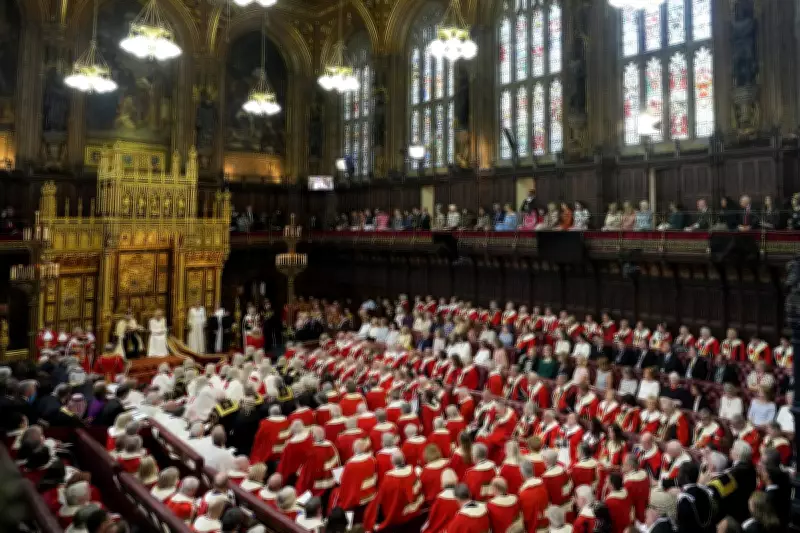
In a dramatic parliamentary session, the House of Lords has delivered a scathing rebuke to ministers over controversial reserve powers in the Pension Schemes Bill, branding the proposed authority as "dangerous and unjustified." The heated debate centers on government attempts to mandate how pension funds invest billions in savings, sparking fierce opposition from peers and industry bodies alike.
Conservative Baroness Warns of 'Sweeping Authority'
During an urgent question session, Conservative Baroness Stedman-Scott launched a blistering attack on the legislation, warning that it grants the government "sweeping authority" over pension fund investments. "The government says this power is merely a backstop to the Mansion House Accord, but this is a gross misrepresentation," she declared. "The pension schemes bill goes far beyond that and gives ministers sweeping authority to mandate pension investments to whatever level they choose."
The contentious backstop power would allow the government to require defined contribution schemes to allocate a minimum percentage into specific areas, particularly UK private assets, if voluntary targets under the Mansion House Accord are not met. Stedman-Scott argued passionately that the state "should not be directing" the allocation of private pension assets, insisting such decisions must remain with trustees who understand their members' best interests.

Government Defends 'Backstop' Purpose
Pensions Minister Torsten Bell defended the legislation, stating at the Pensions UK Investment Conference that "the only purpose of the reserve power in the Pension Schemes Bill is to backstop the Mansion House Accord goals." He promised to "ensure that it is put beyond doubt" as the legislation enters its final phases in the House of Lords, clarifying that the power serves only this singular purpose.
Parliamentary Under-Secretary of State for DWP Baroness Sherlock echoed this position, asserting the government "had made it clear" the power merely backstops the accord and does not direct schemes into specific assets. She argued that investing a "small proportion" into proposed assets under the accord would deliver better returns for savers, countering what she described as excessive "short-termism" in current investment approaches.
Industry Bodies Sound Alarm Bells
Both Pensions UK and the Association of British Insurers have raised serious concerns about the damaging effects of mandation, calling for the power to be dropped entirely. Pensions UK Chief Executive Julian Mund warned last week that the current drafting "goes far beyond the scope of the Mansion House Accord and could be used to direct investment in very broad terms, either by this government or a future one."
Stedman-Scott amplified these industry warnings, claiming the policy "undermined" auto-enrolment success. Meanwhile, Lord Vaux of Harrowden questioned the fundamental approach, asking why pension funds aren't investing in government-preferred assets voluntarily. "Surely the better way forward is to understand what is stopping them doing so and fixing that problem," he suggested, "rather than telling them to do something they don't wish to do."
Mansion House Accord's Voluntary Framework
The voluntary, non-binding Mansion House Accord could potentially channel increased investment into major infrastructure projects and venture capital for fast-growing startups. The Treasury hopes this approach will create jobs and drive economic growth. Under its terms, signatories have agreed to allocate at least ten percent of all defined contribution funds into private markets by 2030, with five percent specifically directed to UK private markets.
As the legislation approaches its final stages, the clash between government ambition and parliamentary oversight intensifies, with the House of Lords positioning itself as a crucial check on what peers perceive as executive overreach in pension policy.