Lords to Debate Critical Loophole in Paedophile Parental Rights Legislation
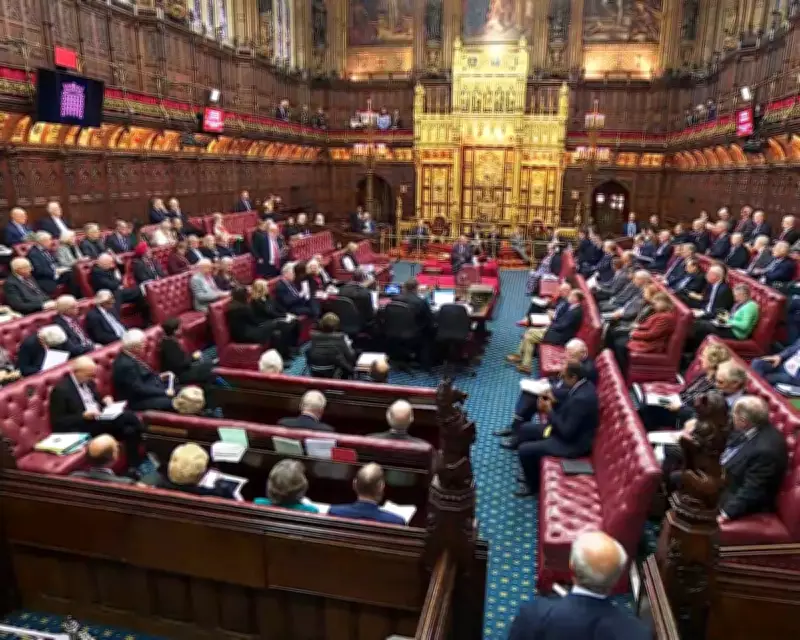
A proposed law designed to restrict the parental rights of convicted paedophiles in England and Wales faces scrutiny this week for a significant weakness. The current version of the victims and courts bill fails to protect children born after a parent's conviction, creating a dangerous legal anomaly that will be debated in the House of Lords on Tuesday.
The Gap in Protection for Future Children
Under the existing bill, a parent convicted of serious sexual offences against any child and sentenced to four or more years in prison would lose parental responsibility. However, this provision only applies to children born before the conviction. Should the offender be released from prison and have additional children, those offspring would not be automatically protected by the law.
Crossbench peer and former family court judge James Meston has tabled an amendment to address this critical oversight. His proposal aims to ensure that all children, regardless of when they are born in relation to a parent's conviction, receive equal protection from potential abuse.

Inspired by a Mother's Legal Battle
The push to strengthen parental responsibility restrictions originated from a harrowing case reported by the BBC. A mother identified as Bethan spent approximately thirty thousand pounds in legal fees to prevent her paedophile ex-husband from having contact with their daughter. Bethan has become a vocal advocate for closing the legislative gap.
"This amendment will prevent the formation of a deeply unfair two-tier system," Bethan stated. "Where children born before the paedophile parent's conviction are safe from abuse, but younger siblings, born even a day after conviction, are still under the control of, and highly likely to be abused by, the paedophile."
She emphasized that if a paedophile retains parental rights over even one child, they maintain control over the entire family unit, potentially terrorizing their ex-partner and children. The amendment seeks to close this substantial loophole and prioritize the safety of all children equally.
Balancing Legal Rights and Child Safety
During parliamentary debates last year, the minister for victims, Alex Davies-Jones, noted the government's position that it "cannot bind future children or children yet to be born." She suggested that if such children were at risk, the normal route to strip parental responsibility through the family courts would remain available.
Lord Meston acknowledged that a blanket ban on parental rights could potentially interfere with Article 8 of the European Convention on Human Rights, which protects the right to respect for family life. However, he designed his amendment to navigate this legal obstacle.
"My amendment overcomes this by allowing the door to remain – at least theoretically – open to an application later on to the family court to be allowed in some circumstances to exercise parental responsibility," Meston explained.
The Specifics of the Proposed Amendment
Meston's amendment, crafted after consultation with Bethan's father, specifies that a person cannot automatically acquire parental responsibility under Section 2 of the Children Act 1989 if, at the time of the child's birth, they meet certain criteria:
- They have been convicted of a serious sexual offence committed against a child and sentenced to a life sentence, or a term of imprisonment or detention of four years or more.
- They have been convicted of rape and the child was conceived as a result of that rape.
Bethan's father highlighted the broader implications, noting that on forums like Mumsnet, some women describe choosing to terminate healthy pregnancies to escape a partner's coercive control without facing the family courts. While the victims and courts bill would end this situation for existing children of convicted child sex offenders, without the amendment, the same ordeal could continue for any child born after conviction.
The government has maintained its standard position of not commenting on amendments before they have been debated in parliament. The House of Lords discussion on Tuesday will determine whether this critical protection for vulnerable children will be strengthened or remain inadequate.