The recent by-election in Gorton and Denton has sent shockwaves through London's political landscape, with aftershocks expected to reverberate across the capital during May's borough elections. By-elections typically serve as isolated, high-intensity political events where parties focus their resources on a single constituency of approximately 70,000 voters. These contests provide a unique opportunity for protest votes and delivering a sharp rebuke to the governing party.
Sectarian Politics in London's Diverse Boroughs
One of the most pressing questions emerging from the by-election is the extent of sectarianism in London's politics. Reform UK has aggressively attributed their defeat to what they describe as dirty tricks and sectarian politics, a thinly veiled critique of the Green Party's successful mobilization of Gorton's substantial Muslim population. This rhetoric, combined with allegations of family voting, ensures that Islam will become a central lens through which borough election results are analyzed.
According to the 2021 Census, Muslims constitute around 16 percent of London's population, with this figure exceeding 30 percent in several east London boroughs including Tower Hamlets, Newham, and Redbridge. Despite London's status as the UK's most diverse region and the clear distinction between race and religion, the upcoming elections are likely to spark a heated parallel debate about multiculturalism in the capital.

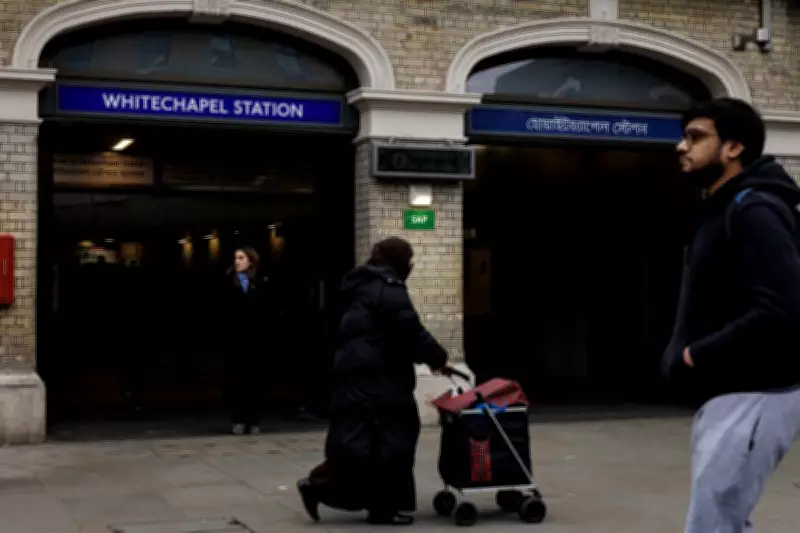
Every campaign leaflet published in Urdu and every reference to international conflicts like Gaza will be amplified, weaponized, and editorialized in this increasingly intemperate discourse. The controversy extends to practical matters of representation, as seen in February 2025 when Reform UK MP Rupert Lowe criticized Bengali signage at Whitechapel Underground Station, installed in 2022 with funding from Tower Hamlets council to acknowledge the Bangladeshi community's contributions. Lowe's assertion that station names should be in English and English only received public support from X-owner Elon Musk, highlighting how cultural symbols become political flashpoints.
Voter Motivations: Protest Against Labour or Reform?
A second critical question is whether Londoners will be voting primarily against Labour, against Reform UK, or against both parties simultaneously. In Gorton and Denton, Reform positioned themselves as the natural choice for voters seeking to punish the government, while Labour presented themselves as the progressive alternative to prevent a Reform victory. Ultimately, voters opted for the Green Party, achieving both objectives with a clear conscience.
If the Greens can replicate this strategy across London, they stand to gain significantly in the borough elections. The relative performance of Green and Reform candidates will provide crucial evidence about Londoners' true voting intentions and which party bears the brunt of public dissatisfaction.
Hidden Consequences for Both Major Parties
The third question concerns whether a disastrous night for Labour leader Keir Starmer might obscure an equally poor performance for Conservative leader Kemi Badenoch. While Labour's defeat in Gorton and Denton captured headlines as they lost a seat held for nearly a century, the Conservatives suffered what many consider their worst-ever by-election performance, plummeting to just two percent of the vote and forfeiting their deposit.
There is substantial evidence that a potential Labour annihilation across London on May 7th could overshadow a similarly dismal outcome for the Conservatives in the capital. Although Tories maintain quiet confidence about regaining control of flagship boroughs like Wandsworth or the City of Westminster—once impregnable strongholds lost to Labour in 2022—they face much stiffer challenges in outer London.
These outer boroughs, previously the party's suburban heartland that twice elected Boris Johnson as Mayor, are now prime targets for Reform UK. Regaining Westminster might provide Badenoch with a talking point, but if it comes at the expense of losing traditional Conservative territories like Bexley and Bromley, claims of a genuine Tory recovery in London will ring hollow.

The Stakes for London's Political Future
This year's local elections carry immense significance, comparable to US midterm elections in their impact on Westminster decision-makers. If Labour loses its grip on inner London to the Greens while Reform UK makes substantial inroads into the Conservative doughnut of outer boroughs, both established parties will face existential threats. Such an outcome would dramatically complicate the 2028 battle for control of City Hall, making London's political landscape increasingly unpredictable and fragmented along sectarian and ideological lines.