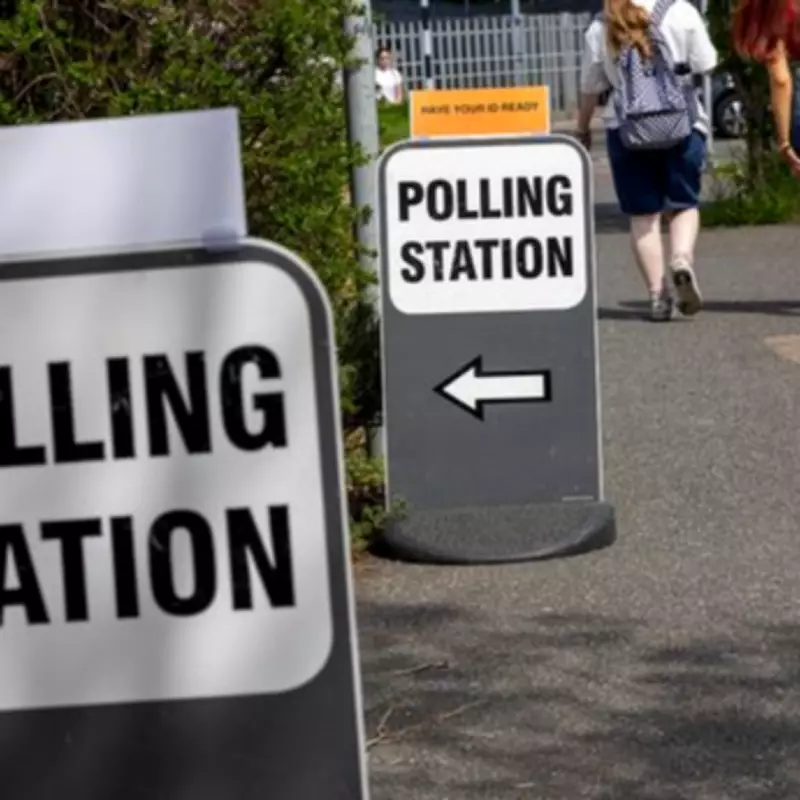
Voters across England will head to the polls on Thursday, May 7, to decide the fate of more than 5,000 council seats in a pivotal set of local elections. Contests are scheduled for 136 local authorities, encompassing some of the nation's largest cities and the entirety of London. In the capital alone, six million eligible voters will elect over 1,800 councillors across all 32 boroughs, potentially marking one of London's most unpredictable electoral events in recent memory.
A Multi-Party Battle for Control
The traditional dominance of Labour, the Conservatives, and the Liberal Democrats is under serious threat. Reform UK and the Green Party are aggressively targeting council control, while independents and the Aspire Party in Tower Hamlets inject additional uncertainty into the political landscape. Political analysts caution that if current polling trends persist, London's political map could look radically different after May, with five or six distinct parties potentially holding power across various boroughs.
Where Are Elections Taking Place?
The 136 local authorities conducting elections are distributed throughout England. Notably, all 32 London boroughs are holding contests. Additionally, local mayoral elections will occur in six specific areas: Croydon, Hackney, Lewisham, Newham, Tower Hamlets, and Watford.

How Many Council Seats Are Being Elected?
A total of 5,013 seats are being contested across the participating authorities. The majority of these seats were last elected in 2022, during a period when the Conservative government, led by then-Prime Minister Boris Johnson, was trailing Labour in opinion polls and losing public support following the Partygate scandal. Those 2022 elections resulted in gains for Labour, the Liberal Democrats, and Greens at the expense of the Conservatives, while Reform UK contested only a limited number of seats, securing just two victories.
Which Parties Are Defending Seats?
Labour is defending more than half of the seats up for election this year, reflecting the party's current strength in London and metropolitan boroughs. The Conservatives are defending just over a quarter of the seats. This scenario contrasts sharply with last year's local elections, where the Tories defended the greatest number of seats due to contests primarily involving county councils where they held dominance.
According to calculations by Professors Colin Rallings and Michael Thrasher of Exeter University, long-time specialists in local election analysis, the breakdown of defended seats is as follows:
- Labour: 2,557 seats
- Conservatives: 1,362 seats
- Liberal Democrats: 684 seats
- Other parties and independents: 410 seats
These figures include seats contested for the first time due to boundary changes, where a notional defending party has been estimated.
Polling Predictions and Recent Trends
Across England, Labour could end up "over 1,000 councillors down," based on analysis published by Professors Rallings and Thrasher. This projection assumes the party will perform as poorly as it did in the May 2025 local elections, when both Labour and the Conservatives lost seats to Reform UK, the Liberal Democrats, the Greens, and independents.
"Neither opinion polls nor local by-elections suggest much has changed" in the past twelve months, their analysis states, indicating that both Labour and the Tories could face substantial losses. Since May 2025, Labour's share of the vote in local by-elections has fallen by an average of 25%. If this trend is replicated in the upcoming elections, the party's losses could approach 2,000 seats.
The Conservatives "face particular jeopardy" in the six county council elections, where dozens of seats could change hands if Reform UK performs as strongly as it did in 2025. Reform UK, the Liberal Democrats, and the Greens are all likely to achieve net gains in seats overall, with Nigel Farage's party especially poised for growth given its currently low baseline.

Challenges Facing the Main Parties
Local council and mayoral elections often reflect voter attitudes on neighborhood issues such as bin collection schedules, park and pavement conditions, and access to libraries and hospitals. However, they can also serve as a verdict on how parties and leaders are handling national concerns. This year, key issues may include the cost of living, the economy, immigration, and even foreign affairs like the conflicts in Iran and Ukraine.
Labour leader Sir Keir Starmer and Conservative leader Kemi Badenoch both confront the challenge of minimizing potential losses. In contrast, Liberal Democrat leader Sir Ed Davey, Reform UK leader Nigel Farage, and Green leader Zack Polanski each face the challenge of demonstrating tangible gains at the expense of the major parties and meeting the heightened expectations of their supporters.
Election Timetable and Logistics
Polls will close at 10 PM on May 7, but only approximately one-third of councils are expected to count and declare results overnight. Most councils will commence vote counting on Friday, May 8, with full results likely announced in the early afternoon. A small number of councils have indicated they may not complete counting until Saturday, May 9. A comprehensive list of estimated declaration times will be published by PA Media closer to polling day.
Other Elections on May 7
Concurrently, elections will be held in Scotland for members of the Scottish Parliament and in Wales for members of the Senedd, adding to the nationwide political significance of the date.
Voter Registration Deadlines
The deadline to register to vote in the May 7 elections is 11:59 PM on Monday, April 20. Applications can be submitted online at gov.uk/register-to-vote. Key deadlines for alternative voting methods include:
- Postal vote applications: 5 PM on Tuesday, April 21 (apply at gov.uk/apply-postal-vote).
- Proxy vote applications: 5 PM on Tuesday, April 28 (apply at gov.uk/apply-proxy-vote).
These elections represent a critical juncture for local governance across England, with London's political future hanging in the balance as voters prepare to reshape council chambers and mayoral offices.