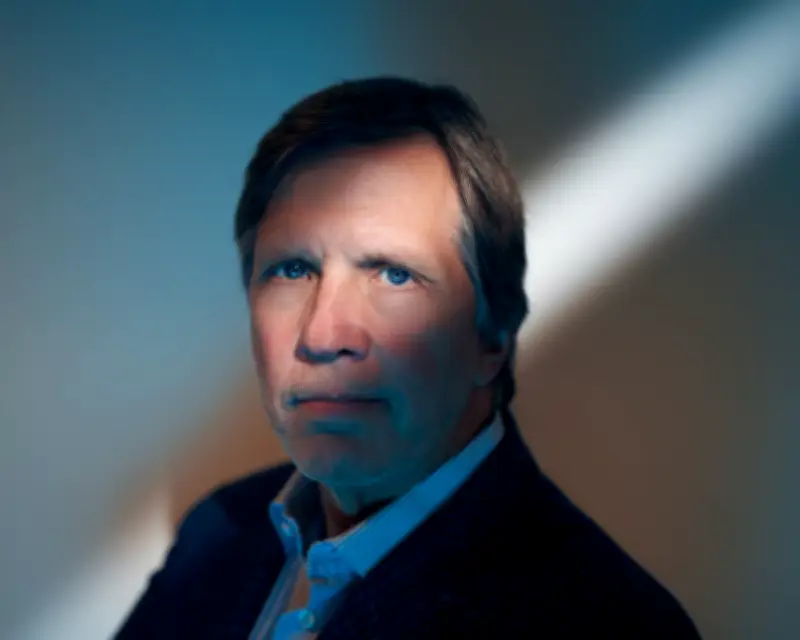
Mark Lanier, the Texas lawyer who secured a landmark victory against Meta and Google in a social media addiction case, has described the trial as a 'holy war' and a 'righteous case'. In February 2024, Lanier faced tech billionaires Mark Zuckerberg and Sundar Pichai in a Los Angeles courtroom, representing a 20-year-old woman identified as Kaley (KGM). The jury found that Instagram and YouTube were deliberately designed to be addictive, causing Kaley to develop body dysmorphia, anxiety, and depression. She was awarded $6m in damages, with Meta responsible for 70% and Google for 30%.
A David versus Goliath battle
Lanier, 65, described the disparity between his team and the tech giants as even greater than the biblical mismatch. 'To call it a David versus Goliath storyline is maybe giving too much credit to David, but it's the best descriptor I can give,' he said. The defendants had unlimited resources and dozens of lawyers. Kaley's case was the first to hold social media companies accountable for the inherent design of their platforms, rather than the content hosted on them.
The trial began with a controversial moment when Zuckerberg entered the courtroom flanked by security guards wearing Meta Ray-Bans. Lanier argued this was an attempt at digital surveillance of the anonymous jury. 'They can easily do facial identification and figure out exactly who the jurors are,' he said. The judge ordered the glasses removed after the prosecution objected.
Using AI against the tech giants
Lanier, a self-described 'AI zealot', employed a custom AI system from BoodleBox that combined Gemini, Claude, and ChatGPT. The AI created psychological profiles of each juror based on their questionnaires, allowing Lanier to test arguments and predict reactions. 'Pretty cool,' he grinned. He also used AI to sift through millions of pages of internal documents from Meta and Google, uncovering evidence of deliberate addictive design.
Internal documents revealed that Google's 2012 memo stated YouTube's 'goal is not viewership; it's viewer addiction'. Another Google document referred to its products as 'slot machines' and 'attention casinos'. Meta's own research in 2019 found that teens had 'an addicts' narrative about their Instagram use' and wished they could spend less time on it.
The impact on Kaley
Kaley, now 20, began using YouTube at age six and Instagram at nine. She spent up to 16 hours a day on Instagram, cutting herself from age 10. Her mother tried to impose screen time limits, but Kaley would 'beg and beg and cry' until she got her phone back. 'I had withdrawal symptoms,' she said. The jury heard testimony from a psychiatrist and therapist that her body dysmorphia was caused by social media use.
Lanier argued that Meta and Google used 'casino science'—intermittent variable rewards—to keep children hooked. 'They are scary,' he said. 'The algorithms are amoral, relentless, and designed to keep your attention.'
A reckoning for big tech
The verdict has opened the floodgates to over 2,000 similar lawsuits against social media companies. Former Facebook whistleblower Frances Haugen claimed Meta could face $1tn in future damages. Lanier estimates 'tens of billions, easy'. He believes litigation is the only way to force change. 'Politicians will never hold these people accountable. The only thing they fear is a jury,' he said.
Lanier's previous landmark cases include a $4.69bn verdict against Johnson & Johnson over talc-based baby powder and a $260m settlement from opioid manufacturers. He funds his charitable foundation, which bought Yarnton Manor in Oxfordshire for religious study, through such victories. 'It was the Johnson & Johnson case that bought this,' he said.
What's next
Lanier is now working on a claim against OpenAI over a teenager's suicide and a forthcoming suit against Roblox, which he calls 'a breeding ground for child exploitation'. He also supports UK Prime Minister Keir Starmer's proposed social media ban for under-16s, calling it 'brilliant'. Kaley, meanwhile, remains on social media but hopes to one day stop. 'It's very difficult,' she said.
Lanier's realism tempers his optimism. 'Mark Zuckerberg has immense power, and power is as addictive as any drug. Do we really think that he's going to readily abandon a portion of his power? This is going to be a war that will last my lifetime—and the lifetime of others.'