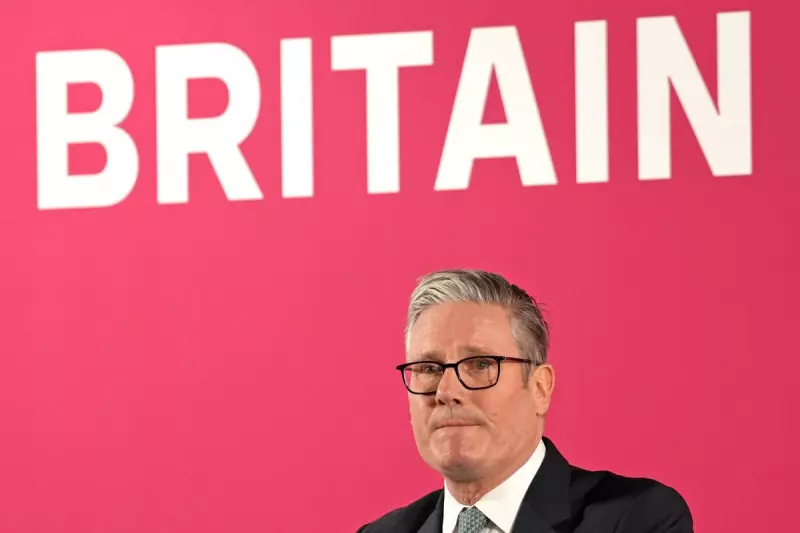
Despite securing a commanding majority in a highly centralised political system, Keir Starmer's Labour government appears hesitant to fully exercise its considerable authority, according to political strategist John McTernan. The administration, which won a landslide victory in the 2024 General Election, has faced criticism for its choice of targets and the pace of its decision-making.
A Slow Search for Political Definition
McTernan posits that a core question for any politician is "who are you?" – a definition often forged through conflict and clear purpose. For Starmer's government, the initial targets proved controversial. Shortly after the election, pensioners saw winter fuel payments cut. This was followed by summer measures affecting a million people with disabilities, with annual cuts of around £5,000, controversially labelled as welfare reform.
However, a shift in focus emerged with last week's Budget. The government has now identified child poverty as a key adversary, lifting the two-child cap on benefits. Chancellor Rachel Reeves presented a clear dividing line with Conservative and Reform UK opponents, committing to increased public service spending funded by higher taxes. "Taxes will rise and continue to rise for the rest of the parliament so that public spending can rise too," McTernan notes, framing this as the Budget's true achievement: achieving unambiguous political definition.

A Stalled Growth Agenda and Systemic Delays
The government's challenges are twofold. Firstly, its agenda for economic growth has seemingly ground to a halt. Housing starts are at a virtual standstill, partly attributed to the Building Safety Regulator, which is reportedly adding an extra year to development approvals. A hoped-for major announcement on nuclear energy, embracing John Fingleton's proposals, was absent from the Budget, suggesting deregulation has been deprioritised.
Delays appear systemic. Government insiders recently indicated that establishing new development corporations would take "at least two years", negating their primary advantage of speed. McTernan contrasts this with the rapid establishment of the Merseyside Development Corporation in the 1980s, urging ministers to study the lessons of urgent, decisive governmental action.
The Power of Government and the Risk of Inaction
The central critique is that Starmer's administration is not leveraging the immense power of the British state. The government seems torn between warning backbenchers about bond market reactions and offering welfare concessions. This contrasts with the appeal of populist figures like Donald Trump or Nigel Farage, who champion the state's power to enact swift, decisive change.
McTernan concludes that the centralised nature of the UK state presents a huge opportunity for a radical government with a large Commons majority. With Labour having held such dominant power for only 23 of its 125-year history, the imperative is clear: it must use its power or risk losing it. The electorate granted a mandate for change; the government's challenge is now to act with the conviction and speed that matches its political potential.