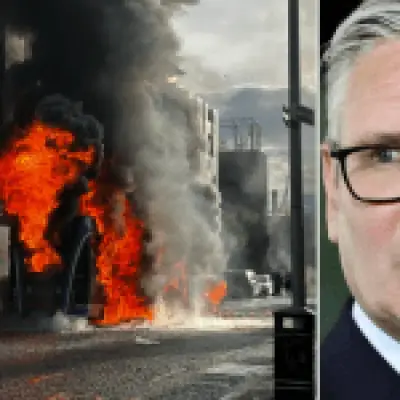
Sir Keir Starmer is entering a perilous phase of his premiership, with a failing government and a demoralised party raising the spectre of a leadership challenge. The Prime Minister's inability to convince the public he has a credible plan for national renewal has created a crisis of confidence within Westminster.
The Structural Crisis Undermining British Governance
Starmer's personal struggles are magnified by deep-seated structural problems that long predate his tenure at Number 10. Voter dissatisfaction has been a driving force in British politics since the 2007-08 financial crisis, with economic stagnation leaving people working harder for little improvement in their living standards. This underlying malaise has been compounded by the shocks of Covid-19, the war in Ukraine, and Brexit.
The political landscape has become a zero-sum game, where chancellors are forced to raid one department's budget to prop up another, and tax one group to spend on their neighbours. This environment of scarce resources fosters resentment and creates fertile ground for demagoguery, particularly around issues like migration and public service funding.

The Retreat from Honesty and the Rise of 'Cakeism'
Before November's budget, Chancellor Rachel Reeves appeared to acknowledge the scale of the challenge, warning the nation that broad-based tax rises might be necessary to fund vital public services. However, facing a clear manifesto pledge, both she and the Prime Minister ultimately flinched.
Instead, the government resorted to stealth taxes, improbable spending projections, and optimistic growth forecasts, deferring the hard choices once again. This retreat exemplifies the 'cakeism' that has dominated British politics—the pretence that voters can have their cake and eat it, without facing trade-offs or costs.
This doctrine, explicitly championed by Boris Johnson during the Brexit debates, has persisted in the denial of other complex issues, from social care funding to climate action. Labour's own 2024 election manifesto was a cakeist document, promising transformative change within tight fiscal constraints that ultimately felt like continuity.
A Reckoning After the Local Elections
The impossibility of delivering on those 2024 promises became starkly apparent in 2025. As the party looks to 2026, it requires a far more honest diagnosis of Britain's predicament and clearer prescriptions. Many MPs believe new leadership might provide that clarity, and a challenge looks plausible, potentially soon after next May's local elections.
This would fit a pattern of short-serving prime ministers; David Cameron was the last leader to serve a full term, with the average tenure since falling to around 20 months. However, replacing the leader has become a habit born of a systemic failure to address more profound problems. While a more charismatic leader with a sharper plan might have fared better, the fundamental issue remains: the incentives in Westminster still militate against candour, and a failing government may finally have to try honesty.