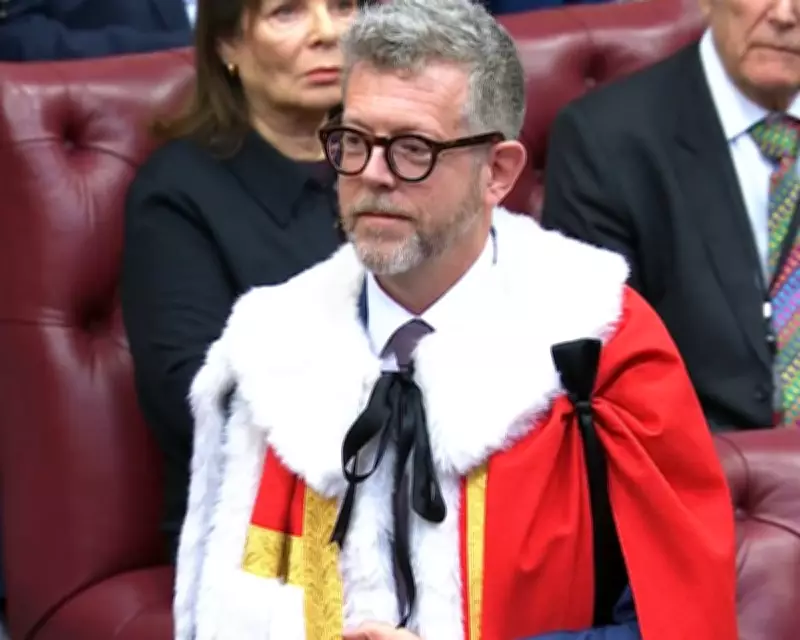
Earlier this week, the Labour Party suspended the Lords whip from Matthew Doyle, a former Downing Street director of communications. This action follows revelations that Lord Doyle campaigned in council elections on behalf of a friend who had been charged with possessing indecent images of children. Lord Doyle has stated that he believed his friend was innocent at the time, but Downing Street officials claim he did not provide a full account of the facts when his peerage was awarded.
Pressure Mounts on Keir Starmer
This incident has intensified pressure on Prime Minister Keir Starmer, who is already facing criticism over appointments and the slow pace of constitutional reform. Conservatives have seized on the episode as evidence of what they describe as the prime minister's poor judgment in making appointments. However, critics note that the Conservative Party itself does not advocate for broader reforms or a clear-out of unsuitable peers, given that the House of Lords is populated with many Tory donors, cronies, and aides who lack robust credentials for lifelong legislative roles.
The Archaic System Under Scrutiny
The archaism of Britain's upper parliamentary chamber is not the direct cause of Sir Keir Starmer's current political challenges, but it remains a significant feature of the political landscape. For instance, Peter Mandelson's peerage was not directly tied to his appointment as ambassador to Washington, yet it was not irrelevant either. He benefited from the status conferred by a seat in the Lords during his long-standing friendship with Jeffrey Epstein. Although Lord Mandelson has voluntarily resigned from active parliamentary membership, his title can only be revoked by special statute, highlighting the absurdity of a system that allows party leaders to distribute legislative positions to friends and supporters without any requirement to face electoral judgment.

Labour's Manifesto Promises
In opposition, Labour demonstrated a clear understanding of these issues. The party's 2024 manifesto committed to an extensive process of "immediate reform" for the House of Lords. Key pledges included the removal of the last remaining hereditary peers, strengthening the appointments process and accountability mechanisms to uphold standards, and ultimately replacing the entire house with a "more representative" second chamber.
Slow Progress on Implementation
However, progress on implementing these reforms has been sluggish. A bill to abolish hereditary peerages was introduced in the Commons in September 2024, but it faced delays and dilution in the Lords and has yet to receive royal assent. Other planned reforms have been referred to a committee that is not scheduled to report until July. There is currently no discussion about abolishing the upper house, nor even a consultation on potential replacements.
The Predictable Loss of Ambition
This loss of ambition was predictable, as constitutional reform is inherently challenging. Persuading a chamber of peers to accept change, let alone agree to its own abolition, was always going to consume significant political bandwidth that Downing Street would prefer to allocate elsewhere. Political strategists often argue that Lords reform is not a "doorstep issue" and ranks low on most voters' priority lists.
Dysfunction and Public Trust
Yet, dysfunction in Britain's governing institutions has a way of resonating with the public, as recent scandals have shown. Trust in the political process and contempt for a system perceived as inherently corrupt—operating for the benefit of elites—is very much a doorstep issue. Avoiding constitutional reform on the grounds that it requires too much time for insufficient political reward is a false economy.
Sir Keir's Missed Opportunity
Sir Keir Starmer's instincts while in opposition were correct. The rotten apparatus of sleazy patronage and power without accountability is not peripheral to his government's dismal approval ratings; it is one of the key issues he promised to change but has left largely unaddressed. The prime minister would be in a stronger position today if he had tackled this issue with reforming zeal upon first entering Downing Street. It is not too late to act, but time is running out to restore public confidence and deliver on Labour's manifesto commitments.