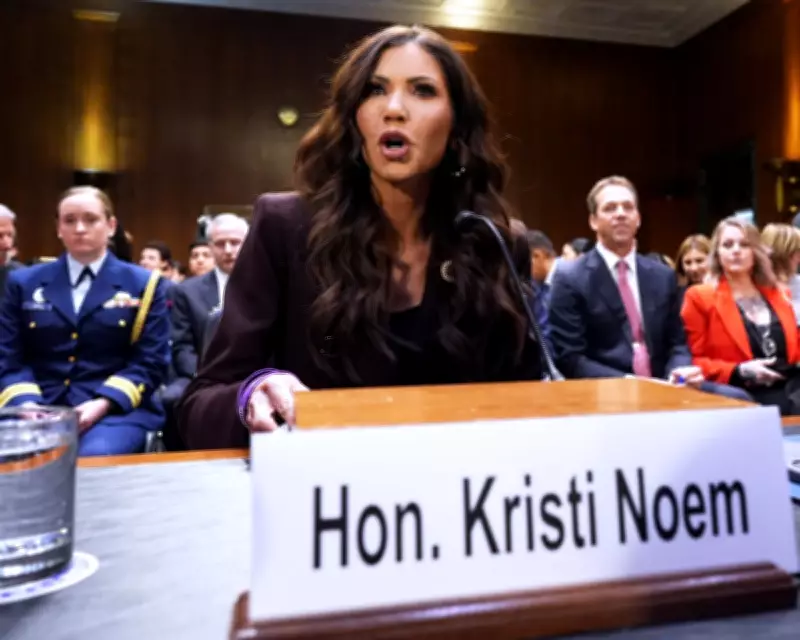
Kristi Noem's Political Exit: A Turning Point with Mixed Prospects
The departure of Kristi Noem from the political arena has sparked widespread discussion, with many expressing relief at her exit. However, this sentiment is tempered by concerns that her successor might not represent a meaningful improvement, potentially leading to continued challenges in governance and policy-making.
Analyzing Noem's Legacy and Its Implications
Kristi Noem's tenure was marked by controversial decisions and polarizing stances, which have left a lasting impact on the political landscape. Her policies often drew criticism for their divisive nature, and her leadership style was frequently questioned by both opponents and allies. As she steps down, there is a palpable sense of closure among her detractors, who view this as an opportunity for change.
Yet, the optimism surrounding her departure is cautious. The political environment remains fraught with complexities, and the process of selecting a replacement is fraught with uncertainty. Potential candidates may lack the experience or vision needed to address the pressing issues that defined Noem's era, such as economic disparities and social tensions.

The Challenges Ahead for Noem's Successor
Whoever assumes Noem's role will inherit a legacy of division and a public weary of political strife. The new leader must navigate a landscape where trust in institutions is low and expectations are high. Without a clear mandate for reform, there is a risk that the replacement could perpetuate existing problems or introduce new ones.
Moreover, the political dynamics that enabled Noem's rise may still be in play, suggesting that her successor could face similar pressures and constraints. This raises doubts about whether any significant progress can be made, as the underlying structural issues remain unaddressed.
Public Reaction and Future Outlook
Public opinion on Noem's departure is mixed. While some celebrate it as a necessary step forward, others worry that it might lead to instability or a lack of direction. The broader implications for governance are significant, as this transition could influence policy decisions and political alliances in the coming years.
In conclusion, Kristi Noem's exit is a pivotal moment, but it does not guarantee a better future. The focus must now shift to ensuring that her replacement is equipped to foster unity and effective leadership, rather than merely continuing the status quo.