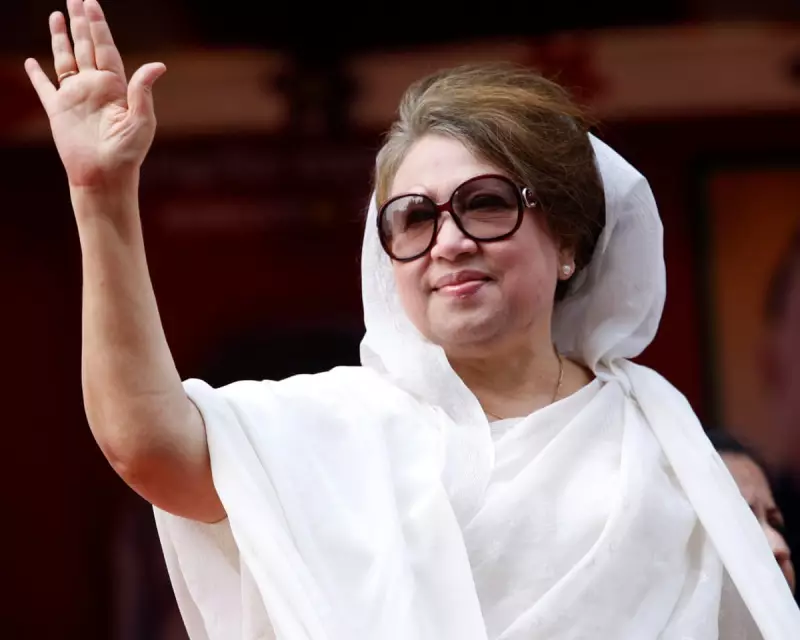
The End of an Era in Bangladeshi Politics
Khaleda Zia, the first woman to serve as prime minister of Bangladesh and a titan of its political landscape for over three decades, has died at the age of 80. Her passing marks the close of a chapter defined by her epic and bitter rivalry with Sheikh Hasina, a feud that shaped the destiny of the South Asian nation.
Zia, who led the country twice in the 1990s and early 2000s, was credited with advancing female education and economic liberalisation. Yet her legacy is inextricably linked to the relentless political warfare with her counterpart, a conflict so intense it became known globally as the "battle of the begums."
A Dynastic Feud That Defined a Nation
Like her rival, Zia's entry into politics was born of tragedy. She was propelled into leadership following the assassination of her husband, President Ziaur Rahman, in 1981. He was the country's first military ruler and founder of the Bangladesh Nationalist Party (BNP), which she would later lead. Similarly, Sheikh Hasina's political journey began after the murder of her father, Sheikh Mujibur Rahman, the founding father of Bangladesh.

This pattern of dynastic succession placed them at the helm of their respective parties, setting the stage for a duel that would dominate public life. After initially uniting to help oust military dictator Hussain Muhammad Ershad in 1990, their alliance shattered. Zia triumphed in the 1991 election, becoming prime minister and establishing a pattern of alternating power marked by strikes, protests, and accusations of corruption and vote-rigging.
Her political strategy included a controversial alliance with the Islamist party Jamaat-e-Islami, which strained relations with neighbouring India. In office, she favoured cultivating ties with Pakistan and China, a direct contrast to Hasina's pro-India stance.
Policy, Prison, and a Fraught Legacy
During her terms, Zia continued her husband's market-friendly economic policies and relaxed media controls. Her focus on girls' education helped Bangladesh achieve gender parity in school enrolment, a landmark achievement for a developing country. The nation's economy grew, propelled by garment exports and remittances from workers abroad, eventually reaching lower-middle-income status.
However, her second term after 2001 was marred by growing Islamist radicalism and allegations that her elder son, Tarique Rahman, was running a shadow government. After leaving office in 2006, she boycotted the 2014 election and was convicted on corruption charges in 2018, which her supporters decried as politically motivated. She was sentenced to prison but was moved to house arrest in 2020 due to failing health.
Only following Sheikh Hasina's own political fall in 2024 after a violent uprising were all restrictions on Zia lifted. An interim government acquitted her of all charges, and she was nominated for elections, though her son Tarique was set to lead the BNP. Her death ensures that for the first time since 1991, a Bangladeshi election will feature neither of the two begums.
Born Khaleda Khanam in Jalpaiguri in 1945—a date disputed in court by opponents—she was a shy housewife before her husband's death. She demonstrated formidable resilience, enduring house arrest and leading her party to victory. She is survived by her son Tarique; her younger son, Arafat, died in 2015.