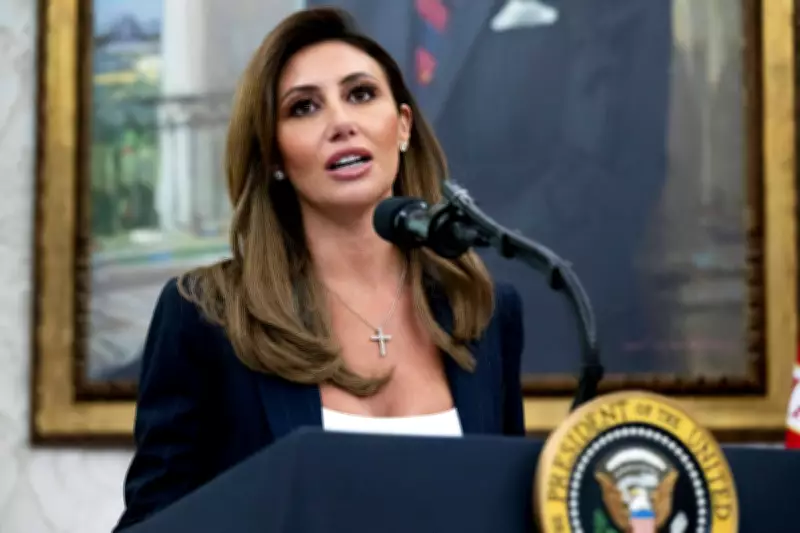
Federal Judge Declares Trump-Appointed New Jersey Attorneys Illegally Installed
A federal judge has delivered a scathing ruling that three prosecutors handpicked by former President Donald Trump's administration to lead the New Jersey attorney general's office were illegally appointed. The decision, issued by Judge Matthew Brann, asserts that the appointments bypassed required congressional approval, repeating a prior error in the administration's handling of the role.
Background of the Controversial Appointments
The controversy stems from the resignation of Alina Habba, who served as interim US attorney general for New Jersey. Habba stepped down after a series of court rulings determined she was serving illegally due to a lack of Senate confirmation. Following her departure, US Attorney General Pam Bondi appointed three administration-friendly lawyers—Jordan Fox, Ari Fontecchio, and Philip Lamparello—to share the responsibilities of the position.
Bondi argued that by splitting the role into three parts, the government was not obligated to seek Senate approval, as no single individual held full authority. However, Judge Brann, in a blistering 130-page ruling, rejected this justification, stating that Bondi had no legal authority to divide the role or appoint delegates to evade confirmation laws.

Judge Brann's Strong Critique of Executive Overreach
In his ruling, Judge Brann warned that the executive branch's actions could jeopardize all cases before him, emphasizing the constitutional necessity of Senate advice and consent for such appointments. He wrote, "On the government's reading, the president would have had no need ever to seek the Senate's advice and consent for his US attorney appointments." Brann further criticized the potential for unlimited executive power, calling it "unthinkable" that Congress would overlook such an expansion of authority.
Brann, a former Republican official appointed during the Obama presidency, had previously ruled in August that Habba was disqualified, accusing the Trump administration of using "a novel series of legal and personnel moves" to maintain her position. He now accuses Bondi of similar maneuvering, describing the leadership structure as "unprecedented and byzantine."
Reactions and Implications for Pending Cases
Alina Habba, now a senior adviser to Bondi, responded to the ruling on social media, attacking Judge Brann and accusing him of "another ridiculous ruling." She asserted, "Judges may continue to try to stop President Trump from carrying out what the American people voted for, but we will not be deterred." Habba defended the appointments, arguing that judges do not have the authority to fire Department of Justice officials.
The case was brought by several criminal defendants in New Jersey seeking dismissal of their cases on grounds of illegal appointments. While Brann did not immediately order the removal of the three attorneys or rule on the fate of these cases, he warned that continuing with unconfirmed leadership could "result in dismissals of pending cases." He questioned the integrity of the justice system, asking, "Why does the fate of thousands of criminal prosecutions in this district potentially rest on the legitimacy of an unprecedented and byzantine leadership structure?"
Broader Context of Illegal Appointments Under Trump
This ruling marks the second time in a week that federal courts have declared Trump appointments illegal for lacking Senate approval. In a separate case, an appeals court judge in Arizona ruled that Kari Lake, a Republican former gubernatorial candidate, unlawfully led the US Agency for Global Media in 2025. Senior Judge Royce C. Lamberth voided actions taken by Lake, including mass layoffs, at the agency overseeing Voice of America and other international broadcasters.
The justice department has not yet commented on Judge Brann's ruling. As legal battles continue, this decision underscores ongoing tensions between the executive and judicial branches over appointment powers and constitutional adherence in US politics.