Family's Search for Answers Halted by High Court
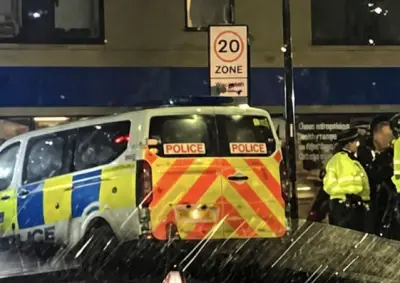
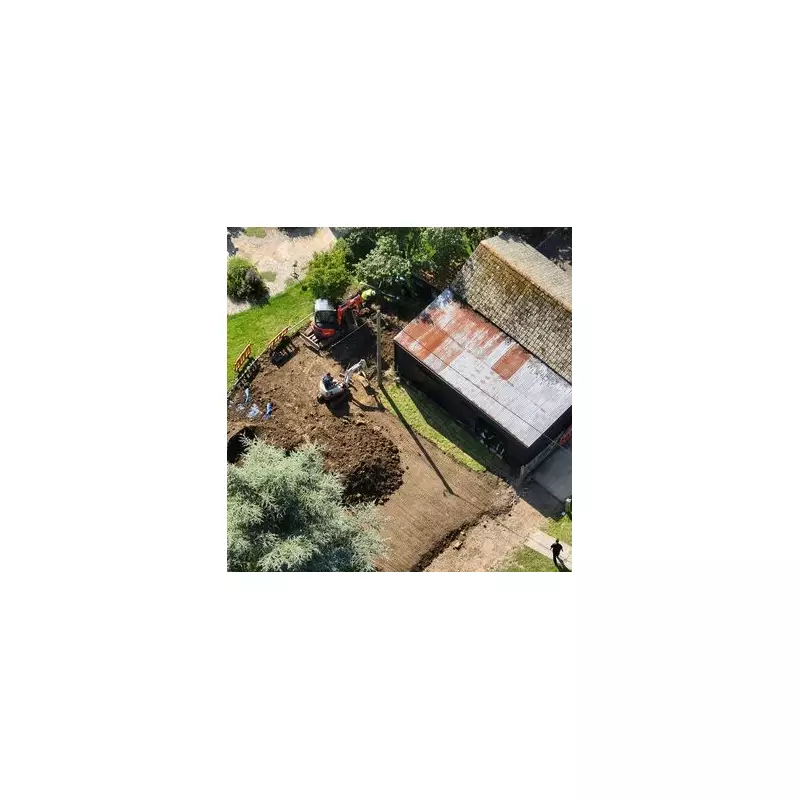
A High Court judge has ruled that the family of Muriel McKay, a woman kidnapped and murdered more than 55 years ago, cannot conduct a radar scan of a shared back garden in East London where they believe her remains are buried.
The Abhorrent Crime and New Lead
Muriel McKay, the 55-year-old wife of newspaper executive Alick McKay, was kidnapped from her home in Wimbledon, south London, on 29 December 1969. She was taken in a case of mistaken identity, with the kidnappers believing she was Anna Murdoch, the then-wife of media mogul Rupert Murdoch. They demanded a £1 million ransom.
Brothers Arthur and Nizamodeen Hosein were later convicted of her murder and sentenced to life in prison, in one of the first murder cases to be successfully prosecuted without a body being found. Ms McKay's remains have never been located.
The family's recent legal bid came after they received new information from Hayley Frais, whose father ran a tailor shop at the premises on Bethnal Green Road at the time of the killing. Ms Frais claimed her father said on his deathbed that he noticed a strong smell at the premises around the time of Ms McKay's disappearance. Arthur Hosein was employed at the shop.
The Court's Decision and Reasoning
At a hearing on Monday, barristers for Ms McKay's children, Ian McKay and Dianne Levinson, asked Mr Justice Richard Smith to grant an injunction. This would have allowed them to perform a "ground-penetrating radar survey" of the shared garden behind two properties on Bethnal Green Road.
However, the judge ruled against the family on Tuesday. He acknowledged the kidnap and murder was an "abhorrent crime" but stated he must consider the case "objectively and dispassionately".
He found that the evidence for Ms McKay's remains being at the property was "thin" and was not persuaded that a survey would produce conclusive data. He also noted that the police had decided not to excavate or survey the garden as it did not meet their "evidential threshold".
Harassment Allegations Influence Outcome
The judge further stated that he would have refused the injunction based on the "egregious conduct" of the McKay family towards one of the homeowners, Madeleine Higson. The court heard that Ms Higson had been subjected to a "bombardment" of requests and had faced "borderline harassment".
This included unsolicited visits from individuals using deception to gain access to the garden. One man falsely claimed he wanted to take photos for a "sentimental montage" for his grandfather, while a woman pretended to be a prospective neighbour wanting a drainage survey.
Mr Justice Smith said that in their "desperation" to find answers, the claimants and Ms McKay's grandson, Mark Dyer, had lost "a sense of perspective and also respect for the interests, concerns and safety of others". He described their actions as "immoral and, in part at least, likely unlawful".
Barristers for the McKay family offered their "sincere apologies for the distress and inconvenience caused". Despite the setback, the family's long search for closure continues, with her grandson previously stating that bringing her home would be "important to the whole family".