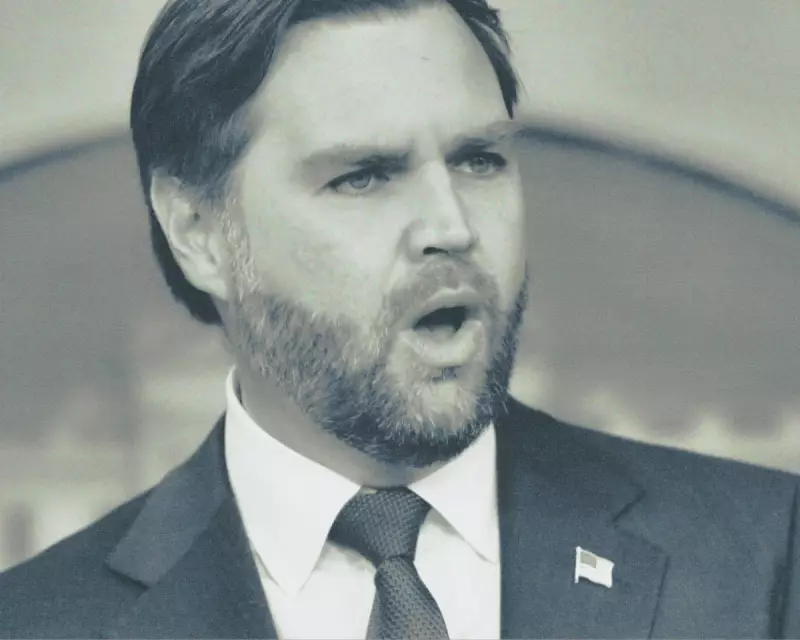
In a packed airport hangar in Concord, North Carolina last September, US Vice-President JD Vance placed a hand on his heart and recounted a childhood of hardship in Middletown, Ohio. "We did not have a lot of money," he told the crowd, painting a picture of a mother struggling to provide. The anecdote, met with earnest cries of "Mamaw!" from the audience, was a calculated piece of political theatre. It aimed to present the 41-year-old as a hardline warrior with a heart, a man leveraging his 'hillbilly' roots while aggressively defending his boss, Donald Trump, and quietly building a bid for the presidency in 2028.
The Shape-Shifter: From Critic to Chief Defender
As he approaches his first anniversary as Vice-President, JD Vance finds himself promoting views he once vehemently opposed. On issues from foreign intervention to government transparency, he has reversed course, shrugged off inconsistencies, or simply ignored them. This transformation has led critics like former Republican congressman Joe Walsh to label him a "thoroughly despicable, dishonest toady for Donald Trump." Yet, this very loyalty is what positions him as the clear frontrunner to inherit the MAGA movement.
Vance's prominence has surged in recent months. He undertook a high-stakes diplomatic mission to Israel, acted as Trump's enforcer during a record government shutdown, and was the administration's public face following the assassination of right-wing activist Charlie Kirk. His comments hoping his Hindu-raised wife would convert to Catholicism drew criticism, as did his blaming of a victim shot by an ICE officer, poet Renee Good, calling her death "a tragedy of her own making."

Silicon Valley's Man in Washington
Vance's path to power is uniquely bolstered by a power centre where his connections surpass even Trump's: Silicon Valley. His political career was launched with a $15 million boost from billionaire Peter Thiel for his Ohio Senate run. Thiel later personally lobbied Trump to select Vance as his running mate.
Other tech titans, including Elon Musk and investor David Sacks, have been pivotal. Vance hosted a $300,000-a-plate fundraiser at Sacks's mansion and played a key role in mending the rift between Musk and Trump. As Vice-President, he has championed the tech industry's anti-regulation agenda, declaring at an AI summit in Paris that the future "is not going to be won by hand-wringing about safety." He also led a successful charge against the UK government's attempt to force backdoor access to encrypted data on Apple devices.
This alliance is strategic. Vance has positioned himself as the essential bridge between the populist MAGA base and the tech elite, assuring executives at events like Andreessen Horowitz's summit that technology has a crucial place within the movement.
The Shadow Campaign and the Trump Dynasty Dilemma
Vance is already running a shadow presidential campaign. In March, he was appointed finance chair of the Republican National Committee, an unprecedented role for a sitting Vice-President that grants him direct access to mega-donors. He has been travelling the country for a year, building contacts and defining a persona both adjacent to, yet distinct from, Trump.
Polls reflect his positioning. A RealClearPolitics average late last year put him at 48.8% for the 2028 Republican nomination, far ahead of Donald Trump Jr. on 11% and potential rival Marco Rubio on 9.3%. He has secured the backing of Turning Point USA and praise from figures like Virginia Governor Glenn Youngkin.
However, the path to succession is fraught. Trump himself continues to tease a 2028 run, a constitutionally impossible move that signals his unwillingness to cede the limelight. As Michael Steele, former RNC chairman, notes, "JD Vance, Marco Rubio, any of these so-called wannabe inheritors of Trump's mantle are gonna have to deal with two things. One, Donald Trump, and two, they're not Trump." The possibility of Trump endorsing his own son also looms large, threatening Vance's 'heir apparent' status.

For now, Vance's strategy is one of unwavering loyalty and subtle groundwork, aware that any overt eagerness could alienate the president. He steers clear of internal MAGA spats, urging unity over "endless, self-defeating purity tests." Whether the once self-described "never Trump" author of Hillbilly Elegy can successfully step into the shoes of the man he once compared to Hitler remains the defining question of the next American political era.