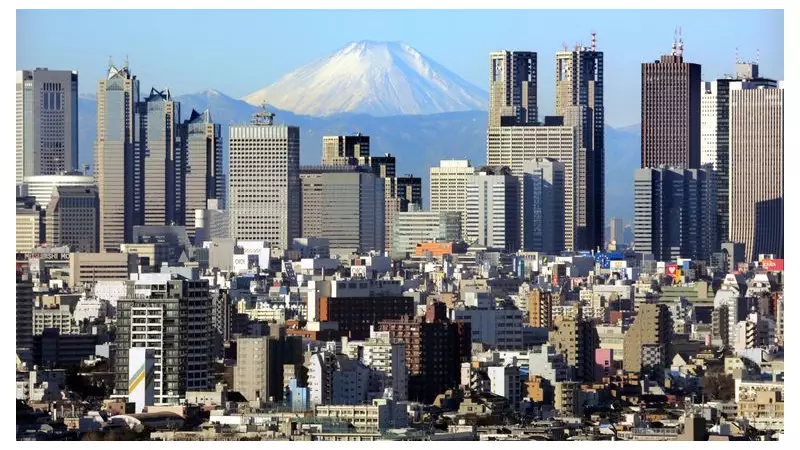
In a significant demographic shift, Tokyo has been surpassed as the world's most populous city, according to a new United Nations report. The Indonesian capital, Jakarta, has now claimed the top position, a title it is projected to hold until 2050.
The New Global Urban Hierarchy
The UN analysis, which updates data from 2018, shows that the number of megacities – urban areas with populations exceeding 10 million – has quadrupled since 1975. From just eight megacities nearly five decades ago, the world now has 33 such vast urban centres, with the majority located in Asia.
Tokyo, which held the title for decades, now ranks third globally. While its population has grown gradually over the last 25 years to 33.4 million residents, it has been overtaken by the rapid expansion of Jakarta and Dhaka. Since the year 2000, these two cities have seen their populations grow at more than five and seven times the rate of Tokyo's growth, respectively.
Today, Jakarta is home to 41.9 million people, followed closely by Dhaka with nearly 37 million inhabitants. The report predicts that by 2050, the Bangladeshi capital will seize the top spot, with its population expected to swell to 52.1 million, edging out Jakarta by a mere 300,000 people.
London's Position in a Changing World
While the global urban landscape transforms, London is set to maintain its status as one of Europe's only megacities. According to the UN data, the English capital will see its population increase by almost 1.5 million people by 2050.
Despite this significant growth, London will retain its ranking as the world's 33rd largest city. It will remain the smallest of Europe's megacities, with Istanbul keeping the continental lead and Moscow following in a close second. The report anticipates the total number of megacities will rise to 37 by 2050, but none of the new additions will be in Europe.
The Bigger Picture of Global Urbanisation
This report underscores the dramatic rise of city living, a relatively recent phenomenon in human history. As recently as 1950, only 20% of the world's population lived in cities. Today, that figure has more than doubled, with 45% of people now residing in urban areas.
The analysis also provides perspective on the scale of most cities worldwide. While megacities like London capture headlines, they are the exception. The report emphasises that 96% of all cities have fewer than 1 million inhabitants, with a significant 81% being home to 250,000 people or fewer.
Looking ahead, Tokyo is projected to continue its descent down the rankings, falling to seventh place by 2050 as it is overtaken by other urban giants including Shanghai and New Delhi.