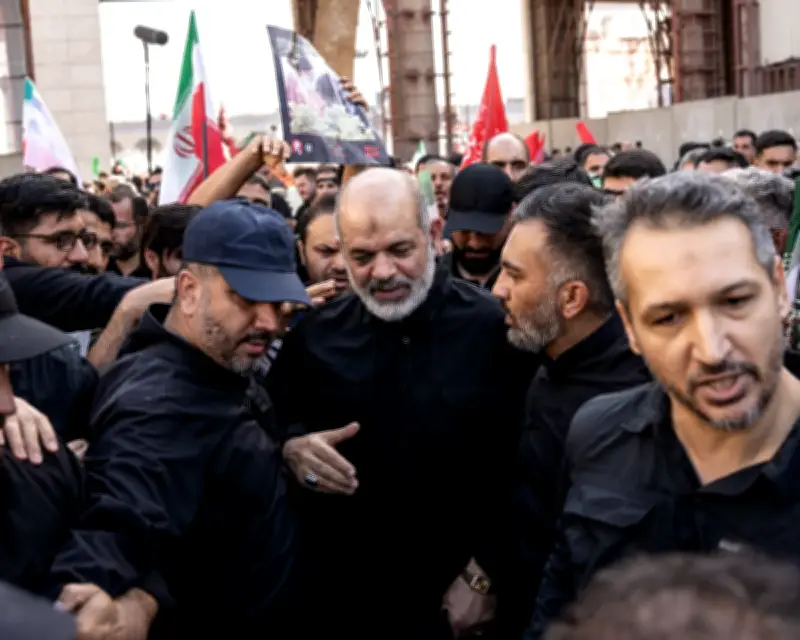
Iran's Islamic Revolutionary Guard Corps (IRGC) has intensified its control over the Strait of Hormuz during the funeral of Supreme Leader Ali Khamenei, warning ships away from the waterway and sending coded Qur'anic messages to visiting Gulf delegations. The strait, a critical chokepoint for global oil shipments, has become a focal point of diplomatic and military contestation.
IRGC warnings force ships to turn back
Over the past 48 hours, at least eight ships turned around after direct IRGC warnings, and the flow of vessels dropped further on Sunday. The UK Maritime Trade Operations (UKMTO) centre reported a distress signal from a vessel in the Red Sea attacked by unknown armed assailants off Yemen's Hodeidah port. According to Marine Traffic, confirmed crossings through the strait on July 2 fell to 38, a 10% day-on-day decline, with Iranian-flagged activity rising sharply from two to 11 crossings.
Western response and oil market impact
French President Emmanuel Macron announced plans to send a mine-clearing naval force to clear the southern route, a move rejected by Iran as unwarranted interference. Oil prices have dropped 40% from a high of $125 per barrel to about $75, easing inflationary pressures on Western economies. A US-Iran memorandum signed on June 17 requires Tehran to restore traffic and refrain from imposing tolls for 60 days, but it remains a loose guideline.

Oman-led talks and legal nuances
Oman held talks with Iran, France, and the UK on future governance of the strait, proposing optional navigational fees similar to the Strait of Malacca. The International Maritime Organisation broadly supports the plan. International law permits tolls on constructed canals like Panama and Suez but exempts natural straits. Iran's potential toll-setting could set a precedent, as seen in Indonesia's failed attempt to charge fees in the Malacca Strait.
Military posturing during ceasefire
Donald Trump acknowledged that US-Iran talks will not resume until after Khamenei's funeral, but the 60-day ceasefire deadline looms. Both sides are using the ceasefire to strengthen military positions, contrary to the US commitment to withdraw forces. An Iranian army spokesperson said, 'We have repeatedly announced that we are using the ceasefire opportunity to enhance our combat capabilities and have not wasted a single moment nor been negligent.' The US appears to be building forces in Jordan.
Qur'anic messages at funeral
At the funeral, Iran sent subtle messages to Gulf delegations through Qur'anic recitations. For Saudi Arabia, a passage from the Battle of Badr was read, implying consequences if Riyadh supports US attacks. Qatar received a verse of forgiveness, while Turkey was reminded of the rewards for those who fight. Hezbollah was praised with a verse from Surah al-Ma'idah. The United Arab Emirates did not send a delegation.