Hungarian Election Result Sparks Celebration and Political Reevaluation
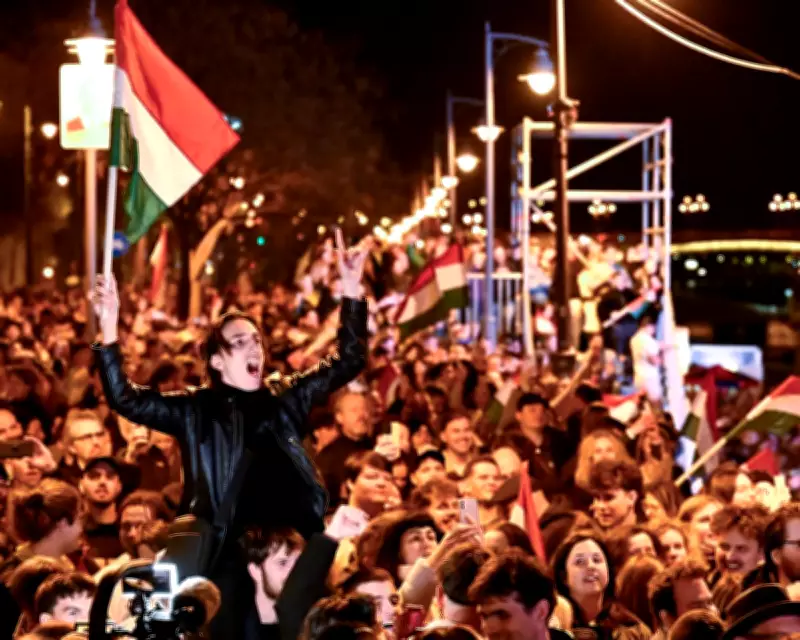
Streets across Budapest erupted in celebration following Sunday's announcement of Hungary's election results, marking a significant political shift that could reverberate throughout Europe. The defeat of long-standing Prime Minister Viktor Orbán represents more than just a domestic political change—it potentially signals a turning point for right-wing populism across the continent.
A Network of Right-Wing Influence Unravels
Viktor Orbán had become a central figure in the global right-wing movement, inspiring politicians across the European Union and in Britain with his brand of "illiberal democracy." His government cultivated extensive networks through state-backed think tanks, media outlets, and international conferences that promoted his political vision beyond Hungary's borders.
The populist-nativist right invested heavily in maintaining Orbán's power, with prominent international figures including US Vice-President JD Vance, Italy's Giorgia Meloni, France's Marine Le Pen, and Austria's Herbert Kickl offering various forms of support. Despite this coordinated backing, Hungarian voters delivered a decisive rejection of Orbán's Fidesz party in favor of Péter Magyar's conservative Tisza party.

Breaking Free from Authoritarian Structures
Orbán's defeat is particularly significant given the extensive structural advantages his government had established over years in power. Through constitutional changes, electoral gerrymandering, media control, and judicial influence, the party-state had created what many observers described as an uneven political playing field.
"Hungarians finally broke free from years of institutional manipulation," noted one political analyst. "This sends a clear message that even well-established authoritarian systems can be challenged through democratic processes."
European Political Landscape in Flux
The Hungarian result arrives at a critical moment for European politics. The hard right had been gaining significant ground across the continent, capturing approximately a quarter of European parliament seats in 2024 and holding or sharing power in multiple countries including Italy, Finland, Sweden, Austria, and Slovakia.
While Péter Magyar represents a conservative rather than liberal alternative, his victory returns Hungary to the European Union's political mainstream after years of Orbán's confrontational relationship with Brussels. This development could strengthen EU unity and reinforce liberal democratic values that have faced increasing pressure.
Implications for Britain's Political Right
The Hungarian election has particular resonance in Britain, where Reform UK leader Nigel Farage had previously described Orbán as "the strongest leader in Europe and the EU's biggest nightmare." Farage's party rose alongside the wave of right-wing populism that Orbán represented, but now faces potential headwinds if this political trend is indeed reversing.
Political scientists note that Reform UK has recently overtaken Labour as the party voters would most likely vote against—a significant factor when tactical voting considerations come into play during elections. This development, combined with Orbán's defeat, suggests changing political dynamics that could affect right-wing parties across Europe.
Financial Connections and Political Influence
Investigations have revealed substantial financial connections between Hungarian institutions and British conservative organizations. The Mathias Corvinus Collegium thinktank, funded by the Hungarian state, reportedly provided more than £500,000 to the UK's Roger Scruton Legacy Foundation, whose directors include Reform UK's head of policy James Orr and former Conservative minister Michael Gove.
These connections highlight how Orbán's government extended its influence beyond Hungary's borders, creating networks that supported right-wing movements internationally. With Orbán's defeat, these relationships may undergo significant reevaluation.

A Warning Against Complacency
Despite the positive implications for liberal democracy, political experts warn against premature celebration. Professor Rob Ford of Manchester University cautions that apparent political turning points often prove illusory, and the true impact of Orbán's defeat will only become clear over time.
Ford also offers a pointed warning to Britain's Labour Party, which faces what he describes as potentially "their worst hammering in history" in upcoming elections. "Labour's greatest risk is their current daze of complacency," he notes, suggesting that no political party should draw excessive comfort from developments in Hungary.
Looking Toward Europe's Political Future
Exactly seventy years after the failed Hungarian uprising against Soviet control, Hungary's rejection of Orbán's government may spark renewed enthusiasm for European unity and democratic principles. The coming year will feature numerous European elections that will test whether Hungary's political shift represents an isolated national story or the beginning of broader continental change.
As political vibrations spread across borders through what one observer called "mysterious osmosis," the Hungarian election result offers a moment of optimism for supporters of liberal democracy. While the full implications remain uncertain, Sunday's celebration in Budapest streets represents at minimum a significant setback for Europe's hard-right movements and potentially a turning point in continental politics.